
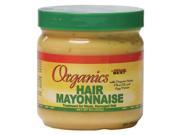

Africa Best Organics Hair Mayonnaise 255g
Summary
This hair care product contains a mix of natural oils and botanicals, which are beneficial for hair health. However, it also includes some synthetic ingredients and preservatives that are common in processed personal care products. The presence of these synthetic components slightly lowers its overall ingredient safety score.
At a glance
Key ingredients 26
Water
Water is a universal solvent and is used as a base in many cosmetic formulations. It helps to dissolve other ingredients and provides hydration. It is essential for the consistency and application of the product.
Risks
There are no significant risks associated with water in cosmetic products.
Benefits
Water hydrates the hair and helps in the even distribution of other ingredients.
Glycerin
Glycerin is a humectant that attracts moisture to the hair and skin. It helps to maintain hydration and improve the texture of hair. It is commonly used in hair care products for its moisturizing properties.
Risks
In high concentrations, glycerin can cause stickiness or greasiness.
Benefits
Glycerin helps to keep hair moisturized and can improve hair elasticity.
Polyquaternium-32
Polyquaternium-32 is a conditioning agent that helps to improve the texture and manageability of hair. It forms a film on the hair surface, providing smoothness and reducing static. It is widely used in hair care products for its conditioning properties.
Risks
There are minimal risks associated with Polyquaternium-32, though it may cause build-up with excessive use.
Benefits
It enhances hair softness and reduces frizz, making hair easier to style.
Paraffinum Liquidum (Mineral Oil)
Mineral oil is used as an emollient to lock in moisture and provide a protective barrier on the hair. It is effective in preventing moisture loss and adding shine. However, it is a petroleum-derived product.
Risks
Mineral oil can cause build-up on the hair and scalp, potentially leading to clogged pores.
Benefits
It provides a protective layer that helps retain moisture and adds shine to the hair.
Dicetyldimonium Chloride
Dicetyldimonium Chloride is a conditioning agent that helps to detangle and soften hair. It reduces static and improves the overall feel of the hair. It is commonly used in conditioners for its effectiveness in smoothing hair.
Risks
There are minimal risks, though it may cause irritation if it comes into contact with the eyes.
Benefits
It enhances hair manageability and reduces frizz, making hair smoother.
Behentrimonium Methosulfate
Behentrimonium Methosulfate is a mild conditioning agent derived from rapeseed oil. It helps to detangle hair and reduce static. It is known for being gentle and effective in hair care formulations.
Risks
There are minimal risks associated with this ingredient.
Benefits
It provides excellent conditioning and detangling properties without causing build-up.
Cetearyl Alcohol
Cetearyl Alcohol is a fatty alcohol used as an emollient and thickener in hair care products. It helps to soften and smooth the hair. It is derived from natural sources and is considered safe for use.
Risks
There are minimal risks, though it may cause irritation in sensitive individuals.
Benefits
It improves the texture and consistency of the product, providing a creamy feel.
Lanolin Oil
Lanolin Oil is an emollient derived from sheep's wool that helps to moisturize and protect the hair. It is effective in preventing moisture loss and adding softness. It is valued for its ability to mimic the skin's natural oils.
Risks
Lanolin can cause allergic reactions in some individuals.
Benefits
It provides deep conditioning and helps to maintain hair moisture.
Dimethicone Copolyol Laurate
Dimethicone Copolyol Laurate is a silicone-based conditioning agent that provides smoothness and shine to the hair. It helps to reduce frizz and improve manageability. It is water-soluble, making it easier to wash out than other silicones.
Risks
Silicones can cause build-up on the hair over time, potentially leading to dullness.
Benefits
It enhances hair shine and smoothness, making hair easier to style.
DMDM Hydantoin
DMDM Hydantoin is a formaldehyde-releasing preservative used to prevent microbial growth in cosmetic products. It helps to extend the shelf life of the product. However, it is a known formaldehyde releaser.
Risks
It can cause skin irritation and allergic reactions, and there are concerns about formaldehyde exposure.
Benefits
It effectively preserves the product, preventing spoilage and contamination.
Cetyl Alcohol
Cetyl Alcohol is a fatty alcohol used as an emollient and thickener in hair care products. It helps to soften and smooth the hair. It is derived from natural sources and is considered safe for use.
Risks
There are minimal risks, though it may cause irritation in sensitive individuals.
Benefits
It improves the texture and consistency of the product, providing a creamy feel.
Phenyl Trimethicone
Phenyl Trimethicone is a silicone-based conditioning agent that provides shine and smoothness to the hair. It helps to reduce frizz and improve manageability. It is often used in hair care products for its ability to enhance shine.
Risks
Silicones can cause build-up on the hair over time, potentially leading to dullness.
Benefits
It enhances hair shine and smoothness, making hair easier to style.
Parfum (Fragrance)
Fragrance is added to cosmetic products to provide a pleasant scent. It is a mixture of aromatic compounds. However, it is a common allergen and can cause skin irritation.
Risks
Fragrance can cause allergic reactions and skin irritation, especially in sensitive individuals.
Benefits
It enhances the sensory experience of using the product.
Daucus Carota Sativa (Carrot) Seed Oil
Carrot Seed Oil is a natural oil rich in vitamins and antioxidants. It helps to nourish and protect the hair. It is valued for its ability to improve hair health and appearance.
Risks
There are minimal risks, though it may cause irritation in sensitive individuals.
Benefits
It provides nourishment and protection, enhancing hair health.
Origanum Vulgare (Oregano)
Oregano extract is known for its antimicrobial and antioxidant properties. It helps to protect the hair and scalp from environmental damage. It is used in hair care products for its potential to improve scalp health.
Risks
There are minimal risks, though it may cause irritation in sensitive individuals.
Benefits
It provides antimicrobial protection and supports scalp health.
Carthamus Tinctorius (Safflower) Seed Oil
Safflower Seed Oil is a natural oil rich in fatty acids and vitamins. It helps to moisturize and nourish the hair. It is commonly used in hair care products for its conditioning properties.
Risks
There are minimal risks, though it may cause irritation in sensitive individuals.
Benefits
It provides deep conditioning and nourishment, improving hair texture.
Rosmarinus Officinalis (Rosemary) Leaf Extract
Rosemary Leaf Extract is known for its antioxidant and antimicrobial properties. It helps to protect the hair and scalp from damage. It is used in hair care products for its potential to improve scalp health and stimulate hair growth.
Risks
There are minimal risks, though it may cause irritation in sensitive individuals.
Benefits
It provides antioxidant protection and supports healthy hair growth.
Urtica Dioica (Nettle) Extract
Nettle Extract is rich in vitamins and minerals that support hair health. It helps to strengthen and nourish the hair. It is used in hair care products for its potential to improve hair strength and reduce hair loss.
Risks
There are minimal risks, though it may cause irritation in sensitive individuals.
Benefits
It strengthens hair and supports healthy hair growth.
Equisetum Hyemale (Horsetail) Extract
Horsetail Extract is rich in silica, which helps to strengthen hair and improve its texture. It is used in hair care products for its potential to enhance hair strength and shine. It is valued for its ability to support healthy hair growth.
Risks
There are minimal risks, though it may cause irritation in sensitive individuals.
Benefits
It strengthens hair and enhances shine, supporting healthy hair growth.
Soluble Collagen
Soluble Collagen is used in hair care products to improve hair strength and elasticity. It helps to repair damaged hair and enhance its appearance. It is valued for its ability to support healthy hair structure.
Risks
There are minimal risks, though it may cause irritation in sensitive individuals.
Benefits
It strengthens hair and improves elasticity, enhancing hair health.
Tocopherol
Tocopherol, also known as Vitamin E, is an antioxidant that helps to protect the hair from environmental damage. It is used in hair care products for its potential to improve hair health and appearance. It is valued for its ability to nourish and protect the hair.
Risks
There are minimal risks, though it may cause irritation in sensitive individuals.
Benefits
It provides antioxidant protection and supports healthy hair.
Panthenol
Panthenol, also known as Provitamin B5, is a moisturizing agent that helps to improve hair texture and appearance. It is used in hair care products for its ability to enhance hair shine and softness. It is valued for its ability to penetrate the hair shaft and provide deep conditioning.
Risks
There are minimal risks, though it may cause irritation in sensitive individuals.
Benefits
It enhances hair shine and softness, providing deep conditioning.
Ovum (Egg Powder)
Egg Powder is rich in proteins and nutrients that help to strengthen and nourish the hair. It is used in hair care products for its potential to improve hair strength and texture. It is valued for its ability to provide deep conditioning and nourishment.
Risks
There are minimal risks, though it may cause irritation in sensitive individuals.
Benefits
It strengthens hair and provides deep conditioning, enhancing hair health.
Yellow #5
Yellow #5 is a synthetic dye used to provide color to cosmetic products. It is commonly used in hair care products for its ability to enhance the visual appeal. However, it is a synthetic additive.
Risks
It can cause allergic reactions and skin irritation in sensitive individuals.
Benefits
It enhances the visual appeal of the product.
Red #40
Red #40 is a synthetic dye used to provide color to cosmetic products. It is commonly used in hair care products for its ability to enhance the visual appeal. However, it is a synthetic additive.
Risks
It can cause allergic reactions and skin irritation in sensitive individuals.
Benefits
It enhances the visual appeal of the product.
Blue #1
Blue #1 is a synthetic dye used to provide color to cosmetic products. It is commonly used in hair care products for its ability to enhance the visual appeal. However, it is a synthetic additive.
Risks
It can cause allergic reactions and skin irritation in sensitive individuals.
Benefits
It enhances the visual appeal of the product.
Processing
Processed Foods
Get the full breakdown in the Scout app
Scan any product to see lab results, healthy alternatives, and your personalized analysis.
Download on theApp Store