Mielle Organics Rosemary Mint Strengthening Conditioner - 12oz
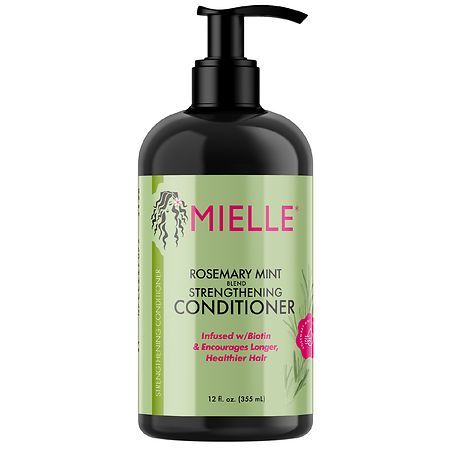
At a glance
Summary
This conditioner features a range of beneficial ingredients such as avocado oil, shea butter, and coconut oil, which are known for their moisturizing and nourishing properties. The presence of gentle conditioning agents like behentrimonium chloride and panthenol further enhances its hair health benefits. However, the inclusion of synthetic fragrance slightly detracts from its overall safety profile, though it remains a largely clean and effective product for hair conditioning. Its plastic packaging can shed microplastics into the product and lowers its score.
Key ingredients 26
Persea Gratissima (Avocado) OilVery Good
Avocado Oil is rich in vitamins and fatty acids, making it an excellent moisturizer for the hair. It helps to nourish and strengthen the hair, promoting overall hair health. It is considered highly beneficial for conditioning and repairing damaged hair.
Risks
There are minimal risks associated with Avocado Oil as it is generally well-tolerated.
Benefits
It provides deep nourishment and helps to strengthen and repair the hair.
Butyrospermum Parkii (Shea) ButterVery Good
Shea Butter is a natural fat extracted from the nuts of the shea tree. It is highly moisturizing and helps to condition and soften the hair. It is considered very beneficial for dry and damaged hair.
Risks
There are minimal risks associated with Shea Butter as it is generally well-tolerated.
Benefits
It provides deep hydration and helps to repair and protect the hair.
Cocos Nucifera (Coconut) OilVery Good
Coconut Oil is known for its moisturizing and nourishing properties. It helps to strengthen the hair and reduce protein loss. It is considered highly beneficial for hair conditioning and repair.
Risks
There are minimal risks associated with Coconut Oil as it is generally well-tolerated.
Benefits
It provides deep nourishment and helps to strengthen and protect the hair.
Olea Europaea (Olive) Fruit OilVery Good
Olive Oil is rich in antioxidants and healthy fats, making it an excellent moisturizer for the hair. It helps to nourish and strengthen the hair, promoting overall hair health. It is considered highly beneficial for conditioning and repairing damaged hair.
Risks
There are minimal risks associated with Olive Oil as it is generally well-tolerated.
Benefits
It provides deep nourishment and helps to strengthen and repair the hair.
Caprylic/Capric TriglycerideGood
Caprylic/Capric Triglyceride is derived from coconut oil and glycerin. It acts as an emollient, providing a lightweight and non-greasy feel. It helps to moisturize and condition the hair.
Risks
There are minimal risks associated with this ingredient as it is generally well-tolerated.
Benefits
It provides hydration and helps to improve the texture of the hair.
Behentrimonium ChlorideGood
Behentrimonium Chloride is a conditioning agent that helps to detangle and soften the hair. It is effective in reducing static and frizz. It is considered safe and beneficial for hair conditioning.
Risks
There are minimal risks associated with Behentrimonium Chloride as it is generally well-tolerated.
Benefits
It improves the manageability and smoothness of the hair.
BiotinGood
Biotin is a vitamin that is often associated with hair health. It helps to strengthen the hair and promote growth. It is considered beneficial for maintaining healthy hair.
Risks
There are minimal risks associated with Biotin as it is generally well-tolerated.
Benefits
It supports hair strength and growth.
Rosmarinus Officinalis (Rosemary) Leaf OilGood
Rosemary Oil is known for its stimulating properties, which can promote hair growth. It also has antimicrobial properties that can help maintain a healthy scalp. It is considered beneficial for overall hair health.
Risks
There are minimal risks associated with Rosemary Oil as it is generally well-tolerated.
Benefits
It promotes hair growth and helps to maintain a healthy scalp.
Mentha Piperita (Peppermint) OilGood
Peppermint Oil provides a cooling sensation and can help to stimulate blood circulation in the scalp. It is known for its refreshing and invigorating properties. It is considered beneficial for promoting a healthy scalp environment.
Risks
There are minimal risks associated with Peppermint Oil as it is generally well-tolerated.
Benefits
It stimulates the scalp and provides a refreshing sensation.
PanthenolGood
Panthenol is a form of vitamin B5 that helps to moisturize and strengthen the hair. It improves the texture and adds shine to the hair. It is considered beneficial for maintaining healthy and hydrated hair.
Risks
There are minimal risks associated with Panthenol as it is generally well-tolerated.
Benefits
It provides hydration and helps to improve the texture and shine of the hair.
TocopherolGood
Tocopherol, also known as Vitamin E, is an antioxidant that helps to protect the hair from damage. It provides nourishment and helps to maintain healthy hair. It is considered beneficial for overall hair health.
Risks
There are minimal risks associated with Tocopherol as it is generally well-tolerated.
Benefits
It provides antioxidant protection and helps to maintain healthy hair.
WaterNeutral
Water is a common solvent used in cosmetic formulations. It helps to dissolve other ingredients and provides a base for the product. It does not have any direct benefits or risks associated with its use in conditioners.
Risks
There are no significant risks associated with water in hair care products.
Benefits
Water helps to hydrate the hair and scalp by providing moisture.
Cetearyl AlcoholNeutral
Standard formulation ingredient — neither beneficial nor harmful at typical use.
Risks
There are minimal risks associated with Cetearyl Alcohol as it is generally well-tolerated.
Benefits
It provides conditioning benefits and helps to improve the texture of the hair.
Polyquaternium-7Neutral
Polyquaternium-7 is a conditioning agent that helps to reduce static and improve the feel of the hair. It forms a thin film on the hair, providing a smooth and silky texture. It is generally considered safe for use in hair care products.
Risks
There are no significant risks associated with Polyquaternium-7 in hair care products.
Benefits
It enhances the softness and manageability of the hair.
C12-15 Alkyl BenzoateNeutral
C12-15 Alkyl Benzoate is an emollient that provides a silky feel to the hair. It helps to enhance the spreadability of the product. It is generally considered safe for use in hair care products.
Risks
There are no significant risks associated with C12-15 Alkyl Benzoate in hair care products.
Benefits
It provides a smooth and silky texture to the hair.
PPG-3 Myristyl EtherNeutral
PPG-3 Myristyl Ether is used as an emollient and conditioning agent. It helps to improve the texture and feel of the hair. It is generally considered safe for use in hair care products.
Risks
There are no significant risks associated with PPG-3 Myristyl Ether in hair care products.
Benefits
It enhances the smoothness and manageability of the hair.
Diheptyl Succinate Capryloyl Glycerin/Sebacic Acid CopolymerNeutral
This ingredient is used as an emollient and film-forming agent. It helps to improve the texture and feel of the hair. It is generally considered safe for use in hair care products.
Risks
There are no significant risks associated with this ingredient in hair care products.
Benefits
It enhances the smoothness and manageability of the hair.
Cetyl AlcoholNeutral
Standard formulation ingredient — neither beneficial nor harmful at typical use.
Risks
There are minimal risks associated with Cetyl Alcohol as it is generally well-tolerated.
Benefits
It provides conditioning benefits and helps to improve the texture of the hair.
C10-40 Isoalkylamidopropylethyldimonium EthosulfateNeutral
This ingredient is used as a conditioning agent and helps to improve the texture of the hair. It is generally considered safe for use in hair care products. It does not have any direct benefits or risks associated with its use in conditioners.
Risks
There are no significant risks associated with this ingredient in hair care products.
Benefits
It enhances the smoothness and manageability of the hair.
Benzoic AcidNeutral
Benzoic Acid is used as a preservative in cosmetic products. It helps to prevent microbial growth and extend the shelf life of the product. It is generally considered safe for use in hair care products.
Risks
There are no significant risks associated with Benzoic Acid in hair care products.
Benefits
It helps to preserve the product and extend its shelf life.
EthylhexylglycerinNeutral
Ethylhexylglycerin is used as a preservative and skin conditioning agent. It helps to enhance the efficacy of other preservatives. It is generally considered safe for use in hair care products.
Risks
There are no significant risks associated with Ethylhexylglycerin in hair care products.
Benefits
It helps to preserve the product and enhance the efficacy of other preservatives.
Glycereth-2 CocoateNeutral
Glycereth-2 Cocoate is used as an emollient and conditioning agent. It helps to improve the texture and feel of the hair. It is generally considered safe for use in hair care products.
Risks
There are no significant risks associated with Glycereth-2 Cocoate in hair care products.
Benefits
It enhances the smoothness and manageability of the hair.
Behentrimonium MethosulfateBad
Processed additive flagged under Scout's ingredient doctrine.
Risks
There are minimal risks associated with Behentrimonium Methosulfate as it is generally well-tolerated.
Benefits
It improves the manageability and smoothness of the hair.
PhenoxyethanolBad
Processed additive flagged under Scout's ingredient doctrine.
Risks
There are no significant risks associated with Phenoxyethanol in hair care products.
Benefits
It helps to preserve the product and extend its shelf life.
Disodium EDTABad
Processed additive flagged under Scout's ingredient doctrine.
Risks
There are no significant risks associated with Disodium EDTA in hair care products.
Benefits
It helps to improve the stability and efficacy of the product.
Fragrance (Parfum)Very Bad
Fragrance is used to impart a pleasant scent to the product. However, synthetic fragrances can cause irritation and allergic reactions in some individuals. It is often criticized for its potential to cause skin sensitivity.
Risks
Fragrance can cause irritation and allergic reactions, especially in sensitive individuals.
Benefits
It provides a pleasant scent to the product.
Processing
Processed Foods
Get the full breakdown in the Scout appTake Scout shopping
Scan any product to see lab results, healthy alternatives, and your personalized analysis.
Amazon pricing & content
Amazon price as of . Product prices and availability are accurate as of the date/time indicated and are subject to change. Any price and availability information displayed on Amazon.com at the time of purchase will apply to the purchase of this product.
CERTAIN CONTENT THAT APPEARS ON THIS SITE COMES FROM AMAZON. THIS CONTENT IS PROVIDED “AS IS” AND IS SUBJECT TO CHANGE OR REMOVAL AT ANY TIME.