
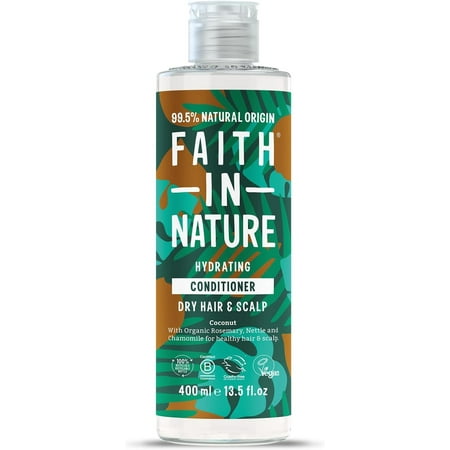
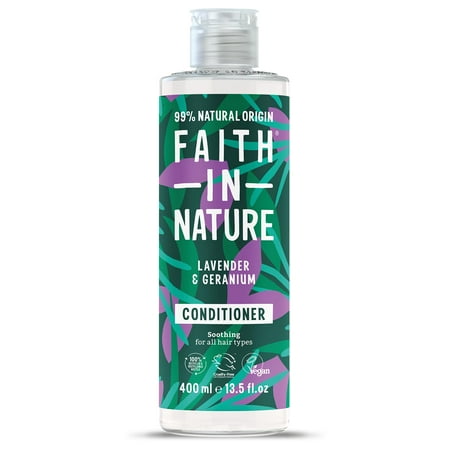

Faith In Nature Natural Conditioner - Vegan & Cruelty Free No SLS or Parabens - 13.5 fl oz Coconut
Analysis updated August 2026 · How Scout scores
At a glance
Summary
This conditioner features beneficial ingredients like coconut oil, glycerin, and rosemary extract, which provide nourishment and hydration to the hair. However, the presence of synthetic fragrance and benzyl alcohol, which can cause irritation and dryness, slightly detracts from its overall safety profile. Despite being processed, the product maintains a mostly clean ingredient list, contributing to a favorable score.
Key ingredients 16
Cocos Nucifera (Coconut) OilVery Good
Coconut oil is renowned for its deep conditioning properties and ability to penetrate the hair shaft. It helps reduce protein loss and adds shine to the hair. It is highly valued in hair care for its nourishing effects.
Risks
Overuse can lead to buildup, especially in fine hair types.
Benefits
Coconut oil deeply conditions and strengthens hair, reducing breakage and adding shine.
Caprylic/Capric TriglycerideGood
This ingredient is derived from coconut oil and glycerin, providing a lightweight emollient effect. It helps to moisturize and soften the hair without leaving a greasy residue. It is beneficial for its ability to enhance the texture and feel of hair.
Risks
There are no significant risks associated with this ingredient in hair care.
Benefits
It provides lightweight moisture and improves the texture of hair, making it feel smoother.
GlycerinGood
Glycerin is a humectant that attracts moisture to the hair, helping to keep it hydrated. It is commonly used in conditioners to improve moisture retention. It is beneficial for its hydrating properties.
Risks
In very dry climates, glycerin can draw moisture out of the hair.
Benefits
Glycerin helps maintain moisture levels in the hair, preventing dryness and frizz.
Rosmarinus Officinalis (Rosemary) Leaf ExtractGood
Rosemary extract is known for its antioxidant properties and ability to stimulate hair growth. It is often used in hair care products to improve scalp health. It is beneficial for its potential to enhance hair growth and scalp condition.
Risks
Some individuals may experience irritation or allergic reactions.
Benefits
Rosemary extract can promote hair growth and improve scalp health.
Chamomilla Recutita (Matricaria) Flower ExtractGood
Chamomile extract is soothing and anti-inflammatory, making it beneficial for sensitive scalps. It is often used to enhance shine and lighten hair naturally. It is valued for its calming and conditioning effects.
Risks
Allergic reactions are possible in sensitive individuals.
Benefits
Chamomile extract soothes the scalp and enhances hair shine.
Urtica Dioica (Nettle) Leaf ExtractGood
Nettle extract is rich in vitamins and minerals that support healthy hair growth. It is often used to strengthen hair and reduce dandruff. It is beneficial for its nourishing and strengthening properties.
Risks
May cause irritation in sensitive individuals.
Benefits
Nettle extract strengthens hair and supports healthy growth.
TocopherolGood
Tocopherol, or Vitamin E, is an antioxidant that helps protect hair from environmental damage. It is often used to improve hair health and appearance. It is beneficial for its protective and conditioning properties.
Risks
There are minimal risks associated with tocopherol in hair care.
Benefits
Tocopherol protects hair from damage and improves its overall health.
Helianthus Annuus (Sunflower) Seed OilGood
Sunflower seed oil is rich in essential fatty acids and vitamins that nourish and condition the hair. It is often used to add shine and softness to hair. It is beneficial for its moisturizing and conditioning effects.
Risks
There are minimal risks associated with sunflower seed oil in hair care.
Benefits
Sunflower seed oil nourishes and conditions hair, adding shine and softness.
Aqua (Water)Neutral
Water is a common solvent used in cosmetic formulations. It helps dissolve other ingredients and provides a base for the conditioner. It does not have any direct benefits or risks associated with hair care.
Risks
There are no known risks associated with water in hair care products.
Benefits
Water acts as a carrier for other beneficial ingredients in the formulation.
Cetearyl AlcoholNeutral
Standard formulation ingredient — neither beneficial nor harmful at typical use.
Risks
There are minimal risks associated with Cetearyl Alcohol, as it is generally well-tolerated.
Benefits
It provides moisture and improves the texture of hair, making it feel softer and more manageable.
Illicium Verum (Anise) Fruit/Seed OilNeutral
Anise oil is used for its aromatic properties and potential antimicrobial effects. It is not commonly associated with significant hair care benefits. It does not have notable benefits or risks in the context of hair care.
Risks
May cause irritation in sensitive individuals.
Benefits
Provides a natural fragrance and may have mild antimicrobial properties.
Citric AcidNeutral
Citric acid is used to adjust the pH of hair care products, ensuring they are not too alkaline. It does not have direct benefits for hair but helps maintain product stability. It is neutral in terms of hair care benefits and risks.
Risks
In high concentrations, it may cause irritation.
Benefits
Helps maintain the pH balance of the product.
Cetrimonium ChlorideBad
Processed additive flagged under Scout's ingredient doctrine.
Risks
There are minimal risks when used in appropriate concentrations.
Benefits
It helps to detangle hair and reduce static, improving manageability.
Sodium BenzoateBad
Synthetic preservative that can form benzene in the presence of vitamin C.
Risks
May cause irritation in sensitive individuals.
Benefits
Ensures the product remains free from harmful microbial growth.
Benzyl AlcoholBad
Benzyl alcohol is used as a preservative and solvent but can be drying to the hair and scalp. It is often criticized for its potential to cause irritation and dryness. It is considered a potential irritant in hair care products.
Risks
Can cause dryness and irritation to the scalp.
Benefits
Acts as a preservative to maintain product integrity.
Parfum (Fragrance)Very Bad
Synthetic fragrances can cause irritation and allergic reactions in sensitive individuals. They are often criticized for their lack of transparency regarding specific chemical components. It is considered a potential irritant in hair care products.
Risks
Fragrances can cause skin irritation and allergic reactions.
Benefits
Provides a pleasant scent to the product.
Get the full breakdown in the Scout appTake Scout shopping
Scan any product to see lab results, healthy alternatives, and your personalized analysis.
Download on theApp Store GET IT ONGoogle PlayAmazon pricing & content
Amazon price as of . Product prices and availability are accurate as of the date/time indicated and are subject to change. Any price and availability information displayed on Amazon.com at the time of purchase will apply to the purchase of this product.
CERTAIN CONTENT THAT APPEARS ON THIS SITE COMES FROM AMAZON. THIS CONTENT IS PROVIDED “AS IS” AND IS SUBJECT TO CHANGE OR REMOVAL AT ANY TIME.