
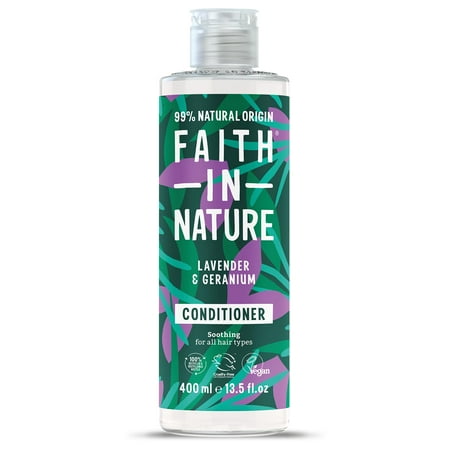

Faith In Nature Natural Conditioner - Vegan & Cruelty Free No SLS or Parabens - 13.5 fl oz Lavender & Geranium
Analysis updated August 2026 · How Scout scores
At a glance
Summary
This conditioner is formulated with high-quality, natural ingredients such as rapeseed oil, lavender oil, and rosemary leaf extract, which provide nourishment and moisture to the hair. It is free from harsh chemicals like SLS, parabens, and silicones, making it gentle on the scalp and hair. The inclusion of essential oils and plant extracts enhances its conditioning properties while maintaining a minimal processing level, contributing to its excellent rating.
Key ingredients 23
Brassica Campestris (Rapeseed) Seed OilVery Good
Rapeseed Oil is rich in essential fatty acids and vitamins. It provides nourishment and moisture to the hair, helping to improve its overall health. It is particularly beneficial for dry and damaged hair.
Risks
There are no significant risks associated with Rapeseed Oil in hair care products.
Benefits
It deeply nourishes and moisturizes the hair, enhancing shine and softness.
Lavandula Angustifolia (Lavender) OilVery Good
Lavender Oil is known for its soothing and calming properties. It can help to reduce scalp irritation and promote relaxation. It also has antimicrobial properties that can benefit scalp health.
Risks
In rare cases, it may cause skin irritation or allergic reactions.
Benefits
It soothes the scalp and provides a pleasant fragrance, enhancing the overall experience.
Lavandula Hybrida OilVery Good
Lavandula Hybrida Oil is similar to Lavender Oil, offering calming and soothing effects. It is often used for its aromatic properties and potential to improve scalp health. It can also help to balance oil production on the scalp.
Risks
Potential for skin irritation in sensitive individuals.
Benefits
It provides a calming effect and helps maintain a healthy scalp environment.
Plant derived Organic certifiedVery Good
The use of plant-derived and organic certified ingredients indicates a commitment to natural and sustainable sourcing. These ingredients are generally considered safer and more environmentally friendly. They contribute to the overall quality and efficacy of the product.
Risks
There are minimal risks associated with plant-derived organic ingredients.
Benefits
They enhance the product's safety and environmental sustainability.
Caprylic/Capric TriglycerideGood
Caprylic/Capric Triglyceride is derived from coconut oil and glycerin. It acts as an emollient, providing a lightweight and non-greasy feel. It helps to condition and soften the hair.
Risks
There are minimal risks associated with this ingredient, as it is generally well-tolerated.
Benefits
It enhances the smoothness and softness of the hair without weighing it down.
Pelargonium Graveolens OilGood
Pelargonium Graveolens Oil, commonly known as Geranium Oil, is used for its balancing and toning properties. It can help to regulate oil production and improve scalp health. It also adds a pleasant floral scent to the product.
Risks
May cause irritation in sensitive skin types.
Benefits
It helps balance scalp oil levels and adds a natural fragrance.
GlycerinGood
Glycerin is a humectant that attracts moisture to the hair and scalp. It helps to keep the hair hydrated and prevents dryness. It is widely used in hair care for its moisturizing properties.
Risks
Overuse can lead to a sticky residue on hair.
Benefits
It effectively hydrates and maintains moisture levels in the hair.
Rosmarinus Officinalis (Rosemary) Leaf ExtractGood
Rosemary Leaf Extract is known for its antioxidant and anti-inflammatory properties. It can help to stimulate hair growth and improve scalp circulation. It also provides a refreshing scent.
Risks
May cause irritation if used in high concentrations.
Benefits
It promotes healthy hair growth and enhances scalp health.
Urtica Dioica (Nettle) Leaf ExtractGood
Nettle Leaf Extract is rich in vitamins and minerals that support hair health. It can help to strengthen hair and reduce hair loss. It is also known for its anti-inflammatory properties.
Risks
Potential for mild irritation in sensitive individuals.
Benefits
It strengthens hair and supports overall scalp health.
Chamomilla Recutita (Matricaria) Flower ExtractGood
Chamomile Flower Extract is soothing and anti-inflammatory. It can help to calm irritated scalps and add shine to the hair. It is often used for its gentle conditioning properties.
Risks
Rarely, it may cause allergic reactions.
Benefits
It soothes the scalp and enhances hair shine.
TocopherolGood
Tocopherol, or Vitamin E, is an antioxidant that helps to protect hair from environmental damage. It can improve hair elasticity and moisture retention. It is beneficial for maintaining healthy hair and scalp.
Risks
Generally safe, but excessive use can lead to buildup.
Benefits
It protects hair from damage and improves moisture retention.
Eucalyptus Globulus Leaf OilGood
Eucalyptus Oil is known for its refreshing and cooling properties. It can help to relieve scalp irritation and promote a healthy scalp environment. It also provides a pleasant, invigorating scent.
Risks
May cause irritation if used in high concentrations.
Benefits
It refreshes the scalp and provides a cooling sensation.
Citrus Aurantium Dulcis (Orange) Peel OilGood
Orange Peel Oil is rich in vitamin C and antioxidants. It can help to improve scalp health and add shine to the hair. It also provides a fresh, citrusy fragrance.
Risks
Potential for photosensitivity if exposed to sunlight.
Benefits
It enhances hair shine and provides a refreshing scent.
Helianthus Annuus (Sunflower) Seed OilGood
Sunflower Seed Oil is rich in essential fatty acids and vitamin E. It provides nourishment and moisture to the hair, helping to improve its overall health. It is particularly beneficial for dry and damaged hair.
Risks
Generally safe, but may cause allergic reactions in sensitive individuals.
Benefits
It nourishes and moisturizes the hair, enhancing shine and softness.
Aqua (Water)Neutral
Water is a common solvent used in cosmetic formulations. It helps to dissolve other ingredients and provides a base for the conditioner. It is essential for hydration but does not have direct conditioning benefits.
Risks
There are no known risks associated with water in cosmetic formulations.
Benefits
Water helps to hydrate the hair and scalp by providing moisture.
Cetearyl AlcoholNeutral
Standard formulation ingredient — neither beneficial nor harmful at typical use.
Risks
There are minimal risks associated with Cetearyl Alcohol, as it is generally considered safe for use in cosmetics.
Benefits
It conditions and softens the hair, improving manageability and texture.
Citric AcidNeutral
Citric Acid is used to adjust the pH of cosmetic formulations. It helps to maintain the stability and effectiveness of the product. It does not have direct conditioning benefits for hair.
Risks
May cause irritation if used in high concentrations.
Benefits
It helps maintain the product's pH balance, ensuring stability.
CitronellolNeutral
Citronellol is a fragrance component derived from plants. It is used to impart a pleasant scent to cosmetic products. It does not have direct conditioning benefits for hair.
Risks
May cause allergic reactions in sensitive individuals.
Benefits
It provides a pleasant fragrance to the product.
GeraniolNeutral
Geraniol is a naturally occurring fragrance compound. It is used to add a floral scent to cosmetic products. It does not have direct conditioning benefits for hair.
Risks
Potential allergen for some individuals.
Benefits
It adds a floral fragrance to the product.
Cetrimonium ChlorideBad
Processed additive flagged under Scout's ingredient doctrine.
Risks
May cause irritation if used in high concentrations.
Benefits
It detangles and smooths hair, improving manageability.
Sodium BenzoateBad
Synthetic preservative that can form benzene in the presence of vitamin C.
Risks
May cause irritation in sensitive individuals.
Benefits
It prevents microbial growth, ensuring product safety and longevity.
LimoneneBad
Processed additive flagged under Scout's ingredient doctrine.
Risks
May cause skin irritation or allergic reactions.
Benefits
It provides a citrus fragrance to the product.
LinaloolBad
Processed additive flagged under Scout's ingredient doctrine.
Risks
Potential allergen for some individuals.
Benefits
It adds a floral fragrance to the product.
Get the full breakdown in the Scout appTake Scout shopping
Scan any product to see lab results, healthy alternatives, and your personalized analysis.
Download on theApp Store GET IT ONGoogle PlayAmazon pricing & content
Amazon price as of . Product prices and availability are accurate as of the date/time indicated and are subject to change. Any price and availability information displayed on Amazon.com at the time of purchase will apply to the purchase of this product.
CERTAIN CONTENT THAT APPEARS ON THIS SITE COMES FROM AMAZON. THIS CONTENT IS PROVIDED “AS IS” AND IS SUBJECT TO CHANGE OR REMOVAL AT ANY TIME.