
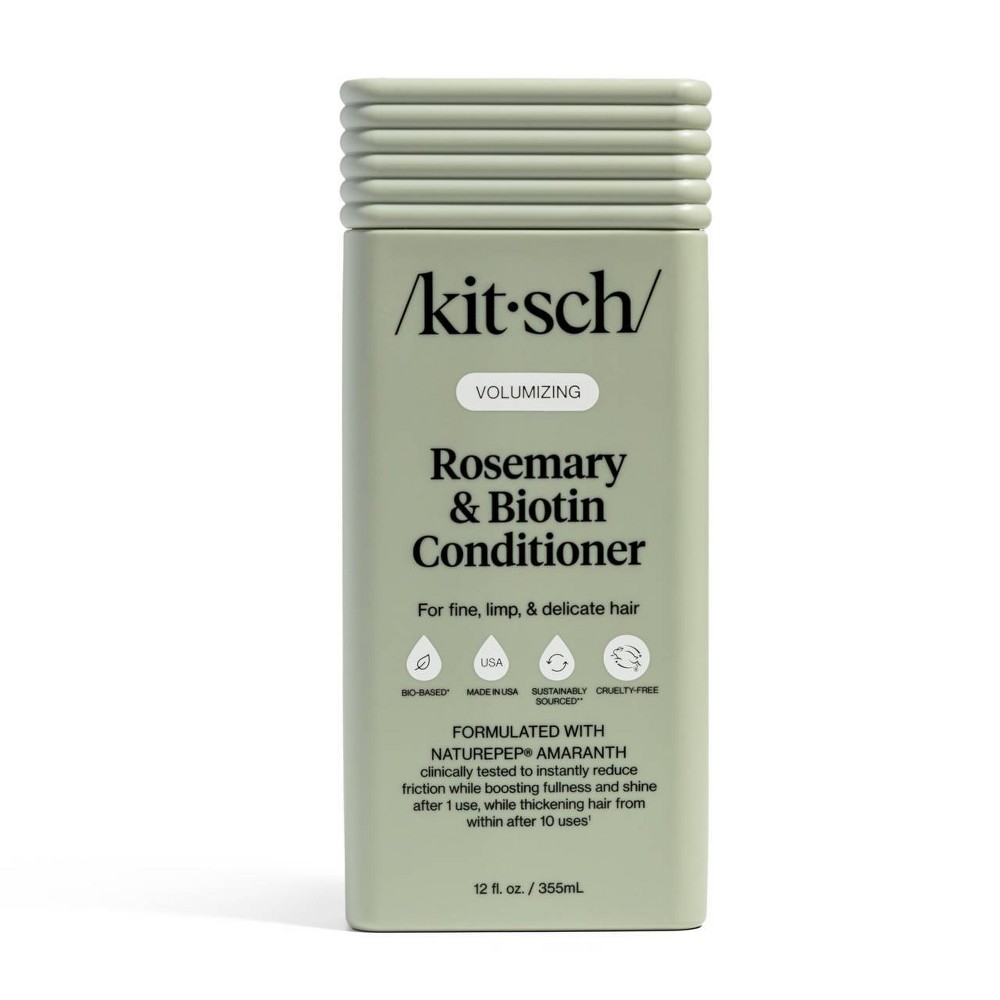
Kitsch Volumizing Rosemary & Biotin Conditioner - 12oz: Paraben-Free, Silicone-Free, Vegan, For Straight Hair
Analysis updated September 2026 · How Scout scores
At a glance
Summary
This conditioner is free from parabens, silicones, and sulfates, which sets a strong baseline for ingredient safety. It contains beneficial ingredients like coconut oil, sunflower seed oil, and behentrimonium methosulfate, which are known for their conditioning and moisturizing properties. However, the presence of synthetic fragrance, phenoxyethanol, and benzyl alcohol, which can cause irritation in sensitive individuals, slightly detracts from its overall score.
Key ingredients 30
Cocos Nucifera (Coconut) OilVery Good
Coconut oil is a natural emollient that deeply conditions and nourishes the hair. It helps to reduce protein loss and improve hair strength. It is highly beneficial for dry and damaged hair.
Risks
May cause buildup if used excessively without proper cleansing.
Benefits
Deeply conditions and nourishes the hair, improving strength and reducing protein loss.
GlycerinGood
Glycerin is a humectant that attracts moisture to the hair, helping to keep it hydrated. It is beneficial for maintaining hair moisture balance. It is generally safe and well-tolerated.
Risks
In very dry conditions, it may draw moisture from the hair.
Benefits
Attracts moisture to the hair, keeping it hydrated and soft.
Helianthus Annuus (Sunflower) Seed OilGood
Sunflower seed oil is rich in essential fatty acids and vitamin E, which help to nourish and protect the hair. It adds shine and helps to maintain moisture balance. It is a beneficial ingredient for hair health.
Risks
Generally safe, but may cause mild irritation in sensitive individuals.
Benefits
Nourishes and protects the hair, adding shine and maintaining moisture balance.
Rosmarinus Officinalis (Rosemary) Leaf ExtractGood
Rosemary Leaf Extract is known for its antioxidant and antimicrobial properties. It helps to stimulate hair growth and improve scalp health. It is a beneficial ingredient for maintaining healthy hair.
Risks
May cause irritation in individuals with sensitive skin.
Benefits
Stimulates hair growth and improves scalp health with antioxidant properties.
BiotinGood
Beneficial ingredient — whole-food or functional value in this product class.
Benefits
Potential to strengthen hair, although benefits are more recognized when ingested.
PanthenolGood
Panthenol is a provitamin of B5 that helps to moisturize and strengthen the hair. It penetrates the hair shaft, improving elasticity and shine. It is a beneficial ingredient for maintaining healthy hair.
Risks
Generally considered safe with minimal risk of irritation.
Benefits
Moisturizes and strengthens hair, improving elasticity and shine.
Lavandula Oil/ExtractGood
Lavandula Oil, or Lavender Oil, is known for its soothing and calming properties. It can help to improve scalp health and promote relaxation. It is a beneficial ingredient for hair care.
Risks
May cause irritation in individuals with sensitive skin.
Benefits
Improves scalp health and promotes relaxation with soothing properties.
Water/Aqua/EauNeutral
Water is a universal solvent and is used as a base in many cosmetic products. It helps to dissolve other ingredients and provides a medium for them to be applied to the hair. It does not have any direct benefits or risks.
Benefits
Provides a medium for other ingredients to be applied effectively.
Cetearyl AlcoholNeutral
Standard formulation ingredient — neither beneficial nor harmful at typical use.
Risks
Rarely, it may cause mild irritation in sensitive individuals.
Benefits
Helps to soften and smooth the hair, improving manageability.
Behentrimonium ChlorideNeutral
Behentrimonium Chloride is a conditioning agent that helps to detangle and smooth the hair. It is effective in reducing static and frizz. It is generally considered safe for use in hair care products.
Risks
May cause mild irritation if used in high concentrations.
Benefits
Helps to detangle and smooth the hair, reducing static and frizz.
Cetyl AlcoholNeutral
Standard formulation ingredient — neither beneficial nor harmful at typical use.
Risks
Rarely, it may cause mild irritation in sensitive individuals.
Benefits
Softens and smooths the hair, improving texture and manageability.
Coconut AlkanesNeutral
Coconut Alkanes are derived from coconut oil and are used as a natural emollient and conditioning agent. They help to improve the texture and feel of the hair. They are generally considered safe and non-irritating.
Benefits
Improves the texture and feel of the hair, providing a natural conditioning effect.
Amaranthus Caudatus Seed ExtractNeutral
Amaranthus Caudatus Seed Extract is a plant-derived ingredient that may provide antioxidant benefits. It is used for its potential to protect and nourish the hair. Its specific effects on hair are not well-documented.
Risks
Generally considered safe with minimal risk of irritation.
Benefits
May provide antioxidant benefits, protecting and nourishing the hair.
Polyquaternium-7Neutral
Polyquaternium-7 is a conditioning polymer that helps to improve the texture and manageability of hair. It reduces static and enhances the feel of the hair. It is generally considered safe for use in hair care products.
Risks
May cause buildup if not rinsed thoroughly.
Benefits
Improves texture and manageability, reducing static and enhancing feel.
Stearamine OxideNeutral
Stearamine Oxide is used as a surfactant and conditioning agent in hair care products. It helps to improve the texture and manageability of hair. It is generally considered safe for use in cosmetics.
Benefits
Improves texture and manageability of hair.
Coco-Caprylate/CaprateNeutral
Coco-Caprylate/Caprate is an emollient derived from coconut oil that helps to improve the spreadability of products. It provides a lightweight conditioning effect. It is generally considered safe and non-irritating.
Benefits
Improves spreadability and provides lightweight conditioning.
Guar Hydroxypropyltrimonium ChlorideNeutral
Guar Hydroxypropyltrimonium Chloride is a conditioning agent derived from guar gum. It helps to improve the texture and manageability of hair. It is generally considered safe and effective for use in hair care products.
Benefits
Improves texture and manageability of hair.
Citric AcidNeutral
Citric Acid is used to adjust the pH of cosmetic products and can help to improve the stability of formulations. It is generally considered safe for use in hair care. It does not provide direct benefits to hair health.
Risks
May cause mild irritation in sensitive individuals.
Benefits
Helps to adjust pH and improve product stability.
CamphorNeutral
Camphor is used for its cooling and soothing properties in cosmetic products. It can provide a refreshing sensation on the scalp. It is generally considered safe for use in hair care.
Risks
May cause irritation if used in high concentrations.
Benefits
Provides a cooling and soothing sensation on the scalp.
Linalyl AcetateNeutral
Linalyl Acetate is a naturally occurring phytochemical found in many essential oils. It is used for its fragrance and is generally considered safe in low concentrations. It does not provide direct benefits to hair health.
Risks
May cause irritation or allergic reactions in sensitive individuals.
Benefits
Provides fragrance to the product.
Behentrimonium MethosulfateBad
Processed additive flagged under Scout's ingredient doctrine.
Risks
Generally considered safe with minimal risk of irritation.
Benefits
Detangles and smooths the hair, enhancing manageability.
Cetrimonium ChlorideBad
Processed additive flagged under Scout's ingredient doctrine.
Risks
May cause mild irritation if used in high concentrations.
Benefits
Reduces static and improves manageability, detangling and smoothing hair.
PhenoxyethanolBad
Phenoxyethanol is a preservative used to prevent microbial growth in cosmetic products. It can cause skin irritation and allergic reactions in some individuals. It is often criticized for its potential to cause sensitivity.
Risks
Potential to cause skin irritation and allergic reactions.
Benefits
Prevents microbial growth, extending the shelf life of the product.
Benzyl AlcoholBad
Benzyl Alcohol is used as a preservative and solvent in cosmetic products. It can cause skin irritation and dryness, particularly in sensitive individuals. It is often criticized for its potential to cause sensitivity.
Risks
Potential to cause skin irritation and dryness.
Benefits
Acts as a preservative and solvent, helping to stabilize the product.
Potassium SorbateBad
Synthetic preservative — flagged in daily-use products.
Risks
May cause mild irritation in sensitive individuals.
Benefits
Prevents the growth of mold and yeast, extending product shelf life.
Sodium BenzoateBad
Synthetic preservative that can form benzene in the presence of vitamin C.
Risks
May cause mild irritation in sensitive individuals.
Benefits
Prevents microbial growth, extending the shelf life of the product.
LinaloolBad
Processed additive flagged under Scout's ingredient doctrine.
Risks
May cause irritation or allergic reactions in sensitive individuals.
Benefits
Provides fragrance to the product.
PineneBad
Processed additive flagged under Scout's ingredient doctrine.
Risks
May cause irritation or allergic reactions in sensitive individuals.
Benefits
Provides fragrance to the product.
VanillinBad
Processed additive flagged under Scout's ingredient doctrine.
Risks
May cause irritation or allergic reactions in sensitive individuals.
Benefits
Provides fragrance to the product.
FragranceVery Bad
Fragrance in hair care products can be synthetic and may cause allergic reactions or irritation. It is often criticized for its potential to cause skin sensitivity. It does not provide any direct benefits to hair health.
Risks
Potential to cause allergic reactions or skin irritation.
Benefits
Provides a pleasant scent to the product.
Processing
Processed Foods
Get the full breakdown in the Scout appTake Scout shopping
Scan any product to see lab results, healthy alternatives, and your personalized analysis.
Download on theApp Store GET IT ONGoogle PlayAmazon pricing & content
Amazon price as of . Product prices and availability are accurate as of the date/time indicated and are subject to change. Any price and availability information displayed on Amazon.com at the time of purchase will apply to the purchase of this product.
CERTAIN CONTENT THAT APPEARS ON THIS SITE COMES FROM AMAZON. THIS CONTENT IS PROVIDED “AS IS” AND IS SUBJECT TO CHANGE OR REMOVAL AT ANY TIME.