
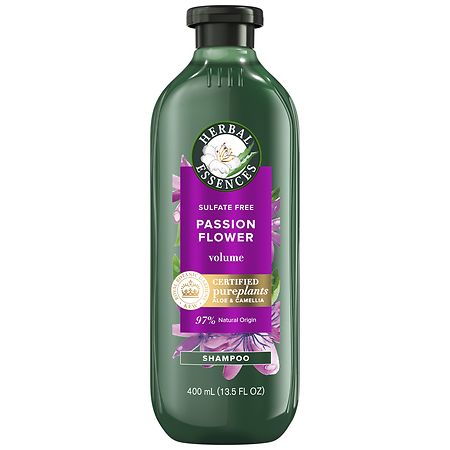
Herbal Essences Passion Flower & Grapefruit Sulfate Free Volumizing Shampoo - 13.5 fl oz
Analysis updated August 2026 · How Scout scores
At a glance
Summary
This shampoo features a range of gentle, coconut-derived surfactants and beneficial ingredients like Camellia Oleifera Seed Oil and Aloe Vera, which are known for their moisturizing and soothing properties. However, the presence of synthetic fragrance, which can cause irritation or allergic reactions, slightly detracts from its overall ingredient safety. The product is processed, which also impacts its score, but it remains a mostly clean option for hair care.
Key ingredients 16
Sodium Cocoyl IsethionateVery Good
Sodium Cocoyl Isethionate is a gentle surfactant derived from coconut oil. It is known for its mildness and ability to cleanse without stripping natural oils. This makes it suitable for sensitive skin and hair.
Risks
There are minimal risks, though some individuals may experience mild irritation.
Benefits
It provides a rich lather and cleanses effectively while maintaining moisture.
Camellia Oleifera Seed OilVery Good
Camellia Oleifera Seed Oil is rich in antioxidants and fatty acids, making it beneficial for hair health. It is known for its moisturizing and conditioning properties. This oil helps to nourish and protect the hair from damage.
Risks
There are minimal risks, though it may cause greasiness if used in excess.
Benefits
It deeply conditions and adds shine to the hair.
Lauramidopropyl BetaineGood
Lauramidopropyl Betaine is a mild surfactant that helps to create foam and improve the texture of the shampoo. It is derived from coconut oil and is considered gentle on the skin and hair. It enhances the cleansing properties of the shampoo without causing dryness.
Risks
In rare cases, it may cause mild irritation to sensitive individuals.
Benefits
It helps to condition the hair and improve the feel of the product.
Aloe Barbadensis Leaf JuiceGood
Aloe Barbadensis Leaf Juice is known for its hydrating and soothing properties. It is commonly used in hair care products to provide moisture and reduce scalp irritation. Aloe vera helps to maintain healthy hair and scalp.
Risks
There are minimal risks, though some may experience mild irritation.
Benefits
It hydrates the hair and soothes the scalp.
WaterNeutral
Water is a common solvent used in many personal care products. It acts as a base for other ingredients to dissolve and mix. It does not have any direct benefits or risks associated with its use in shampoos.
Risks
There are no known risks associated with water in this context.
Benefits
Water helps to dissolve and distribute other ingredients evenly.
Cocamidopropyl BetaineNeutral
Standard formulation ingredient — neither beneficial nor harmful at typical use.
Risks
Some individuals may experience allergic reactions or irritation.
Benefits
It provides a creamy lather and helps to condition the hair.
Passiflora Incarnata ExtractNeutral
Passiflora Incarnata Extract is derived from the passion flower and is used for its soothing properties. It is often included in personal care products for its potential calming effects. However, its direct impact in shampoos is not well-documented.
Risks
There are no significant risks associated with this extract in shampoos.
Benefits
It may provide a soothing effect on the scalp.
HistidineNeutral
Histidine is an amino acid that can help to protect hair from damage. It is sometimes used in hair care products for its potential antioxidant properties. However, its specific benefits in shampoos are not well-established.
Risks
There are no significant risks associated with histidine in shampoos.
Benefits
It may help to protect hair from oxidative stress.
Polyquaternium-10Neutral
Polyquaternium-10 is a conditioning agent that helps to improve the texture and manageability of hair. It is used in shampoos to reduce static and enhance smoothness. While beneficial for hair feel, it does not have significant health impacts.
Risks
There are minimal risks, though buildup can occur with excessive use.
Benefits
It improves hair texture and reduces static.
Sodium SalicylateNeutral
Sodium Salicylate is a salt of salicylic acid, often used for its preservative properties. It can also help to exfoliate the scalp and reduce dandruff. However, its concentration in shampoos is typically low, limiting its effects.
Risks
In high concentrations, it may cause irritation or dryness.
Benefits
It may help to maintain a healthy scalp by reducing dandruff.
Sodium CitrateNeutral
Sodium Citrate is used as a buffering agent to maintain the pH balance of cosmetic products. It helps to stabilize the formula and enhance the effectiveness of other ingredients. Its role is primarily functional rather than therapeutic.
Risks
There are no significant risks associated with sodium citrate in shampoos.
Benefits
It helps to maintain the stability and effectiveness of the product.
Citric AcidNeutral
Citric Acid is used to adjust the pH of cosmetic products, ensuring they are not too alkaline. It can also act as a mild exfoliant, helping to remove dead skin cells. Its primary function in shampoos is to maintain pH balance.
Risks
In high concentrations, it may cause irritation or dryness.
Benefits
It helps to maintain the pH balance and improve product stability.
Tetrasodium EDTANeutral
Tetrasodium EDTA is a chelating agent used to bind metal ions, preventing them from affecting the stability and appearance of cosmetic products. It enhances the effectiveness of preservatives. Its role is primarily to improve product stability.
Risks
There are minimal risks, though it may cause irritation in sensitive individuals.
Benefits
It helps to maintain product stability and effectiveness.
Sodium Lauroyl SarcosinateBad
Processed additive flagged under Scout's ingredient doctrine.
Risks
There is a low risk of irritation, primarily in sensitive individuals.
Benefits
It enhances the cleansing ability of the shampoo while being gentle.
Sodium BenzoateBad
Synthetic preservative that can form benzene in the presence of vitamin C.
Risks
In high concentrations, it may cause skin irritation.
Benefits
It helps to maintain product freshness and safety.
FragranceVery Bad
Fragrance in personal care products can be a mixture of various chemicals, some of which may cause irritation or allergic reactions. It is often criticized for its potential to cause skin sensitivity. The exact composition is usually not disclosed, leading to concerns about safety.
Risks
Fragrance can cause allergic reactions and skin irritation in sensitive individuals.
Benefits
It provides a pleasant scent to the product.
Get the full breakdown in the Scout appTake Scout shopping
Scan any product to see lab results, healthy alternatives, and your personalized analysis.
Download on theApp Store GET IT ONGoogle PlayAmazon pricing & content
Amazon price as of . Product prices and availability are accurate as of the date/time indicated and are subject to change. Any price and availability information displayed on Amazon.com at the time of purchase will apply to the purchase of this product.
CERTAIN CONTENT THAT APPEARS ON THIS SITE COMES FROM AMAZON. THIS CONTENT IS PROVIDED “AS IS” AND IS SUBJECT TO CHANGE OR REMOVAL AT ANY TIME.