
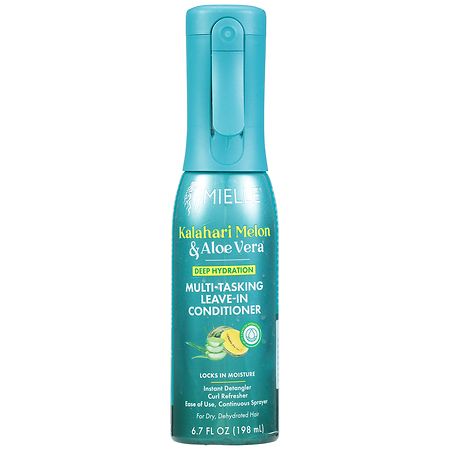

Mielle Organics Kalahari Melon & Aloe Vera Deep Hydration Multi-Tasking Leave-In Conditioner - 6.7 fl oz: Cream, Daily Use
Analysis updated July 2026 · How Scout scores
At a glance
Summary
This leave-in conditioner features beneficial ingredients like aloe vera, panthenol, and coconut water, which are known for their hydrating and nourishing properties. It avoids harsh sulfates and silicones, but includes phenoxyethanol and fragrance, which can be concerning for sensitive scalps. The product is moderately processed, which slightly impacts its overall rating, but the presence of natural oils and extracts contributes positively to its score.
Key ingredients 23
GlycerinGood
Glycerin is a humectant that attracts moisture to the hair and skin. It helps to maintain hydration and prevent dryness. It is widely used for its moisturizing properties.
Risks
Overuse can lead to a sticky feeling on the hair.
Benefits
Glycerin helps to keep hair hydrated and soft.
Behentrimonium ChlorideGood
Behentrimonium Chloride is a conditioning agent that helps to detangle hair and reduce static. It is effective in improving hair manageability. It is considered safe for use in hair care products.
Risks
In rare cases, it may cause mild irritation.
Benefits
It enhances hair smoothness and manageability.
Aloe Barbadensis Leaf JuiceGood
Aloe Vera is known for its soothing and hydrating properties. It helps to moisturize the hair and scalp, reducing dryness and irritation. It is a natural ingredient with a long history of safe use.
Risks
There are minimal risks associated with Aloe Vera.
Benefits
Aloe Vera provides hydration and soothes the scalp.
SqualaneGood
Squalane is a lightweight emollient that mimics the skin's natural oils. It helps to moisturize and protect the hair without leaving a greasy residue. It is considered safe and beneficial for hair care.
Risks
There are minimal risks associated with squalane.
Benefits
It provides lightweight hydration and protection for the hair.
PanthenolGood
Panthenol, also known as provitamin B5, is a moisturizing agent that improves hair elasticity and strength. It helps to retain moisture and adds shine to the hair. It is widely used for its conditioning benefits.
Risks
There are minimal risks associated with panthenol.
Benefits
Enhances hair moisture, elasticity, and shine.
Citrullus Lanatus (Watermelon) Seed OilGood
Watermelon Seed Oil is rich in essential fatty acids and antioxidants. It helps to moisturize and nourish the hair, promoting healthy growth. It is a natural ingredient with beneficial properties.
Risks
There are minimal risks associated with watermelon seed oil.
Benefits
Provides nourishment and hydration to the hair.
Glycereth-2 CocoateGood
Glycereth-2 Cocoate is an emollient derived from coconut oil. It helps to moisturize and condition the hair, improving texture and softness. It is considered safe and beneficial for hair care.
Risks
There are minimal risks associated with glycereth-2 cocoate.
Benefits
Provides conditioning and moisturizing benefits to the hair.
Linum Usitatissimum (Linseed) Seed OilGood
Linseed Oil is rich in omega-3 fatty acids and antioxidants. It helps to nourish and strengthen the hair, promoting healthy growth. It is a natural ingredient with beneficial properties.
Risks
There are minimal risks associated with linseed oil.
Benefits
Provides nourishment and strengthens the hair.
Hyaluronic AcidGood
Hyaluronic Acid is a powerful humectant that attracts and retains moisture. It helps to hydrate the hair and scalp, reducing dryness and improving texture. It is widely used for its moisturizing benefits.
Risks
There are minimal risks associated with hyaluronic acid.
Benefits
Provides intense hydration and improves hair texture.
HoneyGood
Honey is a natural humectant that attracts moisture to the hair. It helps to condition and soften the hair, improving manageability. It is a natural ingredient with a long history of safe use.
Risks
There are minimal risks associated with honey.
Benefits
Conditions and softens the hair, enhancing manageability.
Cocos Nucifera (Coconut) Liquid EndospermGood
Coconut Liquid Endosperm is rich in nutrients and provides hydration to the hair. It helps to nourish and strengthen the hair, promoting healthy growth. It is a natural ingredient with beneficial properties.
Risks
There are minimal risks associated with coconut liquid endosperm.
Benefits
Nourishes and strengthens the hair, providing hydration.
Leuconostoc/Radish Root Ferment Lysate FiltrateGood
This ingredient is a natural preservative derived from radish root. It helps to prevent microbial growth and maintain product stability. It is considered safe and effective as a natural preservative.
Risks
There are minimal risks associated with this natural preservative.
Benefits
Provides natural preservation and maintains product stability.
Althaea Officinalis Root ExtractGood
Marshmallow Root Extract is known for its soothing and hydrating properties. It helps to condition the hair and scalp, reducing dryness and irritation. It is a natural ingredient with beneficial properties.
Risks
There are minimal risks associated with marshmallow root extract.
Benefits
Conditions and soothes the hair and scalp.
Ulmus Fulva Bark ExtractGood
Slippery Elm Bark Extract is known for its soothing and conditioning properties. It helps to improve hair texture and manageability, reducing frizz. It is a natural ingredient with beneficial properties.
Risks
There are minimal risks associated with slippery elm bark extract.
Benefits
Improves hair texture and reduces frizz.
Coconut WaterGood
Coconut Water is rich in nutrients and provides hydration to the hair. It helps to nourish and strengthen the hair, promoting healthy growth. It is a natural ingredient with beneficial properties.
Risks
There are minimal risks associated with coconut water.
Benefits
Nourishes and strengthens the hair, providing hydration.
WaterNeutral
Water is a universal solvent and is used as a base in many cosmetic formulations. It helps to dissolve other ingredients and provides hydration. It is generally considered safe and non-irritating.
Risks
There are no significant risks associated with water in cosmetic formulations.
Benefits
Water provides hydration and helps in the even distribution of other ingredients.
Cetearyl AlcoholNeutral
Cetearyl Alcohol is a fatty alcohol used as an emollient and thickener in cosmetic products. It helps to soften and smooth the hair, improving texture. It is considered safe and beneficial for hair conditioning.
Risks
There are minimal risks, though some individuals may experience mild irritation.
Benefits
It provides conditioning benefits and improves the texture of hair.
Benzoic AcidNeutral
Benzoic Acid is used as a preservative in cosmetic products to prevent microbial growth. It is effective in maintaining product stability. It is generally considered safe in low concentrations.
Risks
May cause irritation in sensitive individuals.
Benefits
Helps to preserve the product and prevent spoilage.
EthylhexylglycerinNeutral
Ethylhexylglycerin is used as a skin conditioning agent and preservative enhancer. It helps to improve the efficacy of preservatives and maintain product stability. It is generally considered safe for use in cosmetics.
Risks
May cause mild irritation in sensitive individuals.
Benefits
Enhances the effectiveness of preservatives and conditions the skin.
PhenoxyethanolBad
Phenoxyethanol is a preservative used to prevent microbial growth in cosmetic products. While effective, it can cause irritation in some individuals. It is generally considered safe in low concentrations.
Risks
Potential skin irritation and allergic reactions in sensitive individuals.
Benefits
It helps to preserve the product and extend its shelf life.
Cetrimonium ChlorideBad
Cetrimonium Chloride is a conditioning agent that helps to reduce static and improve hair manageability. It is effective in detangling and smoothing the hair. It is considered safe for use in hair care products.
Risks
In rare cases, it may cause mild irritation.
Benefits
Improves hair smoothness and reduces static.
Aminomethyl PropanolBad
Processed additive flagged under Scout's ingredient doctrine.
Risks
May cause irritation if used in high concentrations.
Benefits
Helps to stabilize the product's pH level.
FragranceVery Bad
Fragrance is used to impart a pleasant scent to cosmetic products. However, it can be a source of allergens and irritants. It is often criticized for its potential to cause skin sensitivity.
Risks
May cause allergic reactions or irritation in sensitive individuals.
Benefits
Provides a pleasant scent to the product.
Get the full breakdown in the Scout appTake Scout shopping
Scan any product to see lab results, healthy alternatives, and your personalized analysis.
Download on theApp Store GET IT ONGoogle PlayAmazon pricing & content
Amazon price as of . Product prices and availability are accurate as of the date/time indicated and are subject to change. Any price and availability information displayed on Amazon.com at the time of purchase will apply to the purchase of this product.
CERTAIN CONTENT THAT APPEARS ON THIS SITE COMES FROM AMAZON. THIS CONTENT IS PROVIDED “AS IS” AND IS SUBJECT TO CHANGE OR REMOVAL AT ANY TIME.