
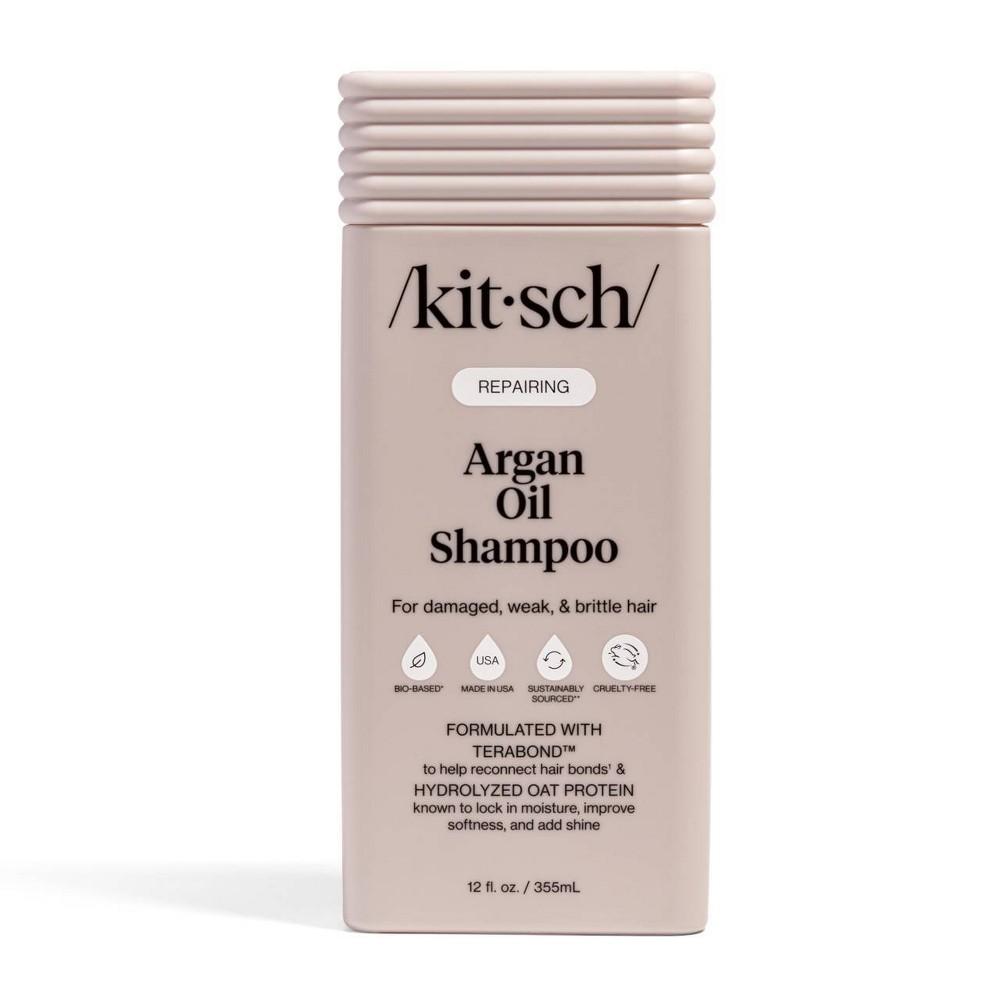
Kitsch Repairing Argan Oil Shampoo - 12 fl oz: Damage Repair, Paraben-Free, Fine and Dry Hair, Liquid Form
Analysis updated August 2026 · How Scout scores
At a glance
Summary
This shampoo contains beneficial ingredients like sodium cocoyl isethionate, argan oil, and hydrolyzed oat protein, which are known for their gentle cleansing and moisturizing properties. However, the presence of sodium chloride, synthetic fragrance, and benzyl alcohol, which can be drying or irritating, slightly detracts from its overall safety and effectiveness. The product is processed, which also impacts its rating, but it remains a mostly clean option for hair care.
Key ingredients 33
Sodium Cocoyl IsethionateVery Good
Sodium Cocoyl Isethionate is a gentle surfactant derived from coconut oil. It is known for its mildness and ability to cleanse without stripping natural oils. It is highly regarded in hair care for its gentle nature.
Risks
Generally considered safe with minimal risks.
Benefits
Provides gentle cleansing, maintaining hair's natural moisture balance.
Coco-GlucosideVery Good
Coco-Glucoside is a mild, non-ionic surfactant derived from coconut oil and glucose. It is known for its gentle cleansing properties and is suitable for sensitive skin. It is highly regarded for its mildness and biodegradability.
Risks
Generally considered safe with minimal risks.
Benefits
Provides gentle cleansing, suitable for sensitive scalps.
Argania Spinosa (Argan) Kernel OilVery Good
Argan Oil is renowned for its moisturizing and nourishing properties. It helps to condition the hair, adding shine and reducing frizz. It is highly beneficial for dry and damaged hair.
Risks
Generally considered safe with minimal risks.
Benefits
Deeply conditions hair, enhancing shine and softness.
GlycerinGood
Glycerin is a humectant that attracts moisture to the hair. It helps to keep hair hydrated and prevent dryness. It is beneficial for maintaining hair's moisture balance.
Risks
Overuse can lead to a sticky feeling on hair.
Benefits
Enhances moisture retention, keeping hair hydrated and soft.
Hydrolyzed Oat ProteinGood
Hydrolyzed Oat Protein is known for its strengthening and moisturizing properties. It helps to improve hair elasticity and reduce breakage. It is beneficial for enhancing hair strength and resilience.
Risks
Generally considered safe with minimal risks.
Benefits
Strengthens hair and improves moisture retention.
Helianthus Annuus (Sunflower) Seed OilGood
Sunflower Seed Oil is rich in essential fatty acids and vitamin E. It helps to nourish and moisturize the hair, improving its overall health. It is beneficial for maintaining hair's moisture balance.
Risks
Generally considered safe with minimal risks.
Benefits
Nourishes and moisturizes hair, enhancing its health.
GluconolactoneGood
Beneficial ingredient — whole-food or functional value in this product class.
Risks
Generally considered safe with minimal risks.
Benefits
Enhances hair manageability and provides antioxidant benefits.
Water/Aqua/EauNeutral
Water is the primary solvent in most shampoos, providing a base for other ingredients. It helps to dissolve and distribute the active components evenly. It is generally considered neutral as it does not directly affect hair health.
Risks
There are no direct risks associated with water in hair care products.
Benefits
Water aids in the application and rinsing of the product, ensuring even distribution.
Sodium C14-16 Olefin SulfonateNeutral
Sodium C14-16 Olefin Sulfonate is a surfactant used for its cleansing properties. It helps to remove dirt and oil from the hair. While effective, it can be drying for some hair types.
Risks
May cause dryness or irritation for sensitive scalps.
Benefits
Provides effective cleansing, removing excess oils and impurities.
Cocamidopropyl BetaineNeutral
Cocamidopropyl Betaine is a mild surfactant derived from coconut oil. It helps to create a rich lather and improve the cleansing ability of the shampoo. It is generally well-tolerated by most hair types.
Risks
Can cause irritation in some individuals with sensitive skin.
Benefits
Enhances foam and cleansing without being overly harsh.
Cocamide MIPANeutral
Cocamide MIPA is used as a foam booster and thickener in shampoos. It helps to stabilize the formula and improve texture. It is considered neutral as it does not directly impact hair health.
Risks
May cause irritation in sensitive individuals.
Benefits
Improves product texture and lather quality.
PropanediolNeutral
Propanediol is used as a solvent and skin-conditioning agent. It helps to improve the texture and feel of the product. It is generally considered neutral in terms of hair health.
Risks
Rarely, it may cause irritation in sensitive individuals.
Benefits
Improves product texture and enhances ingredient penetration.
Glycol DistearateNeutral
Glycol Distearate is used as an opacifying agent and to add pearlescence to shampoos. It helps to improve the visual appeal of the product. It does not have a direct impact on hair health.
Benefits
Enhances the aesthetic appeal of the product.
Sodium ChlorideNeutral
Standard formulation ingredient — neither beneficial nor harmful at typical use.
Risks
Can cause dryness and irritation, especially for sensitive scalps.
Benefits
Helps to thicken the product, improving its consistency.
Sodium Methyl Cocoyl TaurateNeutral
Sodium Methyl Cocoyl Taurate is a mild surfactant derived from coconut oil. It helps to cleanse the hair without stripping natural oils. It is considered neutral as it is gentle but not particularly beneficial.
Risks
Generally safe, but may cause irritation in very sensitive individuals.
Benefits
Provides mild cleansing, maintaining hair's natural moisture.
Polyquaternium-7Neutral
Polyquaternium-7 is a conditioning agent that helps to improve hair texture and manageability. It forms a thin film on the hair, reducing static and frizz. It is considered neutral as it does not have significant positive or negative effects.
Risks
May cause buildup with prolonged use.
Benefits
Improves hair manageability and reduces static.
Hydrogenated Ethylhexyl OlivateNeutral
Hydrogenated Ethylhexyl Olivate is used as an emollient and conditioning agent. It helps to improve the texture and feel of the hair. It is considered neutral as it does not have significant positive or negative effects.
Risks
Generally considered safe with minimal risks.
Benefits
Improves hair texture and adds softness.
Aspergillus FermentNeutral
Aspergillus Ferment is used for its conditioning properties. It helps to improve the overall feel and manageability of the hair. It is considered neutral as it does not have significant positive or negative effects.
Risks
Generally considered safe with minimal risks.
Benefits
Enhances hair manageability and texture.
Hydrogenated Olive Oil UnsaponifiablesNeutral
Hydrogenated Olive Oil Unsaponifiables are used as emollients and conditioning agents. They help to improve the texture and feel of the hair. They are considered neutral as they do not have significant positive or negative effects.
Risks
Generally considered safe with minimal risks.
Benefits
Improves hair texture and adds softness.
ArginineNeutral
Arginine is an amino acid that can help to strengthen hair. It is believed to improve blood circulation to the scalp, promoting healthier hair growth. It is considered neutral as its effects are not strongly pronounced.
Risks
Generally considered safe with minimal risks.
Benefits
May support hair strength and scalp health.
Guar Hydroxypropyltrimonium ChlorideNeutral
Guar Hydroxypropyltrimonium Chloride is a conditioning agent that helps to improve hair texture and manageability. It reduces static and frizz, enhancing the overall feel of the hair. It is considered neutral as it does not have significant positive or negative effects.
Risks
May cause buildup with prolonged use.
Benefits
Improves hair manageability and reduces static.
HydroxyethylcelluloseNeutral
Hydroxyethylcellulose is used as a thickening agent in shampoos. It helps to improve the texture and consistency of the product. It is considered neutral as it does not have significant positive or negative effects.
Risks
Generally considered safe with minimal risks.
Benefits
Enhances product texture and consistency.
Citric AcidNeutral
Citric Acid is used to adjust the pH of cosmetic products. It helps to maintain the stability and effectiveness of the formula. It is considered neutral as it does not have significant positive or negative effects.
Risks
May cause irritation in sensitive individuals.
Benefits
Helps to maintain product stability and effectiveness.
Sodium SulfateNeutral
Sodium Sulfate is used as a filler and thickener in shampoos. It helps to improve the texture and consistency of the product. It is considered neutral as it does not have significant positive or negative effects.
Risks
Generally considered safe with minimal risks.
Benefits
Enhances product texture and consistency.
Citrus Limon Peel OilNeutral
Citrus Limon Peel Oil is used for its fragrance and potential antimicrobial properties. It adds a fresh scent to the product. It is considered neutral as its effects on hair health are minimal.
Risks
May cause irritation in sensitive individuals.
Benefits
Provides a fresh scent and potential antimicrobial benefits.
Cetrimonium ChlorideBad
Processed additive flagged under Scout's ingredient doctrine.
Risks
May cause buildup with prolonged use.
Benefits
Improves hair manageability and reduces static.
PhenoxyethanolBad
Processed additive flagged under Scout's ingredient doctrine.
Risks
May cause irritation in sensitive individuals.
Benefits
Prevents microbial growth, ensuring product safety.
Benzyl AlcoholBad
Benzyl Alcohol is used as a preservative and solvent in cosmetic products. It can be drying and irritating to the skin and scalp. It is generally considered negative due to its potential to cause dryness.
Risks
Can cause dryness and irritation, especially for sensitive scalps.
Benefits
Acts as a preservative, extending product shelf life.
Potassium SorbateBad
Synthetic preservative — flagged in daily-use products.
Risks
May cause irritation in sensitive individuals.
Benefits
Prevents microbial growth, ensuring product safety.
Sodium BenzoateBad
Synthetic preservative that can form benzene in the presence of vitamin C.
Risks
May cause irritation in sensitive individuals.
Benefits
Prevents microbial growth, ensuring product safety.
LimoneneBad
Processed additive flagged under Scout's ingredient doctrine.
Risks
May cause irritation in sensitive individuals.
Benefits
Provides a pleasant citrus scent to the product.
VanillinBad
Processed additive flagged under Scout's ingredient doctrine.
Risks
Generally considered safe with minimal risks.
Benefits
Provides a pleasant vanilla scent to the product.
Fragrance (Parfum)Very Bad
Fragrance is used to impart a pleasant scent to the product. However, synthetic fragrances can cause irritation and allergic reactions in sensitive individuals. It is generally considered negative due to potential skin sensitivities.
Risks
Can cause irritation and allergic reactions in sensitive individuals.
Benefits
Provides a pleasant scent to the product.
Get the full breakdown in the Scout appTake Scout shopping
Scan any product to see lab results, healthy alternatives, and your personalized analysis.
Download on theApp Store GET IT ONGoogle PlayAmazon pricing & content
Amazon price as of . Product prices and availability are accurate as of the date/time indicated and are subject to change. Any price and availability information displayed on Amazon.com at the time of purchase will apply to the purchase of this product.
CERTAIN CONTENT THAT APPEARS ON THIS SITE COMES FROM AMAZON. THIS CONTENT IS PROVIDED “AS IS” AND IS SUBJECT TO CHANGE OR REMOVAL AT ANY TIME.