
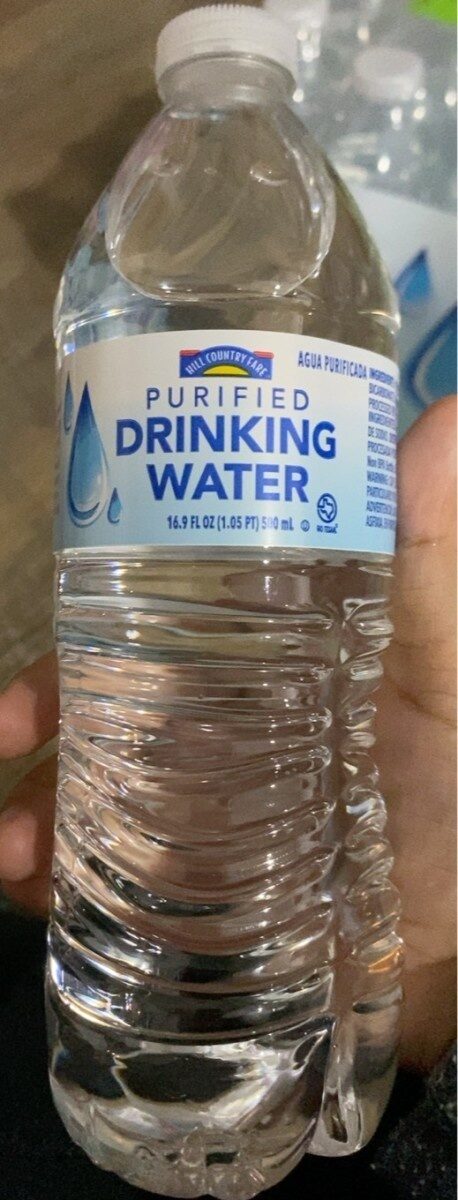


Hill Country Fare Purified drinking water
Analysis updated July 2026 · How Scout scores
At a glance
Summary
This purified drinking water includes added minerals like calcium chloride and sodium bicarbonate, which enhance taste and provide essential electrolytes. However, the use of municipal water as a source can lead to a penalty due to potential contaminants and the need for extensive purification. The product's transparency and lack of harmful substances contribute positively to its score.
Key ingredients 3
Purified waterNeutral
Standard formulation ingredient — neither beneficial nor harmful at typical use.
Benefits
Provides essential hydration and supports overall health by being free from contaminants.
Calcium chlorideNeutral
Standard formulation ingredient — neither beneficial nor harmful at typical use.
Risks
Excessive intake may lead to hypercalcemia, but this is unlikely from water consumption alone.
Benefits
Contributes to bone health and provides essential electrolytes, enhancing the nutritional profile of the water.
Sodium bicarbonateNeutral
Standard formulation ingredient — neither beneficial nor harmful at typical use.
Benefits
Helps maintain pH balance and improves taste, contributing to a more pleasant drinking experience.
Processing
Unprocessed or Minimally Processed Foods
Get the full breakdown in the Scout appTake Scout shopping
Scan any product to see lab results, healthy alternatives, and your personalized analysis.
Download on theApp Store GET IT ONGoogle Play