
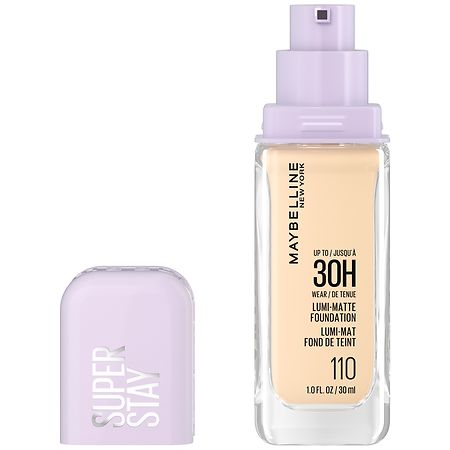

Maybelline Super Stay Up to 30HR Wear Lumi-Matte Liquid Foundation - 110 - 1 fl oz: Noncomedogenic, Vegan, Buildable Coverage
Summary
This foundation contains a mix of safe and concerning ingredients. While it includes beneficial components like niacinamide and tocopherol, it also contains synthetic fragrance, which can be irritating and is often associated with allergenic reactions. The presence of alcohol denat. and synthetic polymers contributes to a higher processing level, which impacts the overall safety and naturalness of the product.
At a glance
Key ingredients 40
Aqua / WaterNeutral
Water is a common solvent used in cosmetics to dissolve other ingredients. It helps in the application and absorption of the product. It does not have any direct benefits or risks.
Benefits
Provides a base for the formulation and aids in consistency.
DimethiconeNeutral
Dimethicone is a silicone-based polymer used to provide a smooth application and improve the texture of the product. It forms a barrier on the skin that can help retain moisture. It is generally considered safe for use in cosmetics.
Risks
May cause breakouts in some individuals with sensitive skin.
Benefits
Improves product spreadability and provides a silky feel.
IsododecaneNeutral
Isododecane is a hydrocarbon used to enhance the spreadability of the product and provide a lightweight feel. It evaporates quickly, leaving a non-greasy finish. It is generally safe for use in cosmetics.
Risks
Can cause irritation if it comes into contact with the eyes.
Benefits
Provides a lightweight, non-greasy finish.
Alcohol Denat.Bad
Denatured alcohol is used as a solvent and to help the product dry quickly. However, it can be drying and irritating to the skin, especially with prolonged use. It is often used in small amounts to minimize these effects.
Risks
Can cause skin dryness and irritation.
Benefits
Helps the product dry quickly and enhances absorption.
TrimethylsiloxysilicateNeutral
Trimethylsiloxysilicate is a silicone resin that provides water resistance and long-lasting wear. It forms a flexible film on the skin. It is generally considered safe for use in cosmetics.
Risks
May cause skin irritation in sensitive individuals.
Benefits
Enhances product longevity and water resistance.
Butylene GlycolNeutral
Butylene Glycol is a common humectant used to retain moisture in the skin. It also helps improve the texture and spreadability of the product. It is generally considered safe for use in cosmetics.
Risks
May cause irritation in very sensitive skin.
Benefits
Helps retain moisture and improves product texture.
PEG-10 DimethiconeNeutral
PEG-10 Dimethicone is a silicone-based polymer used to improve the spreadability and texture of the product. It provides a smooth, silky feel. It is generally considered safe for use in cosmetics.
Risks
Potential for skin irritation in sensitive individuals.
Benefits
Improves product texture and spreadability.
PerliteNeutral
Perlite is a natural mineral used for its absorbent properties to control shine and oil. It provides a matte finish to the skin. It is generally considered safe for use in cosmetics.
Risks
May cause mild irritation if inhaled.
Benefits
Controls oil and provides a matte finish.
Synthetic FluorphlogopiteNeutral
Synthetic Fluorphlogopite is a synthetic mica used to add shimmer and improve the texture of the product. It is a safer alternative to natural mica. It is generally considered safe for use in cosmetics.
Risks
Minimal risk of skin irritation.
Benefits
Adds shimmer and improves product texture.
Nylon-12Neutral
Nylon-12 is a synthetic polymer used to improve the texture and feel of the product. It provides a soft, smooth finish. It is generally considered safe for use in cosmetics.
Risks
Minimal risk of skin irritation.
Benefits
Improves texture and provides a smooth finish.
Isopropyl Lauroyl SarcosinateNeutral
Isopropyl Lauroyl Sarcosinate is an emollient and surfactant that helps improve the spreadability of the product. It provides a silky feel to the skin. It is generally considered safe for use in cosmetics.
Risks
May cause mild irritation in sensitive skin.
Benefits
Improves spreadability and provides a silky feel.
Diisopropyl SebacateNeutral
Diisopropyl Sebacate is an emollient used to improve the texture and spreadability of the product. It provides a lightweight, non-greasy feel. It is generally considered safe for use in cosmetics.
Risks
Minimal risk of skin irritation.
Benefits
Improves texture and provides a lightweight feel.
HDI/Trimethylol Hexyllactone CrosspolymerNeutral
This ingredient is a film-forming agent that provides a long-lasting effect and enhances the texture of the product. It is used to improve the wear time of cosmetics. It is generally considered safe for use in cosmetics.
Risks
Minimal risk of skin irritation.
Benefits
Enhances product longevity and texture.
Bis-PEG/PPG-14/14 DimethiconeNeutral
Bis-PEG/PPG-14/14 Dimethicone is a silicone-based polymer used to improve the spreadability and texture of the product. It provides a smooth, silky feel. It is generally considered safe for use in cosmetics.
Risks
Potential for skin irritation in sensitive individuals.
Benefits
Improves product texture and spreadability.
Disteardimonium HectoriteNeutral
Disteardimonium Hectorite is a thickening agent used to stabilize emulsions and improve the texture of the product. It helps maintain the consistency of the formulation. It is generally considered safe for use in cosmetics.
Risks
Minimal risk of skin irritation.
Benefits
Stabilizes emulsions and improves texture.
Magnesium SulfateNeutral
Magnesium Sulfate is used as a thickening agent and to improve the texture of the product. It helps maintain the consistency of the formulation. It is generally considered safe for use in cosmetics.
Risks
Minimal risk of skin irritation.
Benefits
Improves texture and maintains consistency.
PhenoxyethanolNeutral
Phenoxyethanol is a preservative used to prevent microbial growth and extend the shelf life of the product. It is a common alternative to parabens. It is generally considered safe for use in cosmetics at low concentrations.
Risks
May cause irritation in sensitive skin.
Benefits
Prevents microbial growth and extends shelf life.
Disodium Stearoyl GlutamateNeutral
Disodium Stearoyl Glutamate is an emulsifier used to stabilize formulations and improve texture. It helps maintain the consistency of the product. It is generally considered safe for use in cosmetics.
Risks
Minimal risk of skin irritation.
Benefits
Stabilizes formulations and improves texture.
Silica SilylateNeutral
Silica Silylate is used to provide a matte finish and improve the texture of the product. It helps control oil and shine. It is generally considered safe for use in cosmetics.
Risks
Minimal risk of skin irritation.
Benefits
Controls oil and provides a matte finish.
SilicaNeutral
Silica is used to provide a matte finish and improve the texture of the product. It helps control oil and shine. It is generally considered safe for use in cosmetics.
Risks
Minimal risk of skin irritation.
Benefits
Controls oil and provides a matte finish.
Dipentaerythrityl Tetrahydroxystearate/TetraisostearateNeutral
This ingredient is used as an emollient and thickening agent to improve the texture of the product. It provides a smooth, creamy feel. It is generally considered safe for use in cosmetics.
Risks
Minimal risk of skin irritation.
Benefits
Improves texture and provides a creamy feel.
Hydrolyzed Soy ProteinNeutral
Hydrolyzed Soy Protein is used to condition and strengthen the skin. It provides moisturizing benefits and improves skin texture. It is generally considered safe for use in cosmetics.
Risks
May cause allergic reactions in individuals sensitive to soy.
Benefits
Conditions and strengthens the skin.
ProlineNeutral
Proline is an amino acid used to condition the skin and improve texture. It provides moisturizing benefits. It is generally considered safe for use in cosmetics.
Risks
Minimal risk of skin irritation.
Benefits
Conditions the skin and provides moisture.
PEG/PPG/Polybutylene Glycol-8/5/3 GlycerinNeutral
This ingredient is used as a humectant to retain moisture in the skin. It helps improve the texture and spreadability of the product. It is generally considered safe for use in cosmetics.
Risks
Minimal risk of skin irritation.
Benefits
Retains moisture and improves texture.
TocopherolVery Good
Tocopherol, also known as Vitamin E, is an antioxidant that helps protect the skin from free radical damage. It provides moisturizing benefits and improves skin texture. It is highly regarded for its skin conditioning properties.
Risks
Minimal risk of skin irritation.
Benefits
Protects skin from free radicals and provides moisture.
NiacinamideVery Good
Niacinamide is a form of Vitamin B3 that helps improve skin texture and tone. It provides anti-inflammatory benefits and helps reduce the appearance of pores. It is highly regarded for its skin conditioning properties.
Risks
Minimal risk of skin irritation.
Benefits
Improves skin texture and reduces inflammation.
GlycerinNeutral
Glycerin is a common humectant used to retain moisture in the skin. It helps improve the texture and spreadability of the product. It is generally considered safe for use in cosmetics.
Risks
Minimal risk of skin irritation.
Benefits
Retains moisture and improves texture.
Aluminum HydroxideNeutral
Aluminum Hydroxide is used as a thickening agent and to improve the texture of the product. It helps maintain the consistency of the formulation. It is generally considered safe for use in cosmetics.
Risks
Minimal risk of skin irritation.
Benefits
Improves texture and maintains consistency.
Glutamic AcidNeutral
Glutamic Acid is an amino acid used to condition the skin and improve texture. It provides moisturizing benefits. It is generally considered safe for use in cosmetics.
Risks
Minimal risk of skin irritation.
Benefits
Conditions the skin and provides moisture.
Tin OxideNeutral
Tin Oxide is used as an opacifying agent and to improve the texture of the product. It helps provide a smooth, even finish. It is generally considered safe for use in cosmetics.
Risks
Minimal risk of skin irritation.
Benefits
Improves texture and provides an even finish.
Pentylene GlycolNeutral
Pentylene Glycol is a humectant used to retain moisture in the skin. It also helps improve the texture and spreadability of the product. It is generally considered safe for use in cosmetics.
Risks
Minimal risk of skin irritation.
Benefits
Retains moisture and improves texture.
Glyceryl Acrylate/Acrylic Acid CopolymerNeutral
This ingredient is used as a film-forming agent to provide a long-lasting effect and improve the texture of the product. It helps maintain the consistency of the formulation. It is generally considered safe for use in cosmetics.
Risks
Minimal risk of skin irritation.
Benefits
Enhances product longevity and texture.
LimoneneNeutral
Limonene is a fragrance component derived from citrus oils. It provides a pleasant scent to the product. It is generally considered safe for use in cosmetics, but can be a potential allergen.
Risks
Potential allergen and may cause skin irritation.
Benefits
Provides a pleasant citrus scent.
LinaloolNeutral
Linalool is a fragrance component derived from essential oils. It provides a pleasant floral scent to the product. It is generally considered safe for use in cosmetics, but can be a potential allergen.
Risks
Potential allergen and may cause skin irritation.
Benefits
Provides a pleasant floral scent.
Parfum / FragranceBad
Fragrance is used to provide a pleasant scent to the product. However, it can be a potential allergen and cause skin irritation, especially in sensitive individuals. It is often criticized for its lack of transparency regarding specific components.
Risks
Potential allergen and may cause skin irritation.
Benefits
Provides a pleasant scent.
CI 77891 / Titanium DioxideNeutral
Titanium Dioxide is used as a pigment and sunscreen agent in cosmetics. It provides opacity and UV protection. It is generally considered safe for use in cosmetics.
Risks
Minimal risk of skin irritation.
Benefits
Provides opacity and UV protection.
CI 77491, CI 77492, CI 77499 / Iron OxidesNeutral
Iron Oxides are used as pigments to provide color to the product. They are stable and non-toxic. They are generally considered safe for use in cosmetics.
Risks
Minimal risk of skin irritation.
Benefits
Provides stable and non-toxic color.
CI 77007 / UltramarinesNeutral
Ultramarines are used as pigments to provide color to the product. They are stable and non-toxic. They are generally considered safe for use in cosmetics.
Risks
Minimal risk of skin irritation.
Benefits
Provides stable and non-toxic color.
MicaNeutral
Mica is used to add shimmer and improve the texture of the product. It provides a luminous finish. It is generally considered safe for use in cosmetics.
Risks
Minimal risk of skin irritation.
Benefits
Adds shimmer and provides a luminous finish.
CI 77288 / Chromium Oxide GreensNeutral
Chromium Oxide Greens are used as pigments to provide color to the product. They are stable and non-toxic. They are generally considered safe for use in cosmetics.
Risks
Minimal risk of skin irritation.
Benefits
Provides stable and non-toxic color.
Processing
Processed Foods
Get the full breakdown in the Scout app
Scan any product to see lab results, healthy alternatives, and your personalized analysis.
Download on theApp Store