
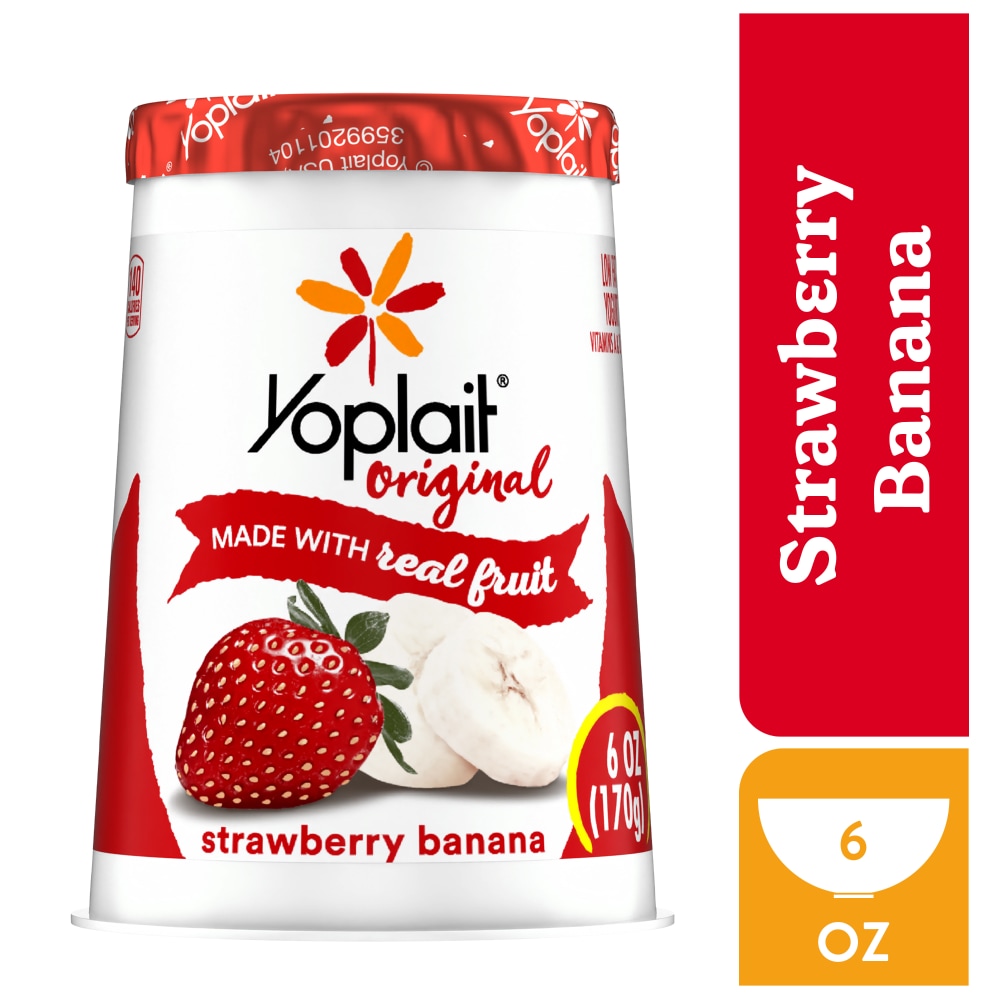


Yoplait Original Strawberry Banana Low Fat Yogurt
Summary
This yogurt contains beneficial ingredients like low-fat milk and live yogurt cultures, which provide essential nutrients and probiotics. However, it is heavily processed with added sugar, natural flavors, and carmine, which detract from its healthfulness. The presence of these additives and its high processing level limit its overall nutritional quality.
At a glance
Key ingredients 11
Pasteurized Grade A Low Fat MilkGood
This is a primary ingredient providing essential nutrients like calcium and protein. Pasteurization ensures safety by eliminating harmful bacteria. Low fat content makes it suitable for those monitoring fat intake.
Benefits
Provides calcium and protein, supporting bone health and muscle maintenance.
SugarBad
Refined sugar is added for sweetness but contributes to high calorie content without nutritional benefits. Excessive consumption can lead to health issues like obesity and diabetes. It is a common ingredient in processed foods, often leading to overconsumption.
Risks
High intake can increase the risk of obesity, type 2 diabetes, and dental cavities.
Modified Corn StarchNeutral
Used as a thickening agent to improve texture and stability of the yogurt. It is derived from corn and undergoes chemical modification. While it is generally safe, it provides no significant nutritional value.
See more about Modified Corn Starch →Kosher GelatinNeutral
Gelatin is used to stabilize and thicken the yogurt, improving its texture. Kosher certification indicates adherence to specific dietary laws. It is derived from animal collagen and is generally considered safe.
Benefits
May provide minor amounts of protein and support joint health.
Citric AcidNeutral
Citric acid is used as a preservative and to add tartness to the yogurt. It is naturally found in citrus fruits and is widely used in food processing. It is generally recognized as safe when used in food products.
Risks
Excessive consumption may cause tooth enamel erosion.
Natural FlavorBad
Natural flavors are added to enhance taste but lack transparency regarding their specific composition. They are highly processed and can contain numerous chemical compounds. This lack of transparency can be concerning for consumers with allergies or sensitivities.
Risks
Potential allergen risk due to undisclosed ingredients.
Potassium SorbateNeutral
Potassium sorbate is a preservative used to extend shelf life by inhibiting mold and yeast growth. It is synthetically produced and widely used in the food industry. Generally recognized as safe, but some individuals may experience allergic reactions.
Risks
May cause allergic reactions in sensitive individuals.
Colored With CarmineBad
Carmine is a natural dye derived from cochineal insects, used to impart color to the yogurt. While natural, it can cause allergic reactions in some individuals. Its use raises ethical concerns for vegetarians and vegans.
Risks
Potential allergen and ethical concerns for certain dietary preferences.
Yogurt CulturesGood
Yogurt cultures like L. bulgaricus and S. thermophilus are essential for fermentation, providing probiotics that support gut health. These live cultures help in digesting lactose and improving gut flora. They are a hallmark of traditional yogurt production.
Benefits
Supports digestive health by providing beneficial probiotics.
Vitamin A AcetateNeutral
Vitamin A acetate is added to fortify the yogurt, providing essential nutrients for vision and immune function. It is a synthetic form of vitamin A, commonly used in food fortification. While beneficial, excessive intake can lead to toxicity.
Risks
Excessive intake can lead to vitamin A toxicity.
Benefits
Supports vision and immune health when consumed in appropriate amounts.
Vitamin D3Neutral
Vitamin D3 is added to enhance the nutritional profile, supporting bone health and calcium absorption. It is a synthetic form of vitamin D, often used in fortified foods. While beneficial, it should be consumed in moderation to avoid toxicity.
Risks
Excessive intake can lead to vitamin D toxicity.
Benefits
Supports bone health and calcium absorption.
Processing
Ultra-Processed Foods
Get the full breakdown in the Scout app
Scan any product to see lab results, healthy alternatives, and your personalized analysis.
Download on theApp Store