
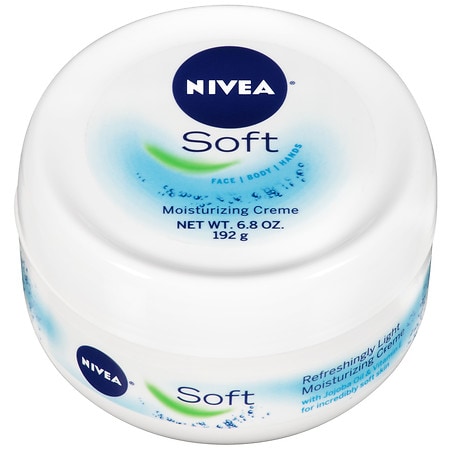

NIVEA Soft Refreshingly Soft Moisturizing Cream for Face Body and Hands Jojoba Oil 6.8 oz
Summary
This moisturizing cream contains beneficial ingredients like jojoba oil, which is known for its skin-nourishing properties. However, the presence of synthetic fragrance results in a deduction due to potential skin irritation and allergenic risks. The product is moderately processed, which also impacts its overall rating, but it lacks the more harmful chemicals found in lower-scoring lotions.
At a glance
Key ingredients 12
Alcohol Denat
Alcohol Denat is used as a solvent and can help other ingredients penetrate the skin. It also acts as a preservative to extend the shelf life of the product. However, it can be drying and irritating to the skin.
Risks
Potential risks include skin dryness and irritation, especially for sensitive skin types.
Benefits
It helps in the quick absorption of the product and acts as an antimicrobial agent.
Arachidic Acid
Arachidic Acid is a fatty acid that acts as an emollient and thickening agent in cosmetics. It helps to improve the texture and spreadability of the product. It is generally considered safe for use in cosmetics.
Risks
There are minimal risks associated with Arachidic Acid, though it may cause mild irritation in very sensitive individuals.
Benefits
It provides moisturizing properties and helps to maintain the skin's barrier function.
Butylene Glycol
Butylene Glycol is a common ingredient used as a solvent and conditioning agent. It helps to improve the texture of the product and enhances the penetration of other ingredients. It is generally considered safe for use in cosmetics.
Risks
Potential risks include skin irritation and allergic reactions in sensitive individuals.
Benefits
It acts as a humectant, drawing moisture into the skin and helping to keep it hydrated.
Carbomer
Carbomer is a thickening agent used to create gel-like textures in cosmetic products. It helps to stabilize emulsions and improve the consistency of the product. It is considered safe for use in cosmetics.
Risks
There are minimal risks, though it may cause mild irritation if used in high concentrations.
Benefits
It provides a smooth texture and helps to evenly distribute the product on the skin.
Dimethicone
Dimethicone is a type of silicone used as an emollient and skin protectant. It forms a barrier on the skin's surface, helping to lock in moisture. It is widely used in cosmetics for its smoothing properties.
Risks
Potential risks include clogging pores and causing breakouts in acne-prone skin.
Benefits
It provides a silky, smooth feel and helps to reduce the appearance of fine lines and wrinkles.
Fragrance
Fragrance is added to cosmetics to provide a pleasant scent. However, it is a common cause of allergic reactions and skin irritation. It is often a mixture of various chemicals, some of which may be harmful.
Risks
Fragrance can cause skin irritation, allergic reactions, and may contain harmful chemicals.
Benefits
It enhances the sensory experience of using the product.
Glycerin
Glycerin is a humectant that attracts moisture to the skin, helping to keep it hydrated. It is a common ingredient in skincare products due to its moisturizing properties. It is considered safe and effective for use in cosmetics.
Risks
There are minimal risks associated with glycerin, though it may cause irritation in very sensitive skin.
Benefits
It helps to maintain skin hydration and improve skin barrier function.
Glyceryl Stearate
Glyceryl Stearate is an emulsifier that helps to blend oil and water-based ingredients. It also acts as a lubricant on the skin's surface, giving it a smooth appearance. It is generally considered safe for use in cosmetics.
Risks
There are minimal risks, though it may cause mild irritation in sensitive individuals.
Benefits
It helps to stabilize formulations and provides a soft, smooth feel to the skin.
Hydrogenated Coco-Glycerides
Hydrogenated Coco-Glycerides are derived from coconut oil and act as emollients and thickeners. They help to improve the texture and moisturizing properties of the product. They are considered safe for use in cosmetics.
Risks
There are minimal risks, though they may cause mild irritation in sensitive individuals.
Benefits
They provide moisturizing benefits and help to improve the skin's texture.
Water
Water is used as a solvent in cosmetics, helping to dissolve other ingredients. It is a key component in many formulations, providing hydration and improving texture. It is considered safe and essential in cosmetic products.
Risks
There are no significant risks associated with water in cosmetics.
Benefits
It provides hydration and helps to improve the texture and spreadability of the product.
Myristyl Alcohol
Myristyl Alcohol is a fatty alcohol used as an emollient and thickening agent. It helps to improve the texture and stability of cosmetic products. It is generally considered safe for use in cosmetics.
Risks
There are minimal risks, though it may cause mild irritation in sensitive individuals.
Benefits
It provides moisturizing properties and helps to improve the texture of the product.
Mineral Oil (Paraffinum Liquidum)
Mineral Oil is a highly refined, lightweight oil used as an emollient and skin protectant. It forms a barrier on the skin's surface, helping to lock in moisture. It is widely used in cosmetics for its moisturizing properties.
Risks
Potential risks include clogging pores and causing breakouts in acne-prone skin.
Benefits
It provides a protective barrier and helps to maintain skin hydration.
Processing
Processed Foods
Get the full breakdown in the Scout app
Scan any product to see lab results, healthy alternatives, and your personalized analysis.
Download on theApp Store