
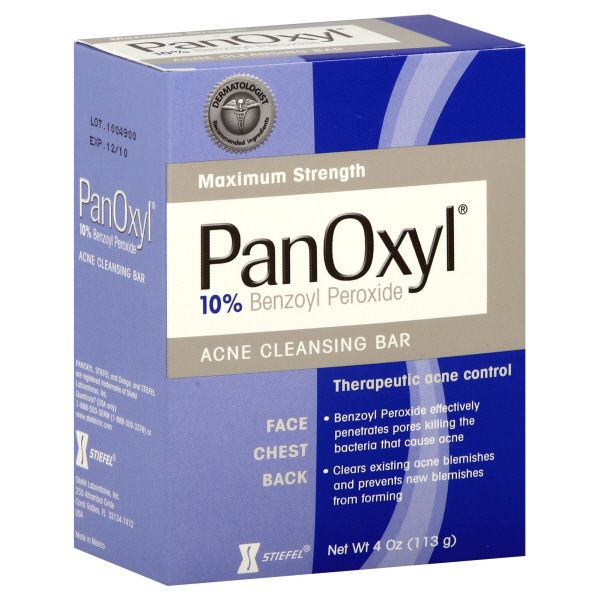

Stiefel Laboratories PanOxyl Acne Cleansing Bar, 4 oz
Summary
This acne cleansing bar contains a mix of beneficial and concerning ingredients. While it may include effective acne-fighting agents, it also contains synthetic chemicals that can be harsh on the skin. The presence of these synthetic ingredients and the processed nature of the product contribute to a moderate score, reflecting a balance between efficacy and potential skin irritation risks.
At a glance
Key ingredients 11
Benzoyl Peroxide
Benzoyl Peroxide is a common acne treatment that works by reducing bacteria and causing the skin to dry and peel. It is effective in treating mild to moderate acne. It is often used in combination with other acne treatments for enhanced effectiveness.
Risks
Potential risks include skin irritation, dryness, and peeling, especially for sensitive skin types.
Benefits
It is beneficial for reducing acne-causing bacteria and helping to clear acne lesions.
Aqua
Aqua, or water, is used as a solvent in cosmetic formulations. It helps dissolve other ingredients and provides a base for the product. It is essential for the consistency and application of the product.
Risks
There are no significant risks associated with water in cosmetic products.
Benefits
Water is beneficial as it hydrates the skin and helps in the application of the product.
Cetearyl Alcohol
Cetearyl Alcohol is a fatty alcohol used as an emollient and thickener in cosmetic products. It helps to soften and smooth the skin. It also stabilizes and thickens formulations.
Risks
It may cause mild irritation in very sensitive skin types.
Benefits
It is beneficial for its moisturizing properties and ability to improve the texture of the product.
Decyl Glucoside
Decyl Glucoside is a mild non-ionic surfactant derived from glucose and coconut oil. It is used for its gentle cleansing properties. It is suitable for sensitive skin and is biodegradable.
Risks
There are minimal risks associated with Decyl Glucoside, making it suitable for sensitive skin.
Benefits
It is beneficial for its gentle cleansing action without stripping the skin's natural oils.
Dextrin
Dextrin is a polysaccharide used as a binding agent in cosmetics. It helps to improve the texture and stability of the product. It is derived from starch and is generally considered safe.
Risks
There are no significant risks associated with dextrin in cosmetic formulations.
Benefits
It is beneficial for its ability to stabilize and improve the texture of cosmetic products.
Cocamidopropyl Betaine
Cocamidopropyl Betaine is a surfactant derived from coconut oil and dimethylaminopropylamine. It is used for its foaming and cleansing properties. It is often used in combination with other surfactants to reduce irritation.
Risks
It may cause skin irritation or allergic reactions in some individuals.
Benefits
It is beneficial for its ability to enhance foam and cleanse the skin effectively.
Corn Starch
Corn Starch is used as an absorbent and thickening agent in cosmetics. It helps to absorb excess oil and moisture. It is derived from corn and is generally considered safe.
Risks
There are minimal risks associated with corn starch in cosmetic formulations.
Benefits
It is beneficial for its oil-absorbing properties and ability to improve product texture.
Glycerin
Glycerin is a humectant that attracts moisture to the skin. It is used to hydrate and improve the skin's barrier function. It is a common ingredient in skincare products due to its moisturizing properties.
Risks
There are minimal risks associated with glycerin, making it suitable for most skin types.
Benefits
It is beneficial for its ability to hydrate and maintain the skin's moisture balance.
Hydrogenated Castor Oil
Hydrogenated Castor Oil is used as an emollient and thickening agent in cosmetics. It helps to soften and smooth the skin. It is derived from castor oil and is generally considered safe.
Risks
There are minimal risks associated with hydrogenated castor oil in cosmetic formulations.
Benefits
It is beneficial for its moisturizing properties and ability to improve product texture.
Lactic Acid
Lactic Acid is an alpha hydroxy acid (AHA) used for its exfoliating properties. It helps to remove dead skin cells and improve skin texture. It is also used to adjust the pH of cosmetic formulations.
Risks
It may cause skin irritation or sensitivity, especially in higher concentrations.
Benefits
It is beneficial for its exfoliating properties and ability to improve skin texture and tone.
Salicylic Acid
Salicylic Acid is a beta hydroxy acid (BHA) used for its exfoliating and acne-fighting properties. It helps to unclog pores and reduce acne lesions. It is commonly used in acne treatments for its effectiveness.
Risks
It may cause skin irritation or dryness, especially in sensitive skin types.
Benefits
It is beneficial for its ability to exfoliate and treat acne-prone skin.
Processing
Processed Foods
Get the full breakdown in the Scout app
Scan any product to see lab results, healthy alternatives, and your personalized analysis.
Download on theApp Store