
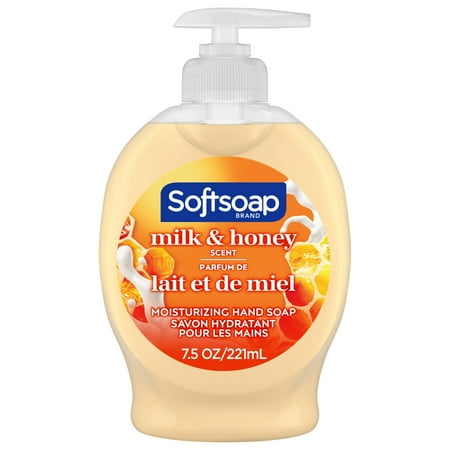
Softsoap Liquid Hand Soap Kitchen and Bathroom Hand Soap Milk and Honey 7.5 Fluid Ounce
Summary
This hand soap contains sodium laureth sulfate, which is a surfactant that can strip natural oils from the skin and carries a risk of contamination with 1,4-dioxane, a potential carcinogen. While it provides effective cleansing, the presence of this ingredient lowers the product's safety profile. The formulation lacks natural oils or beneficial skin actives that could mitigate the harshness of the surfactant.
At a glance
Key ingredients 6
Water/EauNeutral
Water is a universal solvent and is used as a base in many cosmetic formulations. It helps dissolve other ingredients and provides a medium for them to interact. It is essential for the consistency and application of the product.
Risks
There are no significant risks associated with water in cosmetic formulations.
Benefits
Water hydrates the skin and helps in the even distribution of other ingredients.
Sodium C12-13 Alketh SulfateNeutral
Sodium C12-13 Alketh Sulfate is a surfactant used for its cleansing and foaming properties. It helps to remove dirt and oil from the skin. It is considered milder than sodium lauryl sulfate.
Risks
It may cause mild irritation in sensitive individuals, especially with prolonged use.
Benefits
It effectively cleanses the skin without being as harsh as some other sulfates.
Sodium Laureth SulfateBad
Sodium Laureth Sulfate is a surfactant that provides cleansing and foaming action. It is milder than sodium lauryl sulfate but can still strip natural oils from the skin. There is a risk of contamination with 1,4-dioxane, a potential carcinogen, during its production.
Risks
It can cause skin irritation and dryness, and there is a contamination risk with 1,4-dioxane.
Benefits
It is effective at removing dirt and oil, providing a rich lather.
Cocamidopropyl BetaineNeutral
Cocamidopropyl Betaine is a mild surfactant derived from coconut oil. It is used to enhance the foaming and cleansing properties of products. It is generally well-tolerated and less irritating than harsher surfactants.
Risks
Some individuals may experience allergic reactions or irritation.
Benefits
It helps to condition the skin and hair, making them feel softer and smoother.
Glycol StearateNeutral
Glycol Stearate is an emulsifier and opacifying agent that helps to stabilize formulations and give them a pearly appearance. It is used to improve the texture and feel of the product. It is generally considered safe for use in cosmetics.
Risks
There are minimal risks associated with its use, though it may cause mild irritation in sensitive individuals.
Benefits
It enhances the aesthetic appeal of the product and improves its texture.
Citric AcidNeutral
Citric Acid is used to adjust the pH of cosmetic formulations. It acts as a preservative and can help to exfoliate the skin by breaking down dead skin cells. It is naturally derived from citrus fruits.
Risks
In high concentrations, it can cause skin irritation or sensitivity.
Benefits
It helps maintain the stability of the product and can improve skin texture by promoting exfoliation.
Processing
Processed Foods
Get the full breakdown in the Scout app
Scan any product to see lab results, healthy alternatives, and your personalized analysis.
Download on theApp Store