
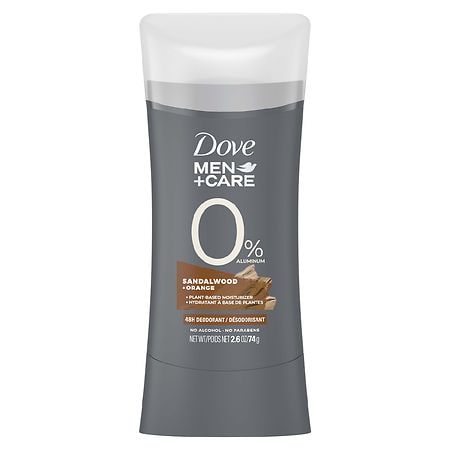
Dove Men+Care 0% Aluminum 24H Deodorant 2.6 oz
Summary
This deodorant is free from aluminum and synthetic chemicals, which are often associated with health concerns. It uses safer alternatives for odor control, contributing to a cleaner ingredient profile. The product's processing level is moderate, but the absence of harmful additives supports a higher rating.
At a glance
Key ingredients 10
Benzyl Alcohol
Benzyl Alcohol is used as a preservative and solvent in cosmetic products. It helps to stabilize the formulation and prevent microbial growth. It is generally considered safe in low concentrations.
Risks
In higher concentrations, it can cause skin irritation and allergic reactions.
Benefits
It helps to preserve the product and extend its shelf life.
Benzyl Salicylate
Benzyl Salicylate is commonly used as a fragrance ingredient and UV light absorber. It helps to enhance the scent of the product and protect it from UV degradation. It is widely used in cosmetic formulations.
Risks
It can cause allergic reactions and skin sensitization in some individuals.
Benefits
It contributes to the fragrance profile and stability of the product.
BHT
BHT (Butylated Hydroxytoluene) is an antioxidant that helps to prevent the oxidation of other ingredients. It is used to extend the shelf life of products by preventing rancidity. It is considered safe in low concentrations.
Risks
There are concerns about its potential to cause skin irritation and its impact on human health with prolonged exposure.
Benefits
It effectively prevents the degradation of the product, maintaining its quality over time.
Citronellol
Citronellol is a fragrance ingredient derived from plants such as rose and geranium. It is used to impart a pleasant floral scent to cosmetic products. It is generally recognized as safe when used in appropriate concentrations.
Risks
It may cause skin irritation or allergic reactions in sensitive individuals.
Benefits
It provides a natural fragrance to the product, enhancing user experience.
Coumarin
Coumarin is a fragrance ingredient that provides a sweet, vanilla-like aroma. It is used to enhance the scent profile of cosmetic products. It is naturally found in some plants.
Risks
It can cause skin irritation and sensitization in some people.
Benefits
It adds a pleasant scent to the product, improving its appeal.
Dipropylene Glycol
Dipropylene Glycol is a solvent and carrier used in cosmetic formulations. It helps to dissolve other ingredients and improve the texture of the product. It is considered safe for use in cosmetics.
Risks
It may cause mild skin irritation in sensitive individuals.
Benefits
It enhances the consistency and application of the product.
Disodium
Disodium is often part of compounds like Disodium EDTA, used as a chelating agent in cosmetics. It helps to stabilize formulations by binding metal ions. It is widely used in personal care products.
Risks
There are minimal risks associated with its use, though it can cause irritation in rare cases.
Benefits
It improves the stability and efficacy of the product.
Water
Water is a universal solvent used in almost all cosmetic products. It acts as a base and helps to dissolve other ingredients. It is essential for the formulation of many products.
Risks
There are no significant risks associated with water in cosmetics.
Benefits
It hydrates the skin and helps to deliver other active ingredients.
Glycerin
Glycerin is a humectant that attracts moisture to the skin. It is used to hydrate and improve the skin's barrier function. It is a common ingredient in skincare products due to its moisturizing properties.
Risks
There are minimal risks, though it can cause irritation if used in very high concentrations.
Benefits
It effectively moisturizes and softens the skin.
Propylene Glycol
Propylene Glycol is a synthetic humectant and solvent used in cosmetics. It helps to retain moisture and improve the texture of the product. It is derived from petroleum and is commonly used in personal care products.
Risks
It can cause skin irritation and allergic reactions, especially in sensitive individuals.
Benefits
It helps to maintain moisture levels in the skin, enhancing hydration.
Processing
Processed Foods
Get the full breakdown in the Scout app
Scan any product to see lab results, healthy alternatives, and your personalized analysis.
Download on theApp Store