
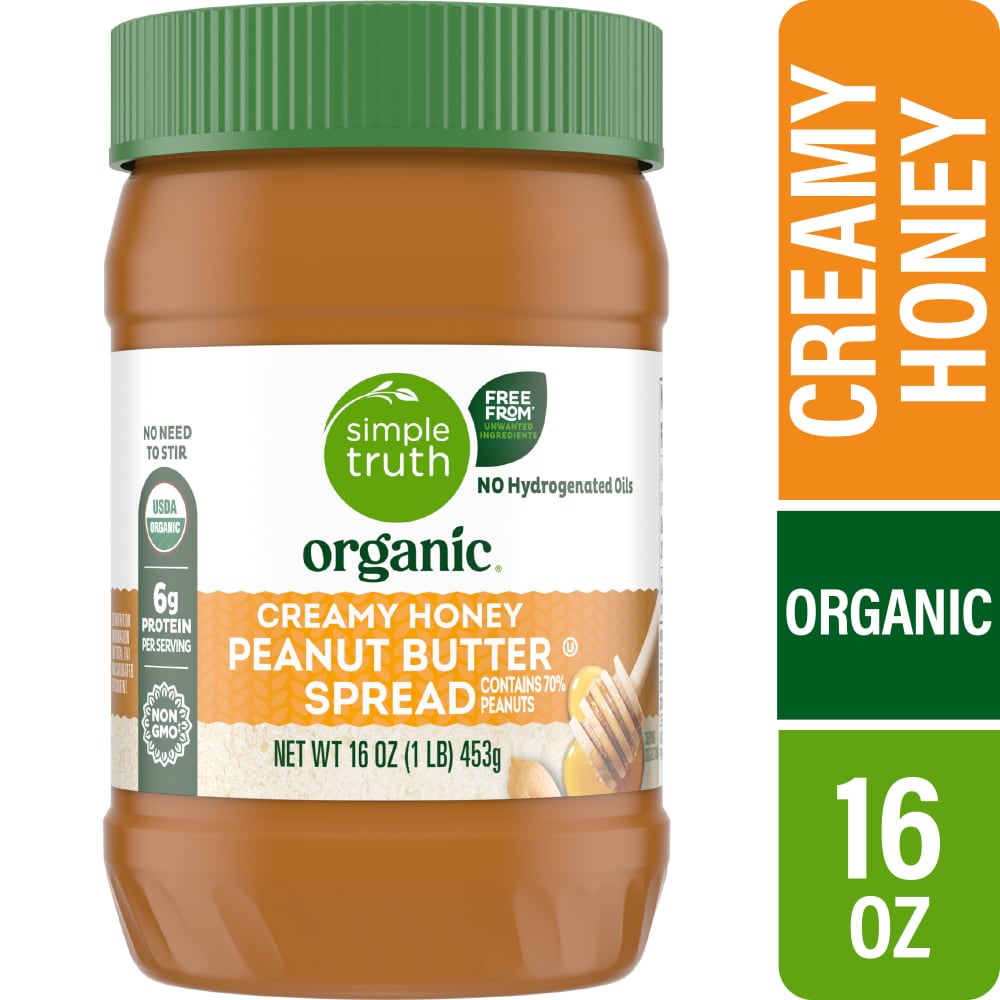
creamy peanut butter
Summary
This creamy peanut butter is made with organic dry roasted peanuts, which provide a good source of protein and healthy fats. The use of organic ingredients and minimal additives contributes to a cleaner label. However, the inclusion of organic cane sugar adds unnecessary refined sugars, which can impact blood sugar levels and overall health when consumed in excess. The product's processing level limits its maximum potential score.
At a glance
Key ingredients 4
Organic Dry Roasted PeanutsVery Good
Peanuts are a rich source of protein and healthy fats, making them a nutritious base for peanut butter. The organic certification ensures minimal pesticide use and better environmental practices. Dry roasting enhances flavor without the need for added oils.
Risks
Peanuts can be a common allergen, posing risks to individuals with peanut allergies.
Benefits
Rich in protein, healthy fats, and fiber, supporting heart health and providing sustained energy.
Organic Expeller Pressed Palm OilNeutral
Palm oil is used to stabilize peanut butter and prevent separation. Expeller pressing is a mechanical extraction method that avoids chemical solvents, and organic certification indicates sustainable practices. However, palm oil is high in saturated fats, which can be a concern if consumed in excess.
Risks
High in saturated fats, which may contribute to heart disease if consumed in large amounts.
Benefits
Provides stability to the product without the use of hydrogenated oils or trans fats.
Organic Cane SugarBad
Cane sugar is a refined sugar that can contribute to increased calorie intake and potential blood sugar spikes. Organic certification ensures it is free from synthetic pesticides and GMOs. Excessive consumption of added sugars is linked to various health issues, including obesity and diabetes.
Risks
May contribute to obesity, diabetes, and other metabolic disorders when consumed in excess.
Benefits
Provides sweetness to enhance flavor, but offers no significant nutritional benefits.
Sea SaltGood
Sea salt is a natural source of sodium and trace minerals, enhancing flavor without excessive processing. It is less refined than table salt, retaining more of its natural mineral content. The use of sea salt can contribute to better mineral intake compared to refined salts.
Risks
Excessive sodium intake can lead to hypertension and cardiovascular issues.
Benefits
Provides essential minerals and enhances flavor with minimal processing.
Processing
Processed Foods
Get the full breakdown in the Scout app
Scan any product to see lab results, healthy alternatives, and your personalized analysis.
Download on theApp Store