
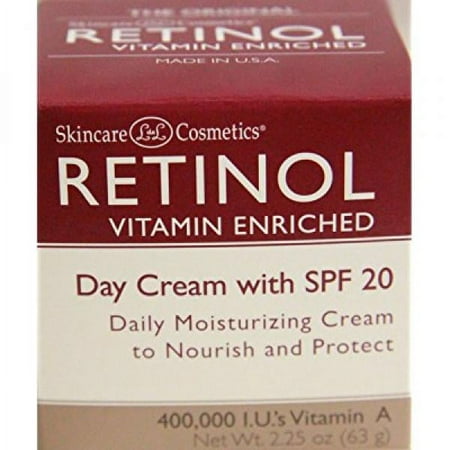


Beauty Solutions Retinol Vitamin A Cream SPF 20 Anti-Aging Day Cream
Summary
This moisturizer contains beneficial ingredients such as retinol and Vitamin A, which are known for their anti-aging properties. However, the presence of synthetic fragrance and other processed components slightly lowers its score due to potential skin irritation and contamination risks. The product is moderately processed, which impacts its overall rating despite the inclusion of some skin-friendly actives.
At a glance
Key ingredients 13
Avobenzone
Avobenzone is a chemical sunscreen agent that absorbs UV radiation. It is often used in combination with other UV filters to enhance stability. However, it can degrade in sunlight, reducing its effectiveness.
Risks
Potential for skin irritation and allergic reactions.
Benefits
Provides broad-spectrum UVA protection.
Homosalate
Homosalate is a chemical sunscreen agent that helps protect the skin from UVB rays. It is commonly used in sunscreens for its ability to dissolve other sunscreen agents. However, it can accumulate in the body and has potential endocrine-disrupting effects.
Risks
Concerns about hormone disruption and skin irritation.
Benefits
Effective in protecting against sunburn.
Octinoxate
Octinoxate is a UV filter that absorbs UVB rays, preventing them from penetrating the skin. It is widely used in sunscreens and cosmetics. However, it can cause allergic reactions and has been linked to hormone disruption.
Risks
Potential for endocrine disruption and allergic reactions.
Benefits
Helps prevent sunburn by absorbing UVB radiation.
Oxybenzone
Oxybenzone is a chemical sunscreen agent that absorbs UVB and short UVA rays. It is often used in combination with other sunscreen agents. However, it is a known endocrine disruptor and can cause skin allergies.
Risks
High potential for hormone disruption and allergic skin reactions.
Benefits
Provides broad-spectrum UV protection.
Retinyl Palmitate
Retinyl Palmitate is a form of Vitamin A that is used for its anti-aging properties. It helps to improve skin texture and reduce the appearance of fine lines. It is a stable form of retinol that is less irritating.
Risks
Potential for skin irritation in sensitive individuals.
Benefits
Promotes cell turnover and collagen production, improving skin appearance.
Tocopheryl Acetate
Tocopheryl Acetate is a form of Vitamin E that acts as an antioxidant. It helps to protect the skin from free radical damage. It is commonly used in skincare products for its moisturizing properties.
Risks
Rarely, it can cause skin irritation.
Benefits
Provides antioxidant protection and moisturizes the skin.
PCANeutral
PCA is a naturally occurring component of the skin that helps maintain moisture balance. It is often used in skincare products for its hydrating properties. It is generally considered safe and non-irritating.
Risks
Minimal risk of irritation.
Benefits
Helps to maintain skin hydration and improve texture.
XanthanNeutral
Xanthan is a polysaccharide used as a thickening agent in cosmetics. It helps to stabilize formulations and improve texture. It is generally considered safe and non-irritating.
Risks
Low risk of skin irritation.
Benefits
Improves product texture and stability.
Hyaluronic Acid
Hyaluronic Acid is a powerful humectant that attracts and retains moisture in the skin. It is widely used in skincare for its hydrating and plumping effects. It is suitable for all skin types and helps to improve skin elasticity.
Risks
Very low risk of irritation.
Benefits
Deeply hydrates the skin and reduces the appearance of fine lines.
Vitamin E
Vitamin E is a potent antioxidant that helps protect the skin from oxidative stress. It is commonly used in skincare for its moisturizing and healing properties. It supports skin barrier function and reduces inflammation.
Risks
Rarely, it can cause skin irritation.
Benefits
Protects against environmental damage and soothes the skin.
Vitamin B5
Vitamin B5, also known as Panthenol, is a humectant that attracts moisture to the skin. It is used in skincare for its soothing and healing properties. It helps to improve skin hydration and reduce inflammation.
Risks
Very low risk of irritation.
Benefits
Enhances skin hydration and promotes healing.
Jojoba Oil
Jojoba Oil is a natural oil that closely resembles the skin's sebum. It is used in skincare for its moisturizing and balancing properties. It is non-comedogenic and suitable for all skin types.
Risks
Very low risk of irritation.
Benefits
Moisturizes the skin and balances oil production.
Silk Amino Acids
Silk Amino Acids are derived from silk proteins and are used for their conditioning properties. They help to improve skin texture and retain moisture. They are gentle and suitable for sensitive skin.
Risks
Minimal risk of irritation.
Benefits
Enhances skin smoothness and hydration.
Processing
Processed Foods
Get the full breakdown in the Scout app
Scan any product to see lab results, healthy alternatives, and your personalized analysis.
Download on theApp Store