


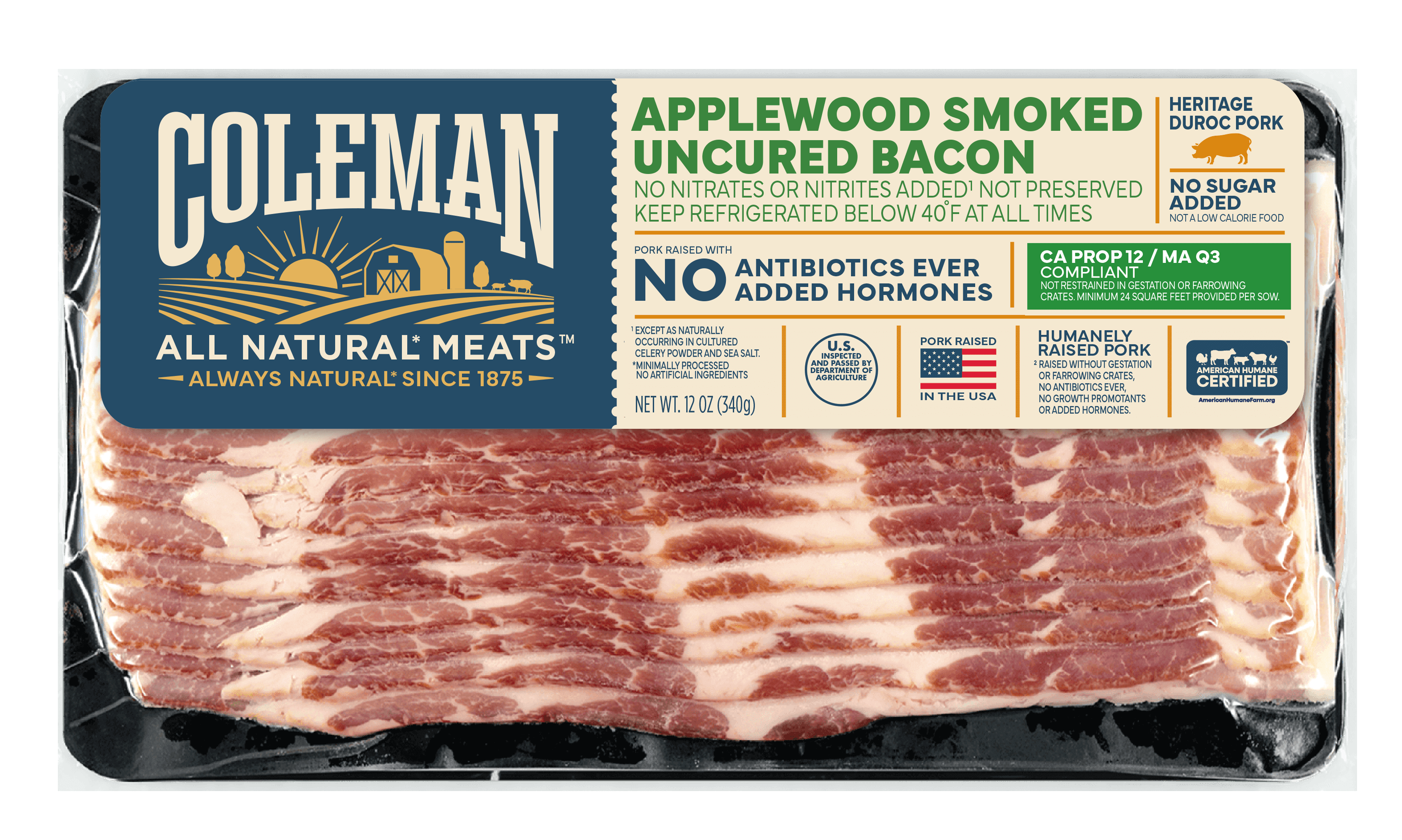
At a glance
Summary
This hardwood smoked bacon is a processed meat product containing additives like sodium phosphates and sodium nitrite, which are used for preservation and moisture retention but have potential health risks. The presence of sugar as an additive is unnecessary from a nutritional standpoint and contributes to its processed nature. While pork provides quality protein, the overall processing level and inclusion of these additives limit its healthiness.
Key ingredients 7
PorkGood
Pork provides high-quality protein and essential nutrients, making it a beneficial ingredient in bacon.
See more about Pork →WaterNeutral
Water is used for processing and does not significantly impact the nutritional quality of the product.
See more about Water →SaltNeutral
Salt enhances flavor and preservation but is neutral in overall health impact when consumed in moderation.
See more about Salt →SugarBad
Sugar is added for flavor but can contribute to negative health effects if consumed excessively.
See more about Sugar →Sodium PhosphatesBad
Sodium phosphates are used as preservatives and stabilizers but may have negative health implications with high intake.
See more about Sodium Phosphates →Sodium ErythorbateBad
Sodium erythorbate is an additive used to preserve color and freshness, but its consumption is linked to potential health concerns.
Sodium NitriteBad
Sodium nitrite is used for curing and preservation but has been associated with potential health risks when consumed regularly.
See more about Sodium Nitrite →Processing
Processed Foods
Get the full breakdown in the Scout appTake Scout shopping
Scan any product to see lab results, healthy alternatives, and your personalized analysis.
Download on theApp Store GET IT ONGoogle Play