
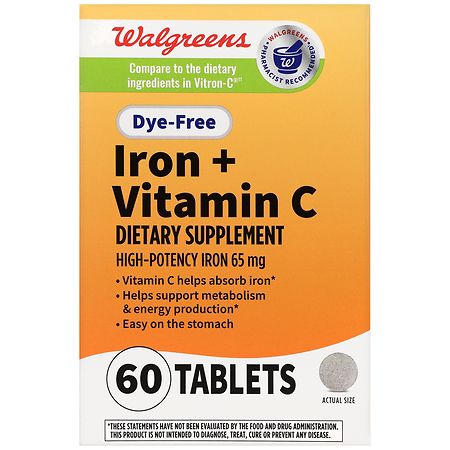

Walgreens Iron 65 mg + Vitamin C Tablets, Dye-Free - 60.0 ea
Analysis updated July 2026 · How Scout scores
At a glance
Summary
This supplement contains sodium lauryl sulfate and talc, which are controversial due to potential irritation and contamination concerns, respectively. While it provides iron and vitamin C, the presence of these additives detracts from its overall formulation quality. The product's processing level is moderate, but the inclusion of these ingredients impacts its safety profile.
Key ingredients 7
Microcrystalline CelluloseNeutral
Microcrystalline Cellulose is a common excipient used as a filler and binder in tablets, generally recognized as safe for consumption.
See more about Microcrystalline Cellulose →Croscarmellose SodiumNeutral
Croscarmellose Sodium helps tablets dissolve properly, ensuring effective release of active ingredients without posing health concerns.
See more about Croscarmellose Sodium →Magnesium StearateNeutral
Magnesium Stearate is used as a flow agent in manufacturing, with a long history of safe use in supplements.
See more about Magnesium Stearate →Silicon DioxideNeutral
Silicon Dioxide acts as an anti-caking agent to prevent clumping, and is considered safe in small amounts.
See more about Silicon Dioxide →HypromelloseNeutral
Hypromellose is a plant-derived polymer used as a capsule shell or binder, generally regarded as safe for consumption.
See more about Hypromellose →TalcNeutral
Talc is used as a flow agent or anti-caking agent, and is considered safe when used appropriately in supplements.
See more about Talc →Sodium Lauryl SulfateVery Bad
Harsh sulfate surfactant — strips skin lipids and irritates sensitive skin.
See more about Sodium Lauryl Sulfate →Processing
Processed Foods
Get the full breakdown in the Scout appTake Scout shopping
Scan any product to see lab results, healthy alternatives, and your personalized analysis.
Download on theApp Store GET IT ONGoogle Play