
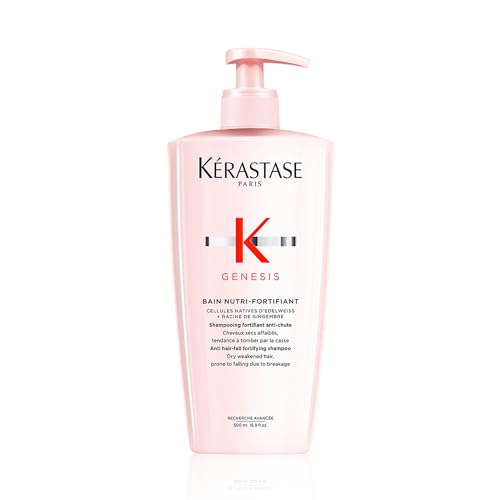


Kerastase Genesis Bain Nutri-Fortifiant, 34 fl.oz.
Summary
This shampoo contains Sodium Laureth Sulfate, which is a less harsh surfactant than Sodium Lauryl Sulfate but can still strip natural oils from the hair and scalp. The presence of Sodium Chloride as a thickener can contribute to drying out the hair, and Dimethicone, a non-water-soluble silicone, can lead to buildup over time. These factors indicate a moderate level of processing and ingredient concerns, impacting the overall score.
At a glance
Key ingredients 7
AquaNeutral
Aqua, or water, is a common solvent used in cosmetic formulations. It helps dissolve other ingredients and provides a base for the product. It is generally considered safe and non-reactive.
Risks
There are no significant risks associated with water in cosmetic products.
Benefits
Water hydrates and helps distribute other ingredients evenly throughout the product.
Sodium Laureth SulfateBad
Sodium Laureth Sulfate (SLES) is a surfactant used for its cleansing and foaming properties. It is known to be less irritating than Sodium Lauryl Sulfate but can still strip natural oils from the hair and scalp. It is often criticized for potential contamination with 1,4-dioxane, a possible carcinogen.
Risks
SLES can cause dryness and irritation, especially for sensitive scalps.
Benefits
It effectively removes dirt and oil, providing a clean feeling.
Sodium ChlorideBad
Sodium Chloride, or table salt, is used as a thickening agent in shampoos. While generally safe, it can contribute to drying out the hair and scalp. It may also cause irritation in some individuals, particularly those with sensitive skin.
Risks
Excessive use can lead to dryness and irritation of the scalp.
Benefits
It helps to increase the viscosity of the product, improving texture and application.
Cocamidopropyl BetaineNeutral
Cocamidopropyl Betaine is a mild surfactant derived from coconut oil, used to enhance foam and reduce irritation from harsher surfactants. It is generally considered safe but can cause allergic reactions in some individuals. It is often used in combination with other surfactants to improve the overall mildness of the formulation.
Risks
Potential for allergic reactions in sensitive individuals.
Benefits
It provides gentle cleansing and helps to stabilize foam.
DimethiconeBad
Dimethicone is a silicone-based polymer used for its smoothing and conditioning properties. It forms a barrier on the hair, which can lead to buildup over time, making hair feel heavy and potentially brittle. It is not water-soluble, which can make it difficult to remove without strong detergents.
Risks
Can cause buildup on hair, leading to dullness and brittleness.
Benefits
Provides a smooth, silky feel and reduces frizz.
Citric AcidNeutral
Citric Acid is used to adjust the pH of cosmetic products, ensuring they are not too alkaline. It can also act as a mild preservative and antioxidant. It is generally safe but can cause irritation in high concentrations.
Risks
May cause irritation if used in high concentrations.
Benefits
Helps maintain the stability and effectiveness of the product by balancing pH.
Hexylene GlycolNeutral
Hexylene Glycol is a solvent and viscosity agent used to improve the texture and spreadability of cosmetic products. It is generally considered safe in low concentrations but can cause irritation in sensitive individuals. It helps to dissolve other ingredients and improve the overall feel of the product.
Risks
Potential for skin irritation in sensitive individuals.
Benefits
Improves product texture and helps dissolve other ingredients.
Processing
Processed Foods
Get the full breakdown in the Scout app
Scan any product to see lab results, healthy alternatives, and your personalized analysis.
Download on theApp Store