
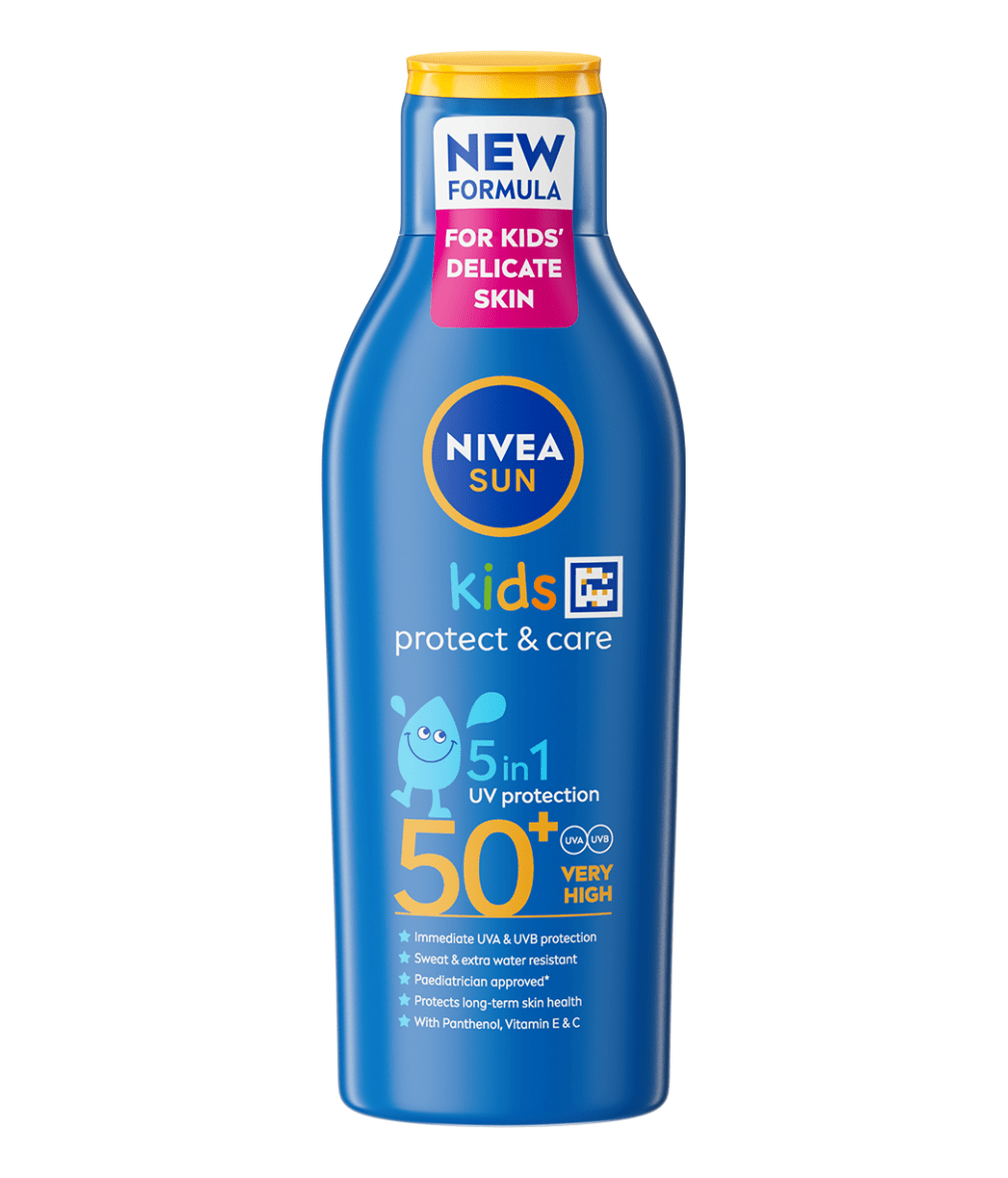
Nivea Sun Kids Moisturising Sun Lotion Spf 30 200ml Buy 1 Get 1 Free Brand
Summary
This sun lotion contains beneficial ingredients like moisturizing agents and UV filters that provide sun protection for children. However, it also includes synthetic preservatives and fragrance, which can be potential irritants or allergens. The presence of these synthetic components and the level of processing involved in creating a stable sun protection formula contribute to a moderate score.
At a glance
Key ingredients 10
AquaNeutral
Aqua, or water, is a common solvent used in cosmetics to dissolve other ingredients. It is essential for the formulation of emulsions and creams. It does not provide direct benefits or risks.
Risks
There are no known risks associated with water in cosmetic formulations.
Benefits
Water helps in the application and absorption of the product on the skin.
GlycerinVery Good
Glycerin is a humectant that attracts moisture to the skin, helping to keep it hydrated. It is widely used in skincare products for its moisturizing properties. It is considered safe and beneficial for most skin types.
Risks
There are minimal risks associated with glycerin, though it may cause irritation in very sensitive skin.
Benefits
Glycerin helps maintain skin hydration and improves skin barrier function.
Isopropyl PalmitateNeutral
Isopropyl Palmitate is an emollient that helps to soften and smooth the skin. It is used to enhance the texture and spreadability of products. It is generally considered safe for use in cosmetics.
Risks
In some cases, it may cause skin irritation or acne in sensitive individuals.
Benefits
It provides a smooth application and helps to lock in moisture.
Alcohol DenatBad
Alcohol Denat is used as a solvent and astringent in cosmetics. It can be drying and irritating to the skin, especially in high concentrations. It is often included to help other ingredients penetrate the skin.
Risks
It can cause dryness, irritation, and disrupt the skin's natural barrier.
Benefits
It helps in the quick drying of products and enhances the penetration of active ingredients.
Butyl MethoxydibenzoylmethaneNeutral
Butyl Methoxydibenzoylmethane, also known as Avobenzone, is a chemical sunscreen agent that absorbs UVA rays. It is effective in protecting the skin from sun damage. It is generally considered safe but can degrade in sunlight.
Risks
It may cause skin irritation and degrade in sunlight, reducing its effectiveness.
Benefits
Provides broad-spectrum UVA protection, reducing the risk of sunburn and skin aging.
CocoglyceridesGood
Cocoglycerides are derived from coconut oil and glycerin, acting as emollients and skin conditioning agents. They help to moisturize and soften the skin. They are considered safe and beneficial for most skin types.
Risks
There are minimal risks, though it may cause mild irritation in very sensitive skin.
Benefits
They enhance skin hydration and improve the texture of the product.
Bis-Ethylhexyloxyphenol Methoxyphenyl TriazineNeutral
This ingredient is a broad-spectrum UV filter that provides protection against both UVA and UVB rays. It is photostable and does not degrade in sunlight. It is considered safe for use in sunscreens.
Risks
There are minimal risks, though it may cause irritation in sensitive skin.
Benefits
Offers effective and stable sun protection, reducing the risk of sunburn and skin damage.
Behenyl AlcoholNeutral
Behenyl Alcohol is a fatty alcohol used as an emollient and thickener in cosmetics. It helps to improve the texture and stability of products. It is considered safe and non-irritating.
Risks
There are minimal risks associated with behenyl alcohol.
Benefits
It provides a creamy texture and helps to soften the skin.
C12-15 Alkyl BenzoateNeutral
C12-15 Alkyl Benzoate is an emollient and texture enhancer used in cosmetics. It helps to improve the spreadability and feel of products. It is generally considered safe for use.
Risks
There are minimal risks, though it may cause mild irritation in sensitive skin.
Benefits
Enhances product texture and provides a silky feel on the skin.
Cellulose GumNeutral
Cellulose Gum is a thickening agent derived from cellulose. It is used to stabilize and thicken formulations. It is considered safe and non-irritating.
Risks
There are minimal risks associated with cellulose gum.
Benefits
It helps to stabilize the product and improve its consistency.
Processing
Processed Foods
Get the full breakdown in the Scout app
Scan any product to see lab results, healthy alternatives, and your personalized analysis.
Download on theApp Store