
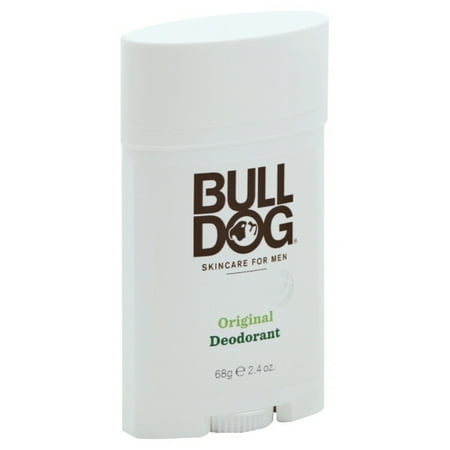

Bull Dog Original Deodorant, 2.4 oz (68 g)
Summary
This deodorant is free from aluminum and other heavily penalized synthetic chemicals, which is a positive aspect for ingredient safety. However, it contains synthetic fragrance, which is a minor concern, and the product is moderately processed. Overall, it is mostly clean with some minor synthetic components.
At a glance
Key ingredients 8
PROPANEDIOL
Propanediol is a naturally derived glycol used as a solvent and skin-conditioning agent. It is often used as an alternative to propylene glycol, which can be irritating. Propanediol is generally considered safe and non-irritating for most skin types.
Risks
There is a low risk of skin irritation for sensitive individuals.
Benefits
It helps to improve the texture and feel of the product on the skin.
GLYCERIN
Glycerin is a humectant that attracts moisture to the skin, helping to keep it hydrated. It is a common ingredient in skincare products due to its moisturizing properties. Glycerin is generally well-tolerated and beneficial for maintaining skin hydration.
Risks
There are minimal risks associated with glycerin, though excessive use can lead to a sticky feeling.
Benefits
It effectively hydrates and maintains the skin's moisture balance.
AQUA (WATER)
Water is used as a solvent in many cosmetic products, helping to dissolve other ingredients. It is essential for the formulation of emulsions and acts as a carrier for active ingredients. Water is a neutral ingredient with no direct benefits or risks.
Risks
There are no significant risks associated with water in cosmetic formulations.
Benefits
It acts as a solvent and carrier for other ingredients.
SODIUM STEARATE
Sodium stearate is a fatty acid salt used as a thickener and stabilizer in cosmetic formulations. It helps to create a solid structure in stick products like deodorants. Sodium stearate is generally considered safe and non-irritating.
Risks
There is a low risk of skin irritation for sensitive individuals.
Benefits
It provides structure and stability to the product.
SILICA
Silica is used as an absorbent and anti-caking agent in cosmetics. It helps to control moisture and improve the texture of the product. Silica is generally considered safe for topical use.
Risks
Inhalation of silica dust can be harmful, but this risk is minimal in topical applications.
Benefits
It helps to absorb moisture and improve product texture.
ZEA MAYS (CORN) STARCH
Corn starch is a natural absorbent used to control moisture and reduce friction. It is often used in natural deodorants as an alternative to talc. Corn starch is generally considered safe and beneficial for moisture absorption.
Risks
There is a minimal risk of skin irritation for sensitive individuals.
Benefits
It effectively absorbs moisture and reduces friction.
ZINC RICINOLEATE
Zinc ricinoleate is used as an odor absorber in deodorant products. It works by trapping and neutralizing odor molecules. Zinc ricinoleate is generally considered safe and effective for odor control.
Risks
There are minimal risks associated with zinc ricinoleate.
Benefits
It effectively neutralizes odors without blocking pores.
FRAGRANCE
Fragrance is used to provide a pleasant scent to cosmetic products. However, it can be a mixture of various chemicals, some of which may cause irritation or allergic reactions. Fragrance is often criticized for its potential to cause skin sensitivity and allergic reactions.
Risks
Fragrance can cause skin irritation and allergic reactions in sensitive individuals.
Benefits
It provides a pleasant scent to the product.
Processing
Processed Foods
Get the full breakdown in the Scout app
Scan any product to see lab results, healthy alternatives, and your personalized analysis.
Download on theApp Store