
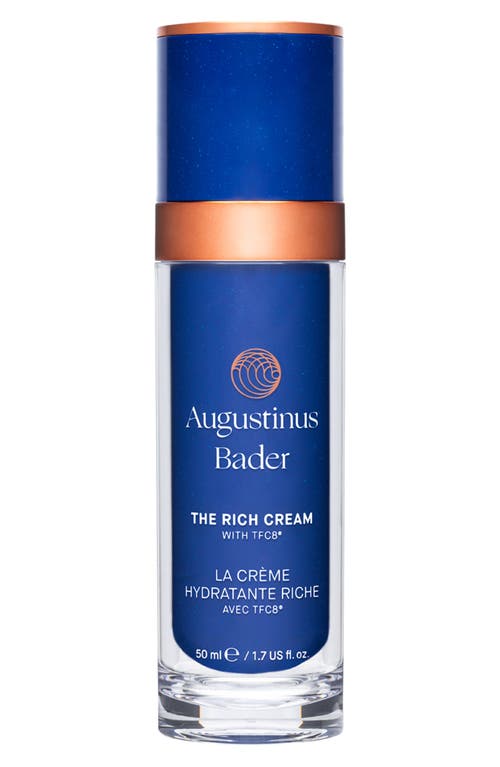

Augustinus Bader The Rich Cream Face Moisturizer
Analysis updated August 2026 · How Scout scores
At a glance
Summary
This moisturizer features a blend of beneficial natural oils and emollients such as squalane, argan oil, and shea butter, which provide excellent hydration and nourishment to the skin. The product avoids harsh chemicals and synthetic fragrances, focusing instead on ingredients that support skin health and barrier function. Although it is processed, the ingredient list is clean and free from major harmful additives, contributing to a high score.
Key ingredients 10
Helianthus Annuus (Sunflower) Seed OilVery Good
Sunflower seed oil is rich in linoleic acid and vitamin E, which are beneficial for skin health. It helps maintain the skin's natural barrier and reduces moisture loss. It is known for its anti-inflammatory properties.
Risks
Generally safe, but may cause allergic reactions in individuals with sunflower allergies.
Benefits
Moisturizes and nourishes the skin, promoting a healthy skin barrier.
SqualaneVery Good
Squalane is a highly effective emollient and natural antioxidant. It mimics the skin's natural oils, making it an excellent moisturizer. It is non-comedogenic and suitable for all skin types.
Benefits
Provides deep hydration and helps reduce the appearance of fine lines.
Argania Spinosa Kernel OilVery Good
Argan oil is rich in essential fatty acids and vitamin E, providing nourishment and hydration to the skin. It is known for its anti-aging and anti-inflammatory properties. It is suitable for all skin types, including sensitive skin.
Risks
Rarely, it may cause allergic reactions in individuals with nut allergies.
Benefits
Moisturizes and revitalizes the skin, improving elasticity and reducing inflammation.
Persea Gratissima (Avocado) OilVery Good
Avocado oil is rich in vitamins A, D, and E, as well as fatty acids that nourish and moisturize the skin. It promotes collagen production and helps heal dry, damaged skin. It is beneficial for dry and sensitive skin types.
Risks
May cause allergic reactions in individuals with avocado allergies.
Benefits
Deeply hydrates and soothes the skin, enhancing its natural barrier.
Oenothera Biennis (Evening Primrose) OilVery Good
Evening primrose oil is high in gamma-linolenic acid, which helps reduce inflammation and improve skin elasticity. It is beneficial for conditions like eczema and acne. It supports overall skin health and hydration.
Risks
May cause mild irritation in sensitive individuals.
Benefits
Reduces inflammation and supports skin barrier function, improving skin texture.
Butyrospermum Parkii (Shea) ButterVery Good
Shea butter is a natural fat extracted from the nuts of the shea tree, known for its moisturizing and anti-inflammatory properties. It is rich in vitamins A and E, which promote skin health. It is suitable for dry and sensitive skin.
Risks
May cause allergic reactions in individuals with nut allergies.
Benefits
Deeply moisturizes and nourishes the skin, improving elasticity and reducing inflammation.
Coco-Caprylate/CaprateGood
Coco-Caprylate/Caprate is an emollient derived from coconut oil and caprylic acid. It provides a lightweight, non-greasy feel to the skin. It is well-tolerated and helps improve skin texture.
Risks
Rarely, it may cause mild irritation in sensitive individuals.
Benefits
Enhances skin softness and smoothness without leaving a greasy residue.
GlycerinGood
Glycerin is a humectant that attracts moisture to the skin, keeping it hydrated. It is a common ingredient in skincare due to its ability to improve skin barrier function. It is safe and effective for all skin types.
Risks
Overuse can lead to a sticky feeling on the skin.
Benefits
Helps maintain skin hydration and improves skin resilience.
Sodium HyaluronateGood
Sodium hyaluronate is a form of hyaluronic acid that penetrates the skin to provide intense hydration. It helps retain moisture, making the skin appear plump and smooth. It is suitable for all skin types and is non-irritating.
Benefits
Enhances skin hydration and reduces the appearance of fine lines and wrinkles.
Aqua (Water)Neutral
Water is a common solvent used in cosmetics to dissolve other ingredients. It helps in the application and absorption of the product. It does not provide direct benefits or risks.
Benefits
Acts as a base for the formulation, aiding in the delivery of active ingredients.
Get the full breakdown in the Scout appTake Scout shopping
Scan any product to see lab results, healthy alternatives, and your personalized analysis.
Download on theApp Store GET IT ONGoogle PlayAmazon pricing & content
Amazon price as of . Product prices and availability are accurate as of the date/time indicated and are subject to change. Any price and availability information displayed on Amazon.com at the time of purchase will apply to the purchase of this product.
CERTAIN CONTENT THAT APPEARS ON THIS SITE COMES FROM AMAZON. THIS CONTENT IS PROVIDED “AS IS” AND IS SUBJECT TO CHANGE OR REMOVAL AT ANY TIME.