
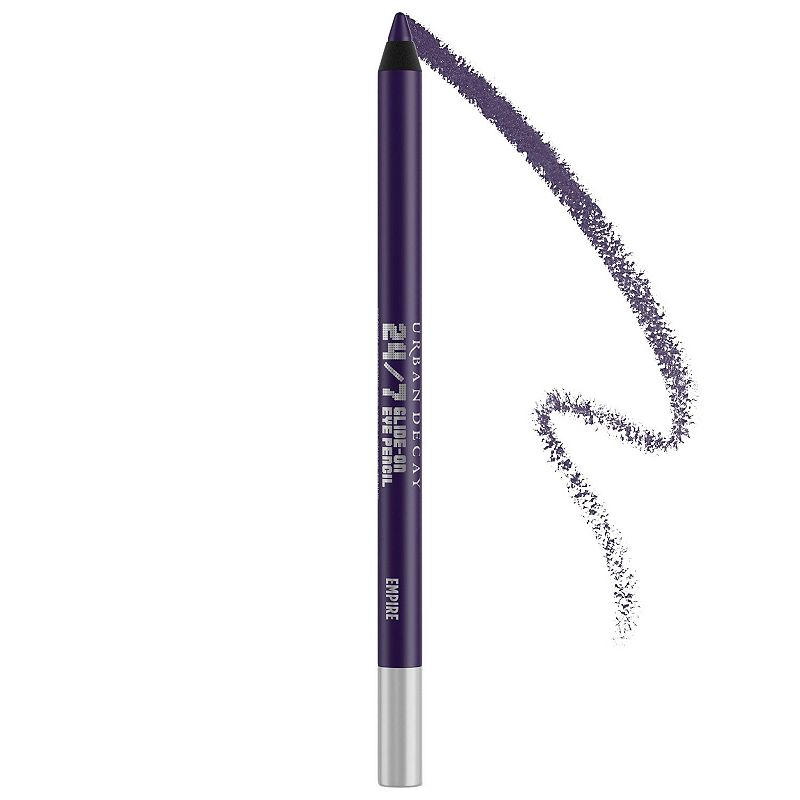


Urban Decay by URBAN DECAY 24/7 Glide On Waterproof Eye Pencil - Empire --1.2g/0.04oz
Analysis updated September 2026 · How Scout scores
At a glance
Summary
This eye pencil contains a mix of synthetic ingredients, including PEG/PPG compounds, which are moderately processed and can be concerning in large quantities. However, it also includes tocopherol, a beneficial antioxidant that supports skin health. The product's formulation lacks major harmful chemicals, but the presence of synthetic waxes and polymers suggests a moderate level of processing.
Key ingredients 12
TocopherolGood
Tocopherol, also known as Vitamin E, is a powerful antioxidant used in cosmetics for its skin-conditioning properties. It helps in protecting the skin from oxidative stress and improving skin health. It is considered safe and beneficial for use in cosmetics.
Risks
There are minimal risks associated with tocopherol, though it can cause mild irritation in sensitive individuals.
Benefits
It provides antioxidant properties and helps in protecting the skin from oxidative stress, improving skin health.
IsododecaneNeutral
Isododecane is a hydrocarbon commonly used in cosmetics for its lightweight and non-greasy feel. It helps in the smooth application of products and enhances spreadability. It is generally considered safe for use in cosmetics.
Risks
There are minimal risks associated with isododecane, though it can cause mild irritation in sensitive individuals.
Benefits
It provides a silky texture and helps in the even application of makeup products.
CyclopentasiloxaneNeutral
Cyclopentasiloxane is a silicone-based compound used for its smooth application and quick-drying properties. It is often used in cosmetics to provide a silky feel. It is considered safe for use in cosmetics.
Risks
There is a low risk of skin irritation, particularly for those with sensitive skin.
Benefits
It enhances the texture of products and provides a smooth, silky finish.
PEG/PPG-19/19 DimethiconeNeutral
PEG/PPG-19/19 Dimethicone is a silicone-based polymer used for its conditioning properties and ability to improve product spreadability. It is commonly used in cosmetics for its emollient properties. It is generally considered safe for use.
Risks
There is a potential risk of skin irritation, especially in individuals with sensitive skin.
Benefits
It helps in conditioning the skin and improving the texture of cosmetic products.
Synthetic WaxNeutral
Synthetic wax is used in cosmetics to provide structure and stability to products. It helps in maintaining the shape and consistency of products like pencils and sticks. It is considered safe for use in cosmetics.
Risks
There are minimal risks associated with synthetic wax, though it can cause mild irritation in sensitive individuals.
Benefits
It provides stability and structure to cosmetic products, ensuring they maintain their form.
Hydrogenated PolydicyclopentadieneNeutral
Hydrogenated Polydicyclopentadiene is used in cosmetics for its film-forming properties, which help in long-lasting wear. It is a synthetic polymer that enhances the durability of products. It is generally considered safe for use.
Risks
There is a low risk of skin irritation, particularly for those with sensitive skin.
Benefits
It provides long-lasting wear and enhances the durability of cosmetic products.
Nylon-12Neutral
Nylon-12 is a synthetic polymer used in cosmetics for its ability to improve the texture and feel of products. It provides a soft focus effect and enhances the smoothness of application. It is considered safe for use in cosmetics.
Risks
There are minimal risks associated with Nylon-12, though it can cause mild irritation in sensitive individuals.
Benefits
It improves the texture and feel of cosmetic products, providing a soft focus effect.
C20-40 AlcoholsNeutral
C20-40 Alcohols are fatty alcohols used in cosmetics for their emollient and thickening properties. They help in improving the texture and stability of products. They are generally considered safe for use.
Risks
There is a low risk of skin irritation, particularly for those with sensitive skin.
Benefits
They provide emollient properties and improve the texture and stability of cosmetic products.
Perfluorononyl DimethiconeNeutral
Perfluorononyl Dimethicone is a silicone-based compound used for its water-repellent properties. It helps in providing a long-lasting and waterproof effect in cosmetics. It is considered safe for use in cosmetics.
Risks
There is a low risk of skin irritation, particularly for those with sensitive skin.
Benefits
It provides a waterproof effect and enhances the longevity of cosmetic products.
Polyglyceryl-4 Diisostearate/Polyhydroxystearate/SebacateNeutral
This ingredient is a blend of esters used in cosmetics for their emulsifying properties. They help in stabilizing formulations and improving texture. They are generally considered safe for use.
Risks
There is a low risk of skin irritation, particularly for those with sensitive skin.
Benefits
They provide emulsifying properties and improve the texture and stability of cosmetic products.
Pentaerythrityl Tetra-Di-T-Butyl HydroxyhydrocinnamateNeutral
This ingredient is an antioxidant used in cosmetics to prevent the oxidation of products. It helps in maintaining the stability and shelf life of formulations. It is generally considered safe for use.
Risks
There is a low risk of skin irritation, particularly for those with sensitive skin.
Benefits
It provides antioxidant properties and helps in maintaining the stability and shelf life of cosmetic products.
PolyethyleneVery Bad
Heavily flagged ingredient class under Scout's doctrine.
Risks
There are minimal risks associated with polyethylene, though it can cause mild irritation in sensitive individuals.
Benefits
It provides structure and stability to cosmetic products, ensuring they maintain their form.
Get the full breakdown in the Scout appTake Scout shopping
Scan any product to see lab results, healthy alternatives, and your personalized analysis.
Download on theApp Store GET IT ONGoogle PlayAmazon pricing & content
Amazon price as of . Product prices and availability are accurate as of the date/time indicated and are subject to change. Any price and availability information displayed on Amazon.com at the time of purchase will apply to the purchase of this product.
CERTAIN CONTENT THAT APPEARS ON THIS SITE COMES FROM AMAZON. THIS CONTENT IS PROVIDED “AS IS” AND IS SUBJECT TO CHANGE OR REMOVAL AT ANY TIME.