
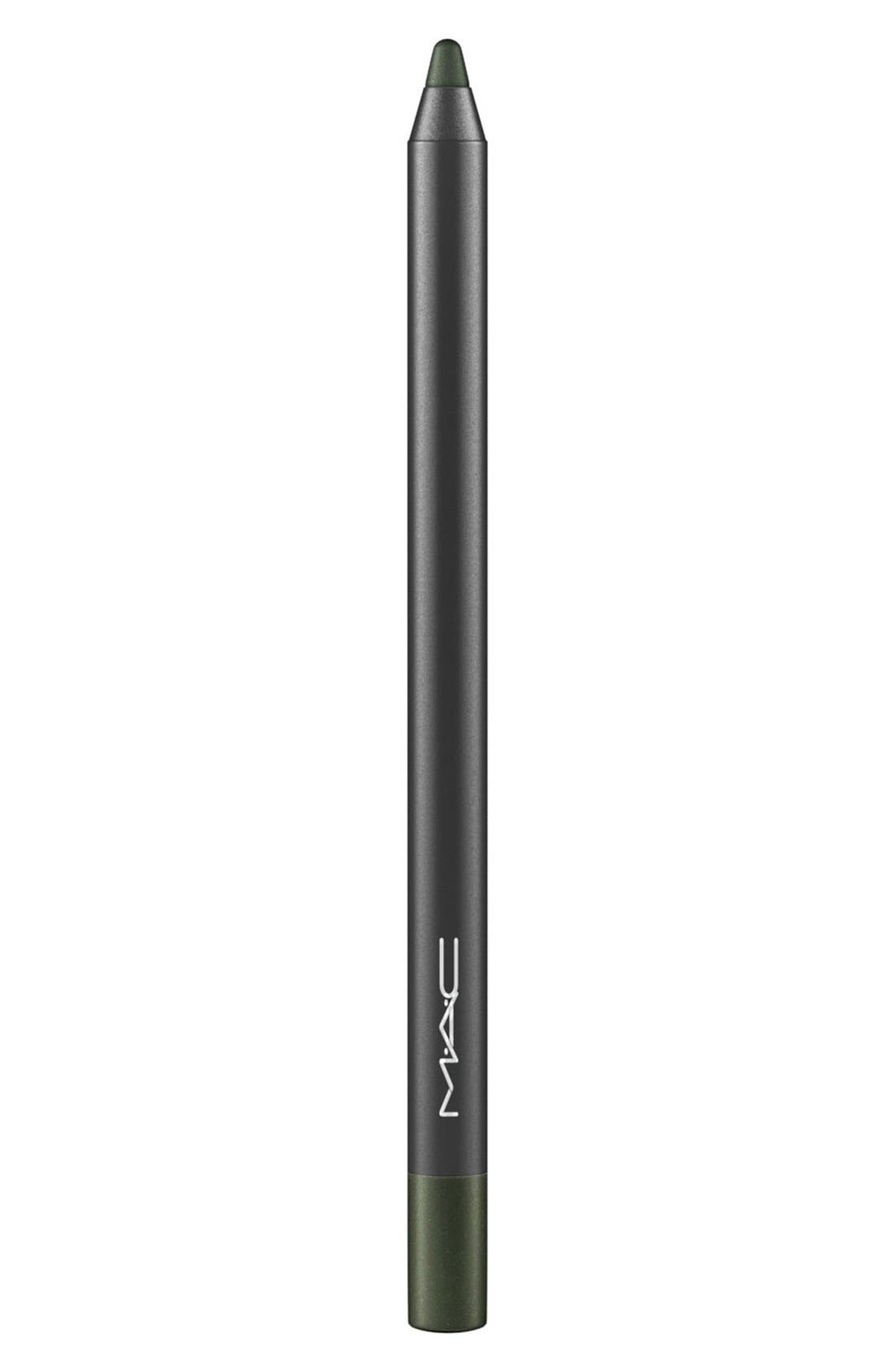



MAC COSMETICS PRO LONGWEAR EYE LINER 0.04 OZ DEVOTION MAC COSMETICS/PRO LONGWEAR EYE LINER (DEVOTION) 0.04 OZ (1.2 ML) DEEP ARMY GREEN
Analysis updated July 2026 · How Scout scores
At a glance
Summary
This eye liner contains a mix of synthetic ingredients and colorants, including some that are generally considered safe for cosmetic use. However, it includes synthetic fluorophlogopite and phenoxyethanol, which are synthetic compounds that may raise concerns for some consumers. The presence of multiple color additives and synthetic compounds indicates a moderate level of processing, which affects the overall score.
Key ingredients 39
Tocopheryl AcetateGood
Tocopheryl Acetate is a form of Vitamin E, used for its antioxidant properties. It helps protect the skin from free radical damage. It is widely used in cosmetics for its skin-conditioning benefits.
Risks
Minimal risks, though some individuals may experience mild irritation.
Benefits
It provides antioxidant protection and moisturizes the skin.
MicaGood
Beneficial ingredient — whole-food or functional value in this product class.
Risks
Inhalation of mica dust can pose respiratory risks, though this is not a concern in typical cosmetic use.
Benefits
It provides a shimmering effect and enhances the appearance of cosmetic products.
IsododecaneNeutral
Isododecane is a hydrocarbon commonly used in cosmetics for its lightweight and non-greasy feel. It helps in the smooth application of products. It is generally considered safe for use in cosmetics.
Risks
There are minimal risks associated with isododecane, primarily related to potential skin irritation in sensitive individuals.
Benefits
It provides a silky texture and helps in the even application of makeup products.
Methyl TrimethiconeNeutral
Methyl Trimethicone is a silicone-based compound used to improve the spreadability of products. It provides a smooth, silky feel without leaving a greasy residue. It is widely used in cosmetics for its non-comedogenic properties.
Risks
There are minimal risks, though some individuals may experience mild irritation.
Benefits
It enhances the texture and application of cosmetic products.
TrimethylsiloxysilicateNeutral
Trimethylsiloxysilicate is a silicone resin used to provide water resistance and long-lasting wear in cosmetics. It forms a flexible film on the skin. It is considered safe for use in cosmetics.
Risks
Minimal risks are associated with its use, primarily related to potential skin irritation.
Benefits
It enhances the longevity and water resistance of makeup products.
Disteardimonium HectoriteNeutral
Disteardimonium Hectorite is a clay-derived thickening agent used to stabilize emulsions. It helps in suspending pigments and providing a smooth texture. It is generally considered safe for use in cosmetics.
Risks
There are minimal risks, with rare cases of skin irritation reported.
Benefits
It improves the texture and stability of cosmetic formulations.
Ceramide NgNeutral
Ceramide Ng is a lipid molecule used to help restore the skin barrier. It is beneficial for maintaining skin hydration. It is considered safe for use in cosmetics.
Risks
Minimal risks, though some individuals may experience mild irritation.
Benefits
It helps in maintaining skin hydration and barrier function.
Phenyl TrimethiconeNeutral
Phenyl Trimethicone is a silicone used to provide a smooth, silky feel to cosmetics. It helps in reducing the greasy feel of products. It is considered safe for use in cosmetics.
Risks
Minimal risks, with rare cases of skin irritation reported.
Benefits
It enhances the texture and feel of cosmetic products.
SilicaNeutral
Silica is a mineral used to improve the texture and absorb excess oil in cosmetics. It provides a matte finish and enhances the smoothness of products. It is generally considered safe for use in cosmetics.
Risks
Inhalation of silica dust can pose respiratory risks, though this is not a concern in typical cosmetic use.
Benefits
It provides a matte finish and improves the texture of cosmetic products.
Tin OxideNeutral
Tin Oxide is used as an opacifying agent in cosmetics. It helps in providing a pearlescent effect and enhancing the appearance of products. It is considered safe for use in cosmetics.
Risks
Minimal risks, with rare cases of skin irritation reported.
Benefits
It enhances the visual appeal of cosmetic products.
Synthetic FluorphlogopiteNeutral
Synthetic Fluorphlogopite is a synthetic mica used to provide shimmer and shine in cosmetics. It is a safer alternative to natural mica. It is considered safe for use in cosmetics.
Risks
Minimal risks, with rare cases of skin irritation reported.
Benefits
It provides a shimmering effect and enhances the appearance of cosmetic products.
Calcium Aluminum BorosilicateNeutral
Calcium Aluminum Borosilicate is used to provide a shimmering effect in cosmetics. It is a glass-like compound that enhances the visual appeal of products. It is considered safe for use in cosmetics.
Risks
Minimal risks, with rare cases of skin irritation reported.
Benefits
It provides a shimmering effect and enhances the appearance of cosmetic products.
Calcium Sodium BorosilicateNeutral
Calcium Sodium Borosilicate is used to provide a shimmering effect in cosmetics. It is a glass-like compound that enhances the visual appeal of products. It is considered safe for use in cosmetics.
Risks
Minimal risks, with rare cases of skin irritation reported.
Benefits
It provides a shimmering effect and enhances the appearance of cosmetic products.
TriethoxycaprylylsilaneNeutral
Triethoxycaprylylsilane is a silicone-based compound used as a surface modifier in cosmetics. It helps in improving the adhesion of pigments to the skin. It is considered safe for use in cosmetics.
Risks
Minimal risks, with rare cases of skin irritation reported.
Benefits
It improves the adhesion and longevity of cosmetic products.
Propylene CarbonateNeutral
Propylene Carbonate is a solvent used to dissolve other ingredients in cosmetics. It helps in improving the texture and spreadability of products. It is considered safe for use in cosmetics.
Risks
Minimal risks, with rare cases of skin irritation reported.
Benefits
It enhances the texture and spreadability of cosmetic products.
Barium SulfateNeutral
Barium Sulfate is used as a pigment and opacifying agent in cosmetics. It helps in providing a smooth, even finish. It is considered safe for use in cosmetics.
Risks
Minimal risks, with rare cases of skin irritation reported.
Benefits
It provides a smooth, even finish to cosmetic products.
Caprylyl GlycolNeutral
Caprylyl Glycol is a skin-conditioning agent used to improve the texture and moisture content of cosmetics. It also acts as a preservative booster. It is considered safe for use in cosmetics.
Risks
Minimal risks, with rare cases of skin irritation reported.
Benefits
It enhances the texture and moisture content of cosmetic products.
Hexylene GlycolNeutral
Hexylene Glycol is a solvent used to improve the texture and spreadability of cosmetics. It helps in dissolving other ingredients and enhancing product performance. It is considered safe for use in cosmetics.
Risks
Minimal risks, with rare cases of skin irritation reported.
Benefits
It enhances the texture and spreadability of cosmetic products.
Hydrogenated PolyisobuteneNeutral
Hydrogenated Polyisobutene is a synthetic polymer used as an emollient in cosmetics. It provides a smooth, non-greasy feel and enhances the texture of products. It is considered safe for use in cosmetics.
Risks
Minimal risks, with rare cases of skin irritation reported.
Benefits
It provides a smooth, non-greasy feel and enhances the texture of cosmetic products.
Pentaerythrityl Tetra-Di-T-Butyl HydroxyhydrocinnamateNeutral
Pentaerythrityl Tetra-Di-T-Butyl Hydroxyhydrocinnamate is an antioxidant used to stabilize cosmetic formulations. It helps in preventing the degradation of ingredients. It is considered safe for use in cosmetics.
Risks
Minimal risks, with rare cases of skin irritation reported.
Benefits
It helps in stabilizing formulations and preventing ingredient degradation.
Titanium Dioxide (CI 77891)Neutral
Titanium Dioxide is a mineral used as a pigment and UV filter in cosmetics. It provides opacity and sun protection. It is considered safe for use in cosmetics.
Risks
Inhalation of titanium dioxide dust can pose respiratory risks, though this is not a concern in typical cosmetic use.
Benefits
It provides opacity and sun protection in cosmetic products.
Iron Oxides (CI 77491, CI 77492, CI 77499)Neutral
Iron Oxides are pigments used to provide color in cosmetics. They are stable and non-reactive, making them ideal for use in a variety of products. They are considered safe for use in cosmetics.
Risks
Minimal risks, with rare cases of skin irritation reported.
Benefits
They provide stable, non-reactive color to cosmetic products.
Aluminum Powder (CI 77000)Neutral
Aluminum Powder is used as a pigment in cosmetics to provide a metallic finish. It enhances the visual appeal of products. It is considered safe for use in cosmetics.
Risks
There are minimal risks, though some individuals may experience mild irritation.
Benefits
It provides a metallic finish and enhances the appearance of cosmetic products.
Bismuth Oxychloride (CI 77163)Neutral
Bismuth Oxychloride is used as a pigment in cosmetics to provide a pearlescent effect. It enhances the visual appeal of products. It is considered safe for use in cosmetics.
Risks
There are minimal risks, though some individuals may experience mild irritation.
Benefits
It provides a pearlescent effect and enhances the appearance of cosmetic products.
Blue 1 Lake (CI 42090)Neutral
Blue 1 Lake is a synthetic dye used to provide color in cosmetics. It is stable and widely used in various products. It is considered safe for use in cosmetics.
Risks
There are minimal risks, though some individuals may experience mild irritation.
Benefits
It provides stable color to cosmetic products.
Bronze Powder (CI 77400)Neutral
Bronze Powder is used as a pigment in cosmetics to provide a metallic finish. It enhances the visual appeal of products. It is considered safe for use in cosmetics.
Risks
There are minimal risks, though some individuals may experience mild irritation.
Benefits
It provides a metallic finish and enhances the appearance of cosmetic products.
Carmine (CI 75470)Neutral
Carmine is a natural pigment derived from cochineal insects, used to provide red color in cosmetics. It is stable and widely used in various products. It is considered safe for use in cosmetics.
Risks
There are minimal risks, though some individuals may experience mild irritation or allergic reactions.
Benefits
It provides stable, natural red color to cosmetic products.
Chromium Hydroxide Green (CI 77289)Neutral
Chromium Hydroxide Green is a pigment used to provide green color in cosmetics. It is stable and widely used in various products. It is considered safe for use in cosmetics.
Risks
There are minimal risks, though some individuals may experience mild irritation.
Benefits
It provides stable green color to cosmetic products.
Chromium Oxide Greens (CI 77288)Neutral
Chromium Oxide Greens is a pigment used to provide green color in cosmetics. It is stable and widely used in various products. It is considered safe for use in cosmetics.
Risks
There are minimal risks, though some individuals may experience mild irritation.
Benefits
It provides stable green color to cosmetic products.
Copper Green (CI 77289)Neutral
Copper Green is a pigment used to provide green color in cosmetics. It is stable and widely used in various products. It is considered safe for use in cosmetics.
Risks
There are minimal risks, though some individuals may experience mild irritation.
Benefits
It provides stable green color to cosmetic products.
Copper Powder (CI 77400)Neutral
Copper Powder is used as a pigment in cosmetics to provide a metallic finish. It enhances the visual appeal of products. It is considered safe for use in cosmetics.
Risks
There are minimal risks, though some individuals may experience mild irritation.
Benefits
It provides a metallic finish and enhances the appearance of cosmetic products.
Ferric Ammonium Ferrocyanide (CI 77510)Neutral
Ferric Ammonium Ferrocyanide is a pigment used to provide blue color in cosmetics. It is stable and widely used in various products. It is considered safe for use in cosmetics.
Risks
There are minimal risks, though some individuals may experience mild irritation.
Benefits
It provides stable blue color to cosmetic products.
Ferric Ferrocyanide (CI 77510)Neutral
Ferric Ferrocyanide is a pigment used to provide blue color in cosmetics. It is stable and widely used in various products. It is considered safe for use in cosmetics.
Risks
There are minimal risks, though some individuals may experience mild irritation.
Benefits
It provides stable blue color to cosmetic products.
Manganese Violet (CI 77742)Neutral
Manganese Violet is a pigment used to provide violet color in cosmetics. It is stable and widely used in various products. It is considered safe for use in cosmetics.
Risks
There are minimal risks, though some individuals may experience mild irritation.
Benefits
It provides stable violet color to cosmetic products.
Ultramarines (CI 77007)Neutral
Ultramarines are pigments used to provide blue color in cosmetics. They are stable and widely used in various products. They are considered safe for use in cosmetics.
Risks
There are minimal risks, though some individuals may experience mild irritation.
Benefits
They provide stable blue color to cosmetic products.
LecithinBad
Processed additive flagged under Scout's ingredient doctrine.
Risks
There are minimal risks, primarily related to potential allergic reactions in sensitive individuals.
Benefits
It enhances the texture and provides moisturizing benefits to the skin.
PhenoxyethanolBad
Processed additive flagged under Scout's ingredient doctrine.
Risks
There are minimal risks, though some individuals may experience mild irritation.
Benefits
It helps in preserving cosmetic products and extending their shelf life.
PolyethyleneVery Bad
Heavily flagged ingredient class under Scout's doctrine.
Risks
Environmental concerns exist due to its non-biodegradable nature.
Benefits
It contributes to the stability and texture of cosmetic products.
Yellow 5 (CI 19140)Very Bad
Heavily flagged ingredient class under Scout's doctrine.
Risks
There are minimal risks, though some individuals may experience mild irritation.
Benefits
It provides stable yellow color to cosmetic products.
Get the full breakdown in the Scout appTake Scout shopping
Scan any product to see lab results, healthy alternatives, and your personalized analysis.
Download on theApp Store GET IT ONGoogle PlayAmazon pricing & content
Amazon price as of . Product prices and availability are accurate as of the date/time indicated and are subject to change. Any price and availability information displayed on Amazon.com at the time of purchase will apply to the purchase of this product.
CERTAIN CONTENT THAT APPEARS ON THIS SITE COMES FROM AMAZON. THIS CONTENT IS PROVIDED “AS IS” AND IS SUBJECT TO CHANGE OR REMOVAL AT ANY TIME.