
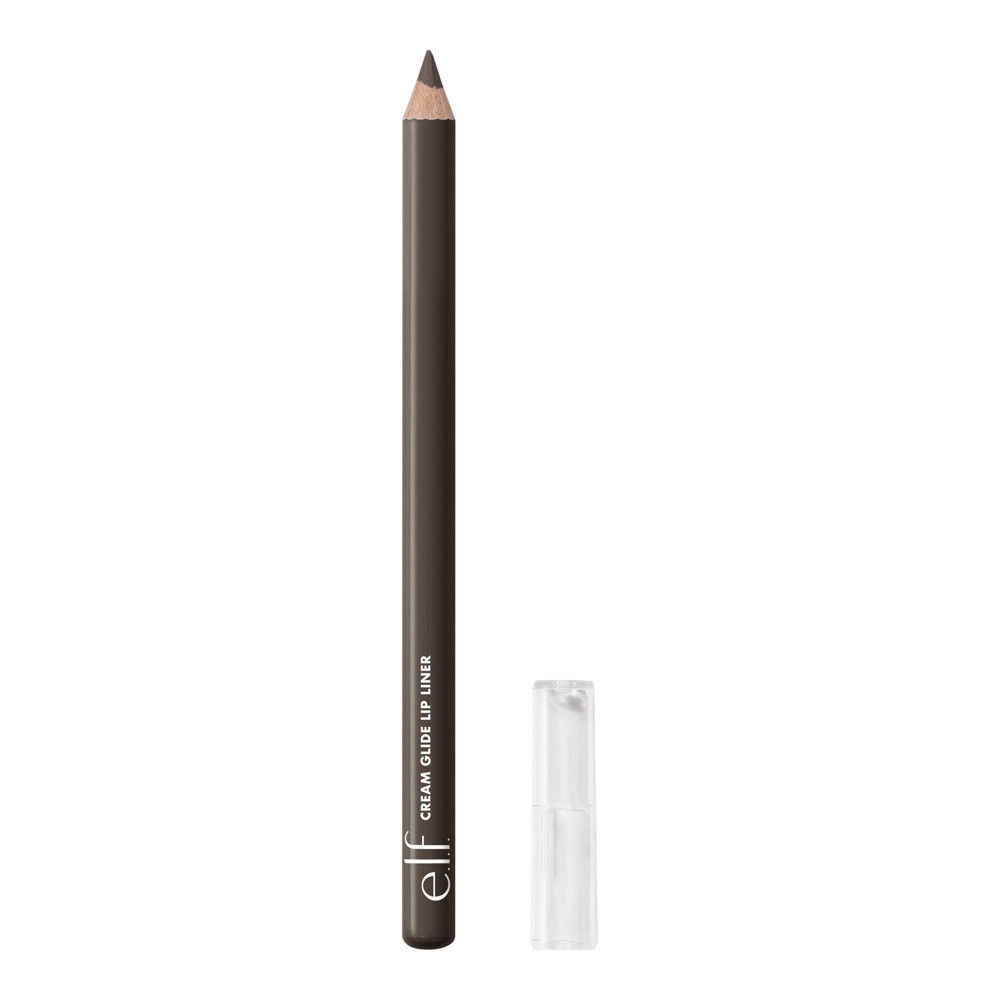
e.l.f. Cream Glide Lip Liner - Doppio Espresso - 0.03oz: Semi-Matte, Paraben-Free, Vegan
Summary
This lip liner features a blend of natural oils and waxes, such as castor seed oil, mango seed butter, and jojoba oil, which are beneficial for skin hydration and protection. The absence of parabens and synthetic fragrances enhances its safety profile. However, the presence of processed ingredients like titanium dioxide and iron oxides, while common in cosmetics, indicates a moderate level of processing, which slightly limits the score.
At a glance
Key ingredients 15
Caprylic/Capric TriglycerideGood
Caprylic/Capric Triglyceride is a mixed triester derived from coconut oil and glycerin. It is used as an emollient and helps to improve the spreadability of products. It is generally considered safe and non-irritating.
Risks
There are minimal risks associated with this ingredient, primarily limited to rare allergic reactions.
Benefits
It provides a lightweight, non-greasy barrier of lubrication that is highly valued in cosmetic formulations.
Ricinus Communis (Castor) Seed OilVery Good
Castor Seed Oil is a natural oil known for its moisturizing properties. It is rich in ricinoleic acid, which helps to lock in moisture. It is widely used in cosmetics for its skin-conditioning benefits.
Risks
Rarely, it may cause allergic reactions in sensitive individuals.
Benefits
It is highly effective in providing deep hydration and nourishment to the skin.
Mangifera Indica (Mango) Seed ButterVery Good
Mango Seed Butter is a natural fat extracted from mango seeds. It is known for its emollient properties and ability to soften and soothe the skin. It is rich in fatty acids and antioxidants.
Risks
There are minimal risks, with rare cases of allergic reactions.
Benefits
It provides excellent moisturizing benefits and helps to protect the skin from environmental stressors.
Euphorbia Cerifera (Candelilla) WaxGood
Candelilla Wax is a plant-derived wax used as a thickening agent and emollient. It helps to improve the texture and stability of cosmetic products. It is a vegan alternative to beeswax.
Risks
It is generally safe with low risk of irritation.
Benefits
It provides a smooth application and helps to lock in moisture.
MicaNeutral
Mica is a naturally occurring mineral dust used in cosmetics for its shimmering appearance. It is used to add a pearlescent effect to products. It is generally considered safe for use in cosmetics.
Risks
Inhalation of mica dust can be harmful, but this is not a concern in solid cosmetic products.
Benefits
It enhances the visual appeal of products by adding shine and luster.
Rhus Succedanea Fruit WaxGood
Rhus Succedanea Fruit Wax is a natural wax used as a thickener and emollient in cosmetics. It helps to improve the texture and consistency of products. It is derived from the berries of the Rhus Succedanea plant.
Risks
It is generally safe with low risk of irritation.
Benefits
It provides a smooth application and helps to retain moisture in the skin.
Hydrogenated Jojoba OilVery Good
Hydrogenated Jojoba Oil is a stable form of jojoba oil that is used as an emollient. It mimics the skin's natural oils and provides long-lasting moisture. It is highly valued for its skin-conditioning properties.
Risks
There are minimal risks, with rare cases of allergic reactions.
Benefits
It provides excellent moisturizing benefits and helps to protect the skin from environmental stressors.
Copernicia Cerifera (Carnauba) WaxGood
Carnauba Wax is a natural wax obtained from the leaves of the carnauba palm. It is used as a thickening agent and provides a glossy finish. It is known for its hypoallergenic and emollient properties.
Risks
It is generally safe with low risk of irritation.
Benefits
It provides a smooth application and helps to lock in moisture.
Limnanthes Alba (Meadowfoam) Seed OilVery Good
Meadowfoam Seed Oil is a natural oil known for its moisturizing and rejuvenating properties. It is rich in long-chain fatty acids that help to lock in moisture. It is highly stable and resistant to oxidation.
Risks
There are minimal risks, with rare cases of allergic reactions.
Benefits
It provides excellent moisturizing benefits and helps to protect the skin from environmental stressors.
Argania Spinosa Kernel OilVery Good
Argan Oil is a natural oil extracted from the kernels of the argan tree. It is rich in essential fatty acids and vitamin E, providing deep hydration and nourishment. It is widely used for its skin-conditioning benefits.
Risks
There are minimal risks, with rare cases of allergic reactions.
Benefits
It provides excellent moisturizing benefits and helps to improve skin elasticity.
Glyceryl CaprylateGood
Glyceryl Caprylate is a naturally derived emulsifier and skin-conditioning agent. It helps to stabilize formulations and improve skin feel. It is known for its antimicrobial properties.
Risks
It is generally safe with low risk of irritation.
Benefits
It helps to maintain the stability of cosmetic formulations and provides a smooth application.
Tocopheryl AcetateGood
Tocopheryl Acetate is a form of vitamin E used as an antioxidant in cosmetics. It helps to protect the skin from oxidative stress and improve skin texture. It is widely used for its skin-conditioning benefits.
Risks
It is generally safe, but high concentrations may cause skin irritation in sensitive individuals.
Benefits
It provides antioxidant protection and helps to improve skin health.
Ascorbyl PalmitateGood
Ascorbyl Palmitate is a stable form of vitamin C used as an antioxidant in cosmetics. It helps to protect the skin from oxidative stress and improve skin texture. It is known for its skin-brightening properties.
Risks
It is generally safe, but high concentrations may cause skin irritation in sensitive individuals.
Benefits
It provides antioxidant protection and helps to improve skin radiance.
Titanium Dioxide (CI 77891)Neutral
Titanium Dioxide is a mineral used as a pigment and UV filter in cosmetics. It provides opacity and sun protection. It is generally considered safe for use in cosmetics.
Risks
Inhalation of titanium dioxide dust can be harmful, but this is not a concern in solid cosmetic products.
Benefits
It provides sun protection and enhances the color and opacity of products.
Iron Oxides (CI 77491, CI 77499, CI 77492)Neutral
Iron Oxides are natural pigments used to provide color in cosmetics. They are stable and non-toxic, making them suitable for use in a variety of products. They are generally considered safe for use in cosmetics.
Risks
There are minimal risks associated with iron oxides, primarily limited to rare allergic reactions.
Benefits
They provide a wide range of color options and are stable under various conditions.
Processing
Processed Foods
Get the full breakdown in the Scout app
Scan any product to see lab results, healthy alternatives, and your personalized analysis.
Download on theApp Store