
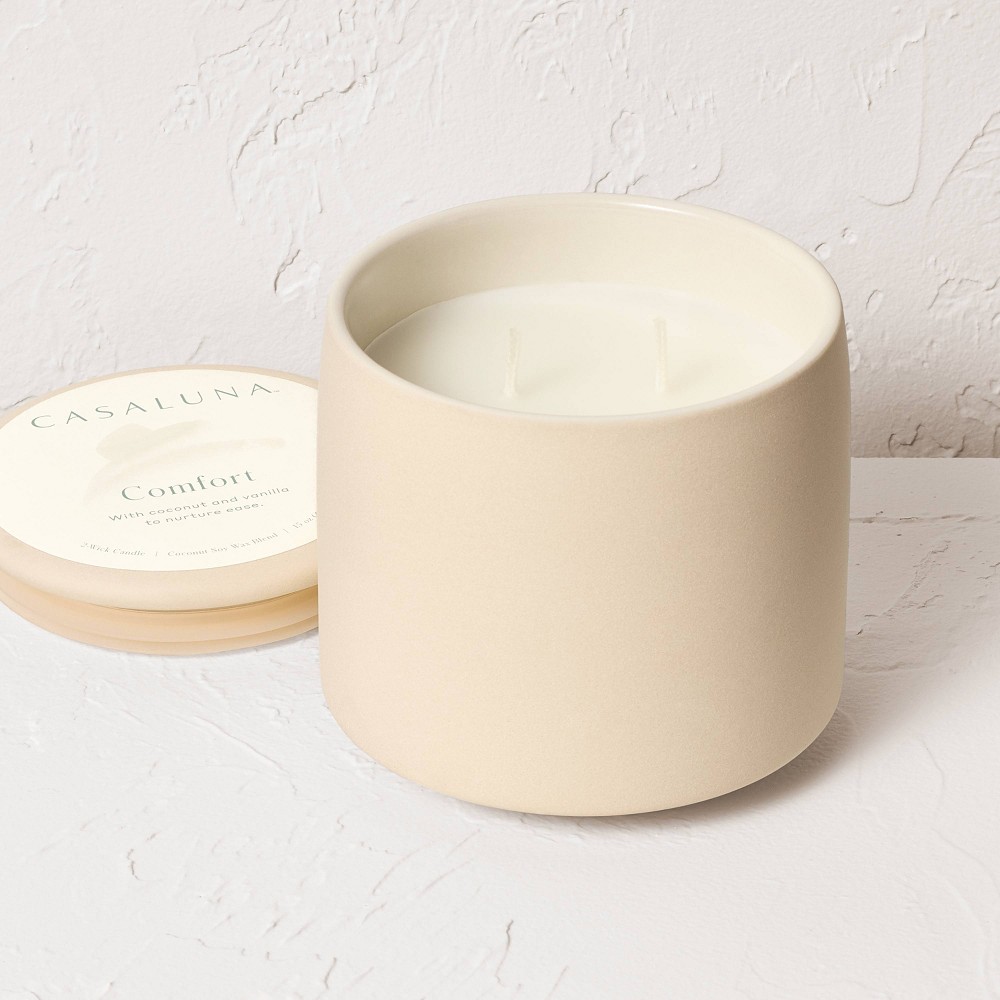

2 Wick Lidded Comfort Jar Candle 15oz - Casaluna™
Summary
This candle is made from soy wax, which is a renewable resource and burns cleaner than paraffin. It likely uses mostly natural fragrances, which are preferable to synthetic ones that can release harmful compounds. The use of a safe wick material, such as cotton or wood, would further enhance its safety profile.
At a glance
Key ingredients 5
Soybean oil
Soybean oil is often used in candles as a base for soy wax, which is a renewable resource. It burns cleaner than paraffin wax, producing less soot and smoke. This makes it a popular choice for eco-friendly candles.
Risks
There are minimal risks associated with soybean oil in candles, primarily related to potential allergies.
Benefits
Soybean oil contributes to a cleaner burn and is biodegradable, making it environmentally friendly.
Palm Wax
Palm wax is derived from palm oil and is used in candles for its ability to hold vibrant colors and create unique textures. It is a natural alternative to paraffin wax. When sustainably sourced, it is considered an eco-friendly option.
Risks
Unsustainable palm oil production can lead to deforestation and habitat destruction.
Benefits
Palm wax provides a hard, long-lasting burn and can be a sustainable choice if sourced responsibly.
Cotton Wick
Cotton wicks are used in candles for their clean burning properties. They do not contain metal cores, which can release harmful substances when burned. Cotton wicks are considered a safer and more natural option.
Risks
There are minimal risks associated with cotton wicks, primarily related to improper trimming which can cause uneven burning.
Benefits
Cotton wicks promote a clean burn and are free from harmful metals, enhancing air quality.
Coconut Wax
Coconut wax is made from the hydrogenation of coconut oil and is known for its clean burn and excellent scent throw. It is a renewable resource and is biodegradable. Coconut wax is often blended with other natural waxes to improve candle performance.
Risks
There are minimal risks associated with coconut wax, primarily related to potential allergies.
Benefits
Coconut wax burns cleanly and slowly, making it a sustainable and eco-friendly choice.
Beeswax
Beeswax is a natural wax produced by honey bees and is prized for its clean burning properties. It emits negative ions when burned, which can purify the air. Beeswax is considered one of the most natural and beneficial waxes for candles.
Risks
There are minimal risks associated with beeswax, primarily related to potential allergies.
Benefits
Beeswax burns cleanly and can improve air quality, making it a highly beneficial ingredient in candles.
Processing
Unprocessed or Minimally Processed Foods
Get the full breakdown in the Scout app
Scan any product to see lab results, healthy alternatives, and your personalized analysis.
Download on theApp Store