
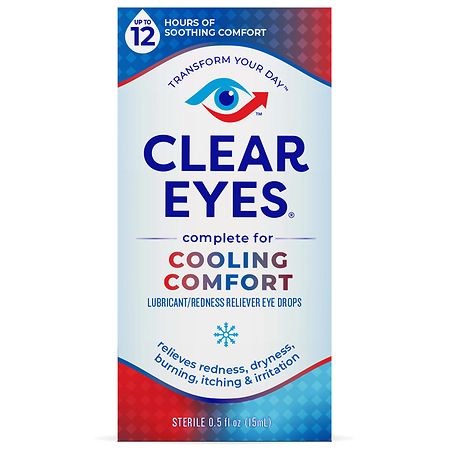


Clear Eyes Cooling Redness Relief / LIQUID
Analysis updated August 2026 · How Scout scores
At a glance
Summary
This eye drop product contains several synthetic ingredients that can be concerning for eye health. Naphazoline Hydrochloride, while effective for reducing redness, can cause rebound redness and dependency with prolonged use. Benzalkonium Chloride, a preservative, is known to irritate the eyes and potentially damage the corneal surface over time. Despite the presence of glycerin, which provides moisture, the overall formulation includes ingredients that may lead to irritation and other adverse effects with frequent use.
Key ingredients 9
GlycerinNeutral
Standard formulation ingredient — neither beneficial nor harmful at typical use.
Benefits
Helps to maintain moisture in the eye, providing relief from dryness and irritation.
Boric AcidNeutral
Boric Acid is used as a buffering agent to maintain the pH balance of eye drops. It is generally considered safe in small amounts but can be toxic in higher concentrations. Its role is primarily to stabilize the solution and enhance comfort during use.
Risks
Toxic in high concentrations, but safe in the amounts used in eye drops.
Benefits
Helps maintain pH balance and enhances comfort during use.
BetaDexNeutral
BetaDex is used as a stabilizer and solubilizer in pharmaceutical formulations. It is derived from starch and is generally considered safe for use in eye care products. Its primary function is to enhance the solubility of active ingredients.
Benefits
Enhances solubility and stability of active ingredients in the formulation.
MentholNeutral
Menthol provides a cooling sensation that can be soothing to the eyes. It is derived from mint oils and is generally safe in small amounts. Its primary role is to provide a refreshing feeling, although it does not contribute to the therapeutic effects of the product.
Risks
May cause irritation in some individuals if used in excess.
Benefits
Provides a cooling and soothing sensation to the eyes.
WaterNeutral
Water is used as a solvent and carrier for the active ingredients in eye drops. The quality and purity of water are crucial to ensure the safety and effectiveness of the product. It is essential for dissolving other ingredients and ensuring proper application.
Benefits
Acts as a solvent and carrier for active ingredients, ensuring proper application.
Sodium BorateNeutral
Sodium Borate is used as a buffering agent to maintain the pH of the solution. It is generally safe in the concentrations used in eye care products. Its primary function is to stabilize the pH and enhance the comfort of the eye drops.
Benefits
Helps stabilize pH and enhances comfort during use.
Naphazoline HydrochlorideBad
Naphazoline Hydrochloride is a vasoconstrictor used to reduce redness in the eyes by narrowing blood vessels. It is a synthetic compound and can cause rebound redness with prolonged use. Overuse can lead to increased irritation and dependency.
Risks
Prolonged use can cause rebound redness and increased irritation.
Benefits
Provides temporary relief from redness by constricting blood vessels.
Edetate DisodiumBad
Edetate Disodium is a chelating agent used to bind metal ions, preventing their adverse effects in formulations. It is a synthetic compound that can cause irritation in sensitive individuals. Its use is primarily to enhance the stability of the product by preventing metal ion contamination.
Risks
Can cause irritation in sensitive individuals.
Benefits
Prevents metal ion contamination, enhancing product stability.
Benzalkonium ChlorideVery Bad
Benzalkonium Chloride is a preservative that can be irritating to the eyes, especially with frequent use. It is a synthetic compound known for its antimicrobial properties but can cause damage to the corneal surface over time. Its presence in eye drops is controversial due to potential long-term effects on eye health.
Risks
Can cause irritation and damage to the corneal surface with prolonged use.
Benefits
Provides antimicrobial protection to prevent contamination of the product.
Processing
Processed Foods
Get the full breakdown in the Scout appTake Scout shopping
Scan any product to see lab results, healthy alternatives, and your personalized analysis.
Download on theApp Store GET IT ONGoogle Play