
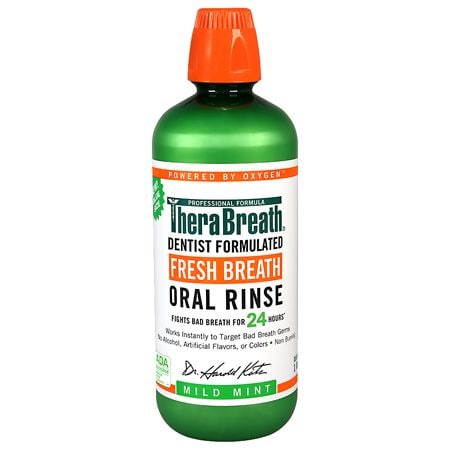
TheraBreath Fresh Breath Mouthwash Mild Mint Alcohol-Free 1 Liter
Analysis updated August 2026 · How Scout scores
At a glance
Summary
This mouthwash contains beneficial ingredients like sodium bicarbonate and peppermint oil, which contribute to oral health and fresh breath. However, the presence of PEG-40 hydrogenated castor oil and sodium hydroxide, which can be irritating, along with the processed nature of the product, affects its overall safety profile. The formulation is free from alcohol, which is a positive aspect, but the inclusion of synthetic ingredients limits its score.
Key ingredients 8
WaterNeutral
Water is a common base in mouthwash that helps dissolve other ingredients and provides hydration without adding any flavor or active properties.
See more about Water →Sodium BicarbonateNeutral
Sodium bicarbonate helps neutralize acids and freshen breath without posing significant health concerns.
See more about Sodium Bicarbonate →Sodium HydroxideNeutral
Sodium hydroxide is used to adjust pH levels, ensuring the product remains stable and effective.
See more about Sodium Hydroxide →PEG-40 Hydrogenated Castor OilBad
This ingredient is used as an emulsifier but can cause skin irritation or allergic reactions in some individuals.
See more about PEG-40 Hydrogenated Castor Oil →Sodium ChloriteBad
Sodium chlorite is used for its antimicrobial properties but may cause irritation or sensitivity in the mouth.
Tetrasodium EDTABad
Tetrasodium EDTA helps stabilize the formula but can bind to minerals and potentially cause irritation or sensitivity.
See more about Tetrasodium EDTA →Sodium BenzoateBad
Sodium benzoate is a preservative that may cause allergic reactions or sensitivities in some consumers.
See more about Sodium Benzoate →Mentha Piperita (Peppermint) OilBad
Peppermint oil provides flavor and freshness but can cause allergic reactions or irritation in sensitive individuals.
See more about Mentha Piperita (Peppermint) Oil →Processing
Processed Foods
Get the full breakdown in the Scout appTake Scout shopping
Scan any product to see lab results, healthy alternatives, and your personalized analysis.
Download on theApp Store GET IT ONGoogle PlayAmazon pricing & content
Amazon price as of . Product prices and availability are accurate as of the date/time indicated and are subject to change. Any price and availability information displayed on Amazon.com at the time of purchase will apply to the purchase of this product.
CERTAIN CONTENT THAT APPEARS ON THIS SITE COMES FROM AMAZON. THIS CONTENT IS PROVIDED “AS IS” AND IS SUBJECT TO CHANGE OR REMOVAL AT ANY TIME.