


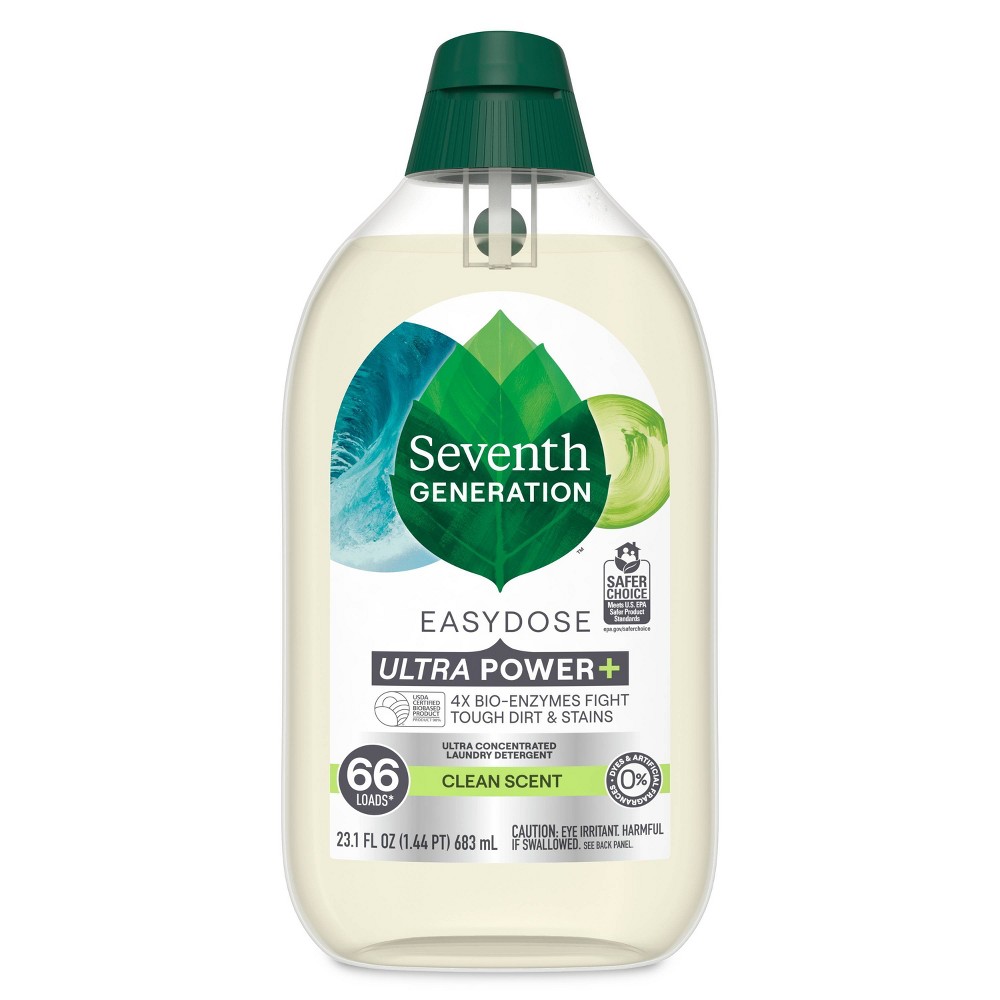
Seventh Generation Concentrated Baby Laundry Detergent, Fresh Scent, 40 Fl Oz, Pack of 2
Summary
This laundry detergent is processed and contains synthetic fragrances, which can be a concern for indoor air quality and potential skin irritation. However, it does not include harsh surfactants like sodium lauryl sulfate or sodium hypochlorite, which are more harmful. The product's formulation is mostly plant-based, contributing to a moderate score.
At a glance
Key ingredients 5
3-hexenol
3-hexenol is an alcohol commonly used for its fresh, green scent in cleaning products. It is considered relatively safe and is often used in small quantities. Its primary role is to enhance the fragrance profile of the product.
Risks
There are minimal risks associated with 3-hexenol, though it may cause mild irritation if used in high concentrations.
Benefits
It provides a pleasant, natural scent that can enhance the user experience without the need for synthetic fragrances.
Amylase
Amylase is an enzyme that helps break down starches into sugars, making it effective in cleaning products for removing food stains. It is derived from natural sources and is biodegradable. Its inclusion in detergents enhances cleaning efficiency.
Risks
Amylase can cause allergic reactions in sensitive individuals if inhaled or if it comes into contact with skin.
Benefits
As a plant-based enzyme, it is environmentally friendly and improves the stain-removing power of the detergent.
Benzisothiazolinone
Benzisothiazolinone is a synthetic preservative used to prevent microbial growth in cleaning products. It is effective in extending the shelf life of products by inhibiting bacteria and fungi. However, it is a synthetic compound and not biodegradable.
Risks
It can cause skin irritation and allergic reactions in some individuals, and its environmental impact is a concern due to its synthetic nature.
Benefits
It helps maintain product integrity by preventing spoilage, ensuring the product remains effective over time.
Calcium Chloride
Calcium Chloride is used in cleaning products as a stabilizer and to control moisture. It is a naturally occurring mineral salt that is generally recognized as safe. Its hygroscopic nature helps in maintaining the consistency of the product.
Risks
In high concentrations, it can cause skin and eye irritation, but it is typically used in safe amounts in consumer products.
Benefits
It helps in maintaining the stability and effectiveness of the detergent by preventing clumping and ensuring even distribution of ingredients.
Cananga Odorata (Ylang Ylang)
Cananga Odorata, commonly known as Ylang Ylang, is used for its natural fragrance properties. It is derived from the flowers of the Ylang Ylang tree and is considered a natural alternative to synthetic fragrances. Its inclusion adds a floral scent to the product.
Risks
Some individuals may experience allergic reactions or skin irritation from essential oils, including Ylang Ylang.
Benefits
It provides a natural, pleasant fragrance that can enhance the sensory experience of using the product without relying on synthetic chemicals.
Processing
Processed Foods
Get the full breakdown in the Scout app
Scan any product to see lab results, healthy alternatives, and your personalized analysis.
Download on theApp Store