
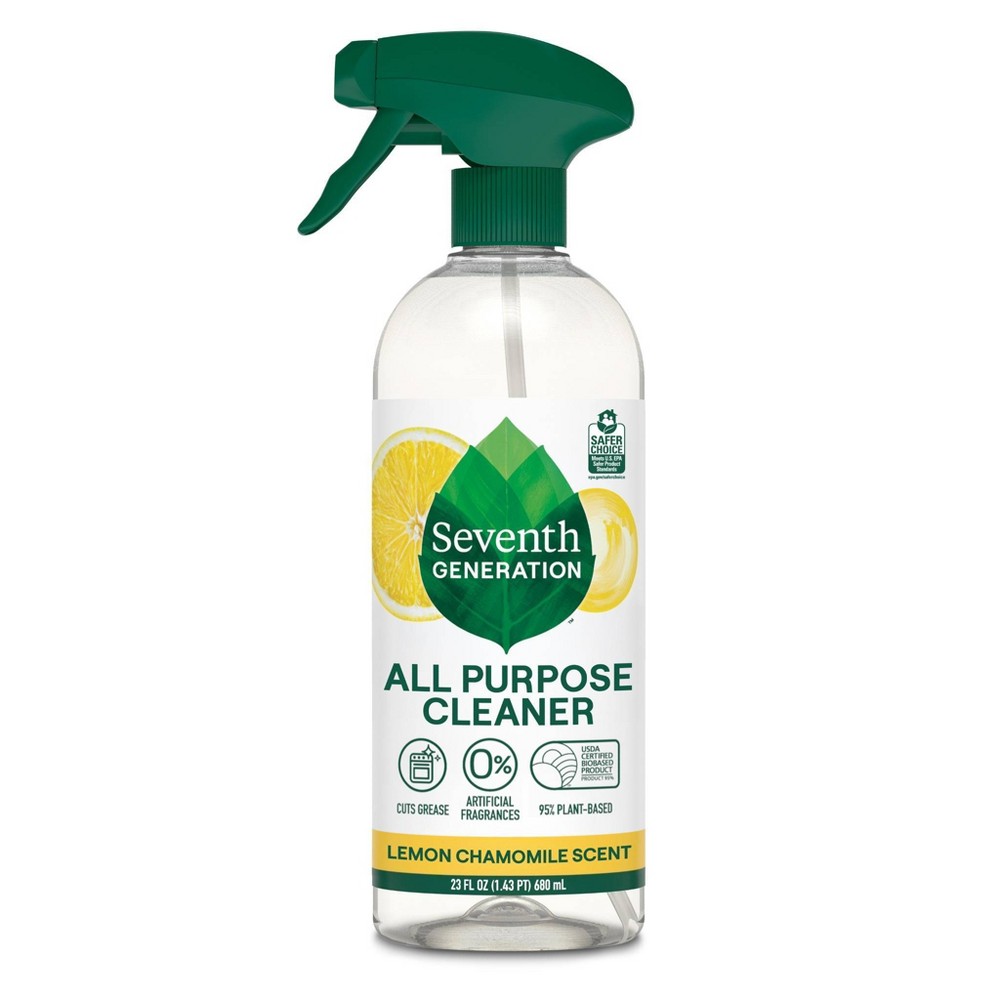

Seventh Generation Lemon All Purpose Cleaner Spray - 23 fl oz: Dye-Free, Phosphate-Free, Artificial Fragrance-Free
Analysis updated October 2026 · How Scout scores
At a glance
Summary
This cleaning product features a range of plant-derived ingredients, including mild surfactants like Caprylyl/Decyl Glucoside and Decyl Glucoside, which are effective and biodegradable. It is free from harsh chemicals such as SLS, SLES, and synthetic fragrances, making it safe for indoor use and environmentally friendly. The inclusion of essential oils like chamomile and orange oil adds natural fragrance and cleaning power without compromising safety.
Key ingredients 10
Anthemis nobilis (chamomile) flower oilGood
Chamomile flower oil is known for its soothing and anti-inflammatory properties. It is often used in natural cleaning products for its mild and pleasant scent. Its inclusion in cleaning products can enhance the fragrance without synthetic additives.
Risks
There are minimal risks associated with chamomile flower oil, though some individuals may experience allergic reactions.
Benefits
Chamomile flower oil provides a natural fragrance and may offer mild antimicrobial properties.
AmylaseGood
Amylase is an enzyme that helps break down starches into sugars. In cleaning products, it aids in the removal of food residues. Its use is beneficial for enhancing cleaning efficiency without harsh chemicals.
Risks
Amylase is generally safe, but inhalation of enzyme dust can cause respiratory irritation.
Benefits
Amylase improves the cleaning power of products by breaking down starch-based stains.
Barosma betulina (buchu) leaf oilGood
Buchu leaf oil is derived from a plant native to South Africa and is known for its antiseptic properties. It is used in cleaning products for its natural fragrance and potential antimicrobial effects. Its inclusion supports a more natural formulation.
Risks
Buchu leaf oil can cause skin irritation in sensitive individuals.
Benefits
Buchu leaf oil provides a natural scent and may contribute to the antimicrobial efficacy of the cleaner.
Caprylyl/Decyl GlucosideGood
Caprylyl/Decyl Glucoside is a mild, plant-derived surfactant. It is used in cleaning products for its ability to effectively remove dirt and grease without being harsh on surfaces. Its biodegradability makes it an environmentally friendly choice.
Risks
There are minimal risks associated with this ingredient, though it can cause mild irritation in sensitive individuals.
Benefits
This surfactant is gentle on skin and surfaces, making it suitable for sensitive environments.
Caprylyl/Myristyl GlucosideGood
Caprylyl/Myristyl Glucoside is a gentle, plant-derived surfactant. It is effective in cleaning formulations for its ability to emulsify oils and dirt. Its use supports a more natural and less irritating product.
Risks
It may cause mild irritation if used in high concentrations.
Benefits
This ingredient is biodegradable and suitable for sensitive skin, enhancing the product's safety profile.
Citrus aurantium dulcis (orange) oilGood
Orange oil is a natural essential oil known for its pleasant citrus scent and degreasing properties. It is commonly used in cleaning products for its ability to cut through grease and leave a fresh aroma. Its natural origin makes it a preferred choice over synthetic fragrances.
Risks
Orange oil can cause skin irritation in some individuals.
Benefits
It enhances cleaning efficacy and provides a refreshing scent.
Citrus aurantium dulcis (orange) peel oilGood
Orange peel oil is extracted from the peel of oranges and is valued for its strong citrus fragrance. It is used in cleaning products for its natural scent and potential antimicrobial properties. Its inclusion supports a more natural product formulation.
Risks
Potential skin irritation can occur with direct contact.
Benefits
Orange peel oil offers a natural fragrance and may enhance the product's cleaning power.
Decyl GlucosideGood
Decyl Glucoside is a mild, non-ionic surfactant derived from glucose and coconut oil. It is used in cleaning products for its ability to effectively cleanse without irritation. Its biodegradability and plant-based origin make it an environmentally friendly option.
Risks
It is generally safe, but can cause mild irritation in sensitive individuals.
Benefits
Decyl Glucoside is gentle on skin and surfaces, making it suitable for sensitive applications.
CedrenolNeutral
Cedrenol is a fragrance ingredient derived from cedarwood. It is used in cleaning products for its woody aroma. While it is a natural compound, its primary function is scent-related.
Risks
Cedrenol can cause allergic reactions in sensitive individuals.
Benefits
It provides a natural woody scent, contributing to the product's fragrance profile.
Benzyl AcetateBad
Benzyl acetate is a synthetic compound used for its pleasant floral aroma. It is commonly found in cleaning products and perfumes. However, it can be an irritant and is not considered a natural ingredient.
Risks
Benzyl acetate can cause skin and respiratory irritation and is a potential allergen.
Benefits
It provides a floral scent to products, enhancing the sensory experience.
Processing
Unprocessed or Minimally Processed Foods
Get the full breakdown in the Scout appTake Scout shopping
Scan any product to see lab results, healthy alternatives, and your personalized analysis.
Download on theApp Store GET IT ONGoogle PlayAmazon pricing & content
Amazon price as of . Product prices and availability are accurate as of the date/time indicated and are subject to change. Any price and availability information displayed on Amazon.com at the time of purchase will apply to the purchase of this product.
CERTAIN CONTENT THAT APPEARS ON THIS SITE COMES FROM AMAZON. THIS CONTENT IS PROVIDED “AS IS” AND IS SUBJECT TO CHANGE OR REMOVAL AT ANY TIME.