
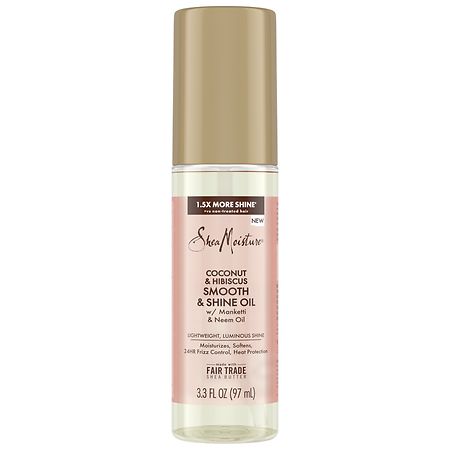

SheaMoisture Coconut and Hibiscus Smooth + Shine Hair Oil - 3.3 fl oz
SheaMoistureAnalysis updated October 2026 · How Scout scores
At a glance
Summary
This hair oil contains a variety of beneficial natural oils such as sunflower, castor, and coconut oil, which are known for their moisturizing and protective properties. The inclusion of squalane and hibiscus extract further enhances its skin and hair benefits. However, the presence of synthetic fragrance, which can cause irritation and allergic reactions, slightly detracts from its overall safety profile.
Key ingredients 14
Helianthus Annuus (Sunflower) Seed OilVery Good
Sunflower seed oil is a natural oil rich in vitamins A, D, and E. It is known for its moisturizing properties and ability to improve skin barrier function. It is generally well-tolerated and beneficial for skin and hair health.
Risks
There are minimal risks associated with sunflower seed oil, though some individuals may experience mild allergic reactions.
Benefits
It provides excellent emollient properties, helping to retain moisture in the skin and hair.
Ricinus Communis (Castor) Seed OilVery Good
Castor oil is a natural oil known for its moisturizing and anti-inflammatory properties. It is often used to promote hair growth and improve scalp health. It is generally safe and beneficial for skin and hair.
Risks
Rarely, it may cause allergic reactions or skin irritation.
Benefits
Promotes hair growth and provides deep moisturization.
Cocos Nucifera (Coconut) OilVery Good
Coconut oil is a natural oil known for its moisturizing and antimicrobial properties. It is widely used to improve skin and hair health. It is generally safe and beneficial for most users.
Risks
May cause acne or skin irritation in some individuals with sensitive skin.
Benefits
Deeply moisturizes and nourishes the skin and hair.
Hibiscus Rosa-Sinensis Flower ExtractVery Good
Hibiscus extract is rich in antioxidants and has anti-inflammatory properties. It is used to improve skin elasticity and promote hair health. It is generally safe and beneficial for skin and hair.
Risks
Rarely, it may cause allergic reactions.
Benefits
Enhances skin elasticity and promotes healthy hair.
SqualaneVery Good
Squalane is a highly effective moisturizer and emollient. It mimics the skin's natural oils, making it an excellent hydrator. It is non-irritating and suitable for all skin types.
Risks
Minimal risk of irritation or allergic reaction.
Benefits
Provides deep hydration and improves skin texture.
Schinziophyton Rautanenii Kernel OilVery Good
This oil, also known as mongongo oil, is rich in vitamin E and polyunsaturated fatty acids. It provides excellent moisturizing and protective properties. It is generally safe and beneficial for skin and hair.
Risks
Minimal risk of irritation or allergic reaction.
Benefits
Offers moisturizing and protective benefits for skin and hair.
Melia Azadirachta (Neem) Seed OilVery Good
Neem oil is known for its antibacterial and anti-inflammatory properties. It is used to treat various skin conditions and improve scalp health. It is generally safe and beneficial for skin and hair.
Risks
May cause skin irritation in sensitive individuals.
Benefits
Provides antibacterial and anti-inflammatory benefits.
TocopherolVery Good
Tocopherol, or vitamin E, is a powerful antioxidant that helps protect the skin from free radical damage. It is used to improve skin health and appearance. It is generally safe and beneficial for skin and hair.
Risks
Minimal risk of irritation or allergic reaction.
Benefits
Protects the skin from oxidative stress and improves skin health.
Brassica Campestris (Rapeseed) Seed OilGood
Rapeseed oil is a natural oil rich in omega-3 and omega-6 fatty acids. It is used for its emollient properties and ability to improve skin barrier function. It is generally safe and beneficial for skin and hair.
Risks
Minimal risk of irritation or allergic reaction.
Benefits
Improves skin barrier function and provides emollient properties.
Glycine Soja (Soybean) OilGood
Soybean oil is a natural oil rich in essential fatty acids and vitamin E. It is used for its moisturizing and antioxidant properties. It is generally safe and beneficial for skin and hair.
Risks
May cause allergic reactions in individuals with soy allergies.
Benefits
Provides moisturizing and antioxidant benefits.
Isopropyl PalmitateNeutral
Isopropyl palmitate is an ester of isopropyl alcohol and palmitic acid, used as an emollient and thickening agent. It helps to improve the texture of formulations. It is generally considered safe but can cause skin irritation in sensitive individuals.
Risks
Potential to cause skin irritation or acne in sensitive individuals.
Benefits
Improves the spreadability and texture of cosmetic products.
OctyldodecanolNeutral
Octyldodecanol is a fatty alcohol used as an emollient and emulsifier in cosmetics. It helps to improve the texture and feel of products. It is generally considered safe for use in cosmetics.
Risks
May cause mild irritation in sensitive skin types.
Benefits
Enhances the texture and spreadability of formulations.
Hydrogenated Ethylhexyl OlivateNeutral
This ingredient is derived from olive oil and used as an emollient. It helps to condition and soften the skin and hair. It is generally considered safe and non-irritating.
Risks
Minimal risk of irritation or allergic reaction.
Benefits
Provides conditioning and softening effects.
FragranceBad
Fragrance in cosmetics can cause allergic reactions and skin irritation. It is a common sensitizer and can contain undisclosed chemicals. It is generally advised to avoid products with synthetic fragrances if sensitive.
Risks
Potential to cause allergic reactions and skin irritation.
Benefits
Provides a pleasant scent to the product.
Get the full breakdown in the Scout appTake Scout shopping
Scan any product to see lab results, healthy alternatives, and your personalized analysis.
Download on theApp Store GET IT ONGoogle PlayAmazon pricing & content
Amazon price as of . Product prices and availability are accurate as of the date/time indicated and are subject to change. Any price and availability information displayed on Amazon.com at the time of purchase will apply to the purchase of this product.
CERTAIN CONTENT THAT APPEARS ON THIS SITE COMES FROM AMAZON. THIS CONTENT IS PROVIDED “AS IS” AND IS SUBJECT TO CHANGE OR REMOVAL AT ANY TIME.