
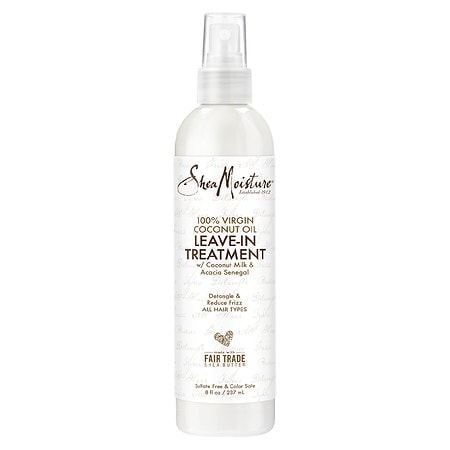

SheaMoisture 100% Virgin Coconut Oil Leave In Conditioner - 8 fl oz: Moisturizing, Detangling, Dry Hair, Paraben-Free
SheaMoistureAnalysis updated August 2026 · How Scout scores
At a glance
Summary
This leave-in conditioner features a variety of beneficial natural ingredients such as coconut oil, shea butter, and sweet almond oil, which are known for their moisturizing and nourishing properties. The product is free from parabens and other harsh chemicals, but it does contain fragrance, which can be a potential irritant for sensitive individuals. Overall, the formulation is mostly clean with a focus on natural oils and extracts, but the presence of fragrance slightly impacts its overall safety profile.
Key ingredients 24
Cocos Nucifera (Coconut) OilVery Good
Coconut oil is a natural emollient known for its moisturizing and nourishing properties. It contains fatty acids that help improve skin barrier function. It is widely used for its ability to hydrate and condition the skin.
Risks
May cause breakouts in acne-prone skin due to its comedogenic nature.
Benefits
Deeply moisturizes and nourishes the skin, improving texture and softness.
Butyrospermum Parkii (Shea) ButterVery Good
Shea Butter is a natural fat extracted from the nuts of the shea tree. It is rich in vitamins and fatty acids, providing excellent moisturizing and healing properties. It is widely used for its ability to soothe and nourish the skin.
Risks
Rarely, individuals with nut allergies may experience sensitivity.
Benefits
Deeply hydrates and nourishes the skin, improving elasticity and softness.
Prunus Amygdalus Dulcis (Sweet Almond) OilVery Good
Sweet Almond Oil is a natural oil rich in vitamins and fatty acids. It is known for its emollient properties, helping to soften and smooth the skin. It is suitable for all skin types and is generally well-tolerated.
Risks
May cause allergic reactions in individuals with nut allergies.
Benefits
Moisturizes and nourishes the skin, improving texture and appearance.
Argania Spinosa Kernel (Argan) OilVery Good
Argan Oil is a natural oil rich in essential fatty acids and vitamin E. It is known for its moisturizing and nourishing properties, helping to improve skin and hair health. It is widely used for its ability to hydrate and condition.
Risks
May cause allergic reactions in individuals with nut allergies.
Benefits
Deeply moisturizes and nourishes the skin and hair, improving texture and shine.
Rosa Canina Fruit (Rosehip) OilVery Good
Rosehip Oil is rich in essential fatty acids and vitamins, providing excellent moisturizing and regenerative properties. It is known for its ability to improve skin texture and reduce the appearance of scars. It is generally well-tolerated and beneficial for skin health.
Benefits
Improves skin texture and reduces the appearance of scars, providing deep hydration.
TocopherolVery Good
Tocopherol, also known as Vitamin E, is a powerful antioxidant that helps protect the skin from environmental damage. It is known for its moisturizing and healing properties. It is widely used for its ability to improve skin health and appearance.
Benefits
Provides antioxidant protection and improves skin hydration and healing.
Glycerin (Vegetable)Good
Glycerin is a humectant that attracts moisture to the skin. It is derived from vegetable sources and is known for its moisturizing properties. It is generally well-tolerated and beneficial for dry skin.
Risks
Rarely, glycerin can cause irritation in sensitive individuals.
Benefits
Helps retain moisture in the skin, improving hydration and softness.
Caprylic/Capric TriglycerideGood
Caprylic/Capric Triglyceride is an emollient derived from coconut oil and glycerin. It helps to moisturize and soften the skin. It is lightweight and non-greasy, making it suitable for various skin types.
Risks
Generally considered safe with minimal risk of irritation.
Benefits
Provides a silky feel and helps improve the spreadability of the product.
Cocos Nucifera (Coconut) Fruit ExtractGood
Coconut Fruit Extract is derived from the coconut fruit and is known for its moisturizing properties. It contains nutrients that help nourish and hydrate the skin. It is generally well-tolerated and beneficial for dry skin.
Benefits
Provides hydration and nourishment to the skin, improving softness and texture.
Algae ExtractGood
Algae Extract is rich in vitamins and minerals, providing antioxidant and moisturizing benefits. It helps protect the skin from environmental damage and improve hydration. It is generally well-tolerated and beneficial for skin health.
Benefits
Provides antioxidant protection and improves skin hydration.
Equisetum Arvense (Horsetail) ExtractGood
Horsetail Extract is known for its high silica content, which helps strengthen hair and improve skin elasticity. It has antioxidant and anti-inflammatory properties. It is generally well-tolerated and beneficial for hair and skin health.
Benefits
Strengthens hair and improves skin elasticity, providing antioxidant benefits.
Urtica Dioica (Nettle) Leaf ExtractGood
Nettle Leaf Extract is known for its anti-inflammatory and antioxidant properties. It helps soothe and protect the skin, improving overall skin health. It is generally well-tolerated and beneficial for sensitive skin.
Benefits
Soothes and protects the skin, providing antioxidant benefits.
Hydrolyzed KeratinGood
Hydrolyzed Keratin is a protein that helps strengthen and repair hair. It improves hair elasticity and reduces breakage. It is widely used for its ability to enhance hair health and appearance.
Benefits
Strengthens and repairs hair, improving elasticity and reducing breakage.
Hydrolyzed Vegetable Protein PG-Propyl SilanetriolGood
This ingredient is a protein-silicone complex that helps strengthen and protect hair. It improves hair texture and reduces damage. It is generally well-tolerated and beneficial for hair health.
Benefits
Strengthens and protects hair, improving texture and reducing damage.
WaterNeutral
Water is a common solvent used in cosmetic formulations. It helps dissolve other ingredients and provides a base for the product. It does not have any direct benefits or risks in this context.
Benefits
Provides a base for the formulation and helps in the application of the product.
Glyceryl StearateNeutral
Glyceryl Stearate is an emulsifier that helps blend water and oils in formulations. It is generally considered safe and non-irritating. It does not have significant direct benefits or risks.
Benefits
Helps stabilize the formulation and improve texture.
Glyceryl CaprylateNeutral
Glyceryl Caprylate is an emulsifier and skin conditioning agent. It helps stabilize formulations and improve skin feel. It is generally considered safe and non-irritating.
Benefits
Enhances the texture and stability of the product.
Coconut AcidNeutral
Coconut Acid is a fatty acid derived from coconut oil. It is used as a surfactant and emulsifier in cosmetic formulations. It is generally considered safe and non-irritating.
Benefits
Helps stabilize formulations and improve texture.
Glyceryl Stearate CitrateNeutral
Glyceryl Stearate Citrate is an emulsifier that helps blend water and oils in formulations. It is derived from natural sources and is generally considered safe. It does not have significant direct benefits or risks.
Benefits
Improves the stability and texture of the product.
Cetearyl AlcoholNeutral
Cetearyl Alcohol is a fatty alcohol used as an emollient and thickener in cosmetic formulations. It helps improve the texture and spreadability of products. It is generally considered safe and non-irritating.
Benefits
Enhances the texture and feel of the product.
Acacia Senegal Gum ExtractNeutral
Acacia Senegal Gum Extract is used as a thickening agent in cosmetic formulations. It helps improve the texture and stability of products. It is generally considered safe and non-irritating.
Benefits
Enhances the texture and stability of the product.
Glyceryl UndecylenateNeutral
Glyceryl Undecylenate is an emulsifier and skin conditioning agent. It helps stabilize formulations and improve skin feel. It is generally considered safe and non-irritating.
Benefits
Enhances the texture and stability of the product.
Cetrimonium ChlorideBad
Processed additive flagged under Scout's ingredient doctrine.
Risks
May cause irritation if used in high concentrations.
Benefits
Improves hair texture and reduces static, making hair easier to manage.
Fragrance (Essential Oil Blend)Very Bad
Fragrance, even when derived from essential oils, can cause allergic reactions and irritation in sensitive individuals. It is often criticized for its potential to trigger skin sensitivities. While it adds scent, it does not provide direct skin benefits.
Risks
Potential to cause allergic reactions and irritation, especially in sensitive skin.
Benefits
Adds a pleasant scent to the product, enhancing user experience.
Get the full breakdown in the Scout appTake Scout shopping
Scan any product to see lab results, healthy alternatives, and your personalized analysis.
Download on theApp Store GET IT ONGoogle PlayAmazon pricing & content
Amazon price as of . Product prices and availability are accurate as of the date/time indicated and are subject to change. Any price and availability information displayed on Amazon.com at the time of purchase will apply to the purchase of this product.
CERTAIN CONTENT THAT APPEARS ON THIS SITE COMES FROM AMAZON. THIS CONTENT IS PROVIDED “AS IS” AND IS SUBJECT TO CHANGE OR REMOVAL AT ANY TIME.