
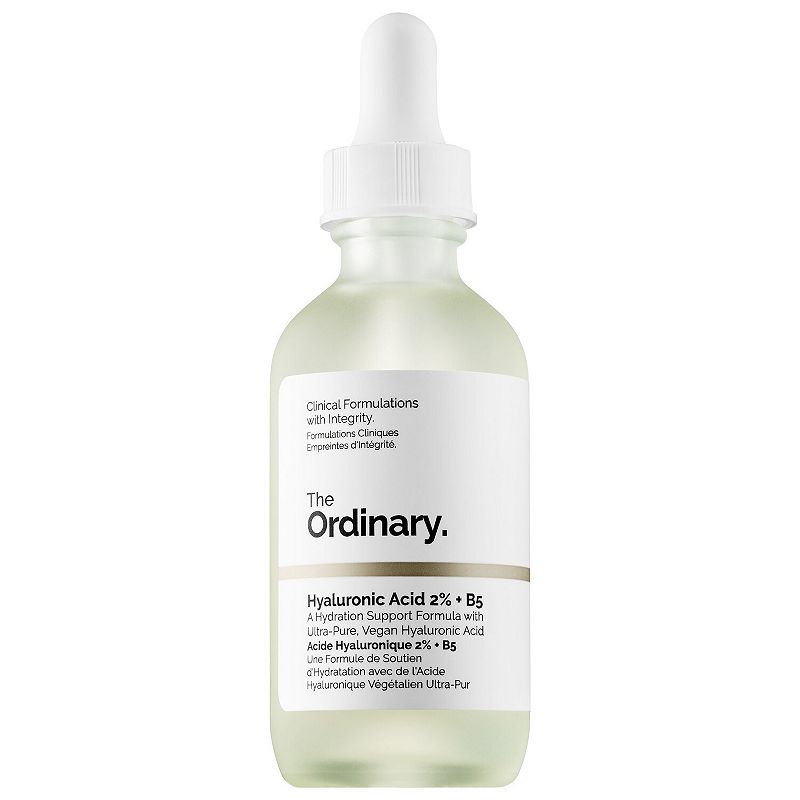
The Ordinary Hyaluronic Acid 2% + B5 30ml
Summary
This product features a clean and minimal ingredient list with safe and beneficial components like hyaluronic acid and panthenol, which are known for their hydrating and soothing properties. The absence of harsh chemicals, synthetic fragrances, or known irritants contributes to its high rating, making it a safe choice for skincare with minimal processing involved.
At a glance
Key ingredients 9
Aqua
Aqua, or water, is a common solvent used in cosmetic formulations. It helps dissolve other ingredients and provides a base for the product. It is essential for hydrating the skin.
Risks
There are no significant risks associated with water in cosmetics.
Benefits
Water is crucial for hydration and helps in the absorption of other beneficial ingredients.
Sodium Hyaluronate
Sodium Hyaluronate is a form of hyaluronic acid that is used for its excellent hydrating properties. It can hold up to 1000 times its weight in water, making it a powerful moisturizer. It helps to plump the skin and reduce the appearance of fine lines.
Risks
There are minimal risks associated with Sodium Hyaluronate, though some individuals may experience mild irritation.
Benefits
It provides deep hydration and helps improve skin elasticity and smoothness.
Pentylene Glycol
Pentylene Glycol is a synthetic humectant that helps retain moisture in the skin. It also acts as a solvent and preservative booster. It enhances the texture and feel of the product.
Risks
In rare cases, it may cause skin irritation or allergic reactions.
Benefits
It improves skin hydration and enhances the efficacy of other active ingredients.
Propanediol
Propanediol is a glycol that serves as a solvent and skin-conditioning agent. It is derived from corn sugar and is considered a safer alternative to propylene glycol. It helps improve the texture and spreadability of the product.
Risks
Propanediol is generally safe, but it may cause irritation in sensitive individuals.
Benefits
It enhances skin hydration and improves the absorption of other ingredients.
Sodium Hyaluronate Crosspolymer
Sodium Hyaluronate Crosspolymer is a modified form of hyaluronic acid that provides long-lasting hydration. It forms a film on the skin that helps retain moisture. It is used to enhance the skin's appearance and texture.
Risks
There are minimal risks, though it may cause mild irritation in some users.
Benefits
It offers prolonged hydration and helps maintain skin suppleness.
Panthenol
Panthenol, also known as Vitamin B5, is a humectant that attracts and retains moisture in the skin. It has anti-inflammatory properties and helps soothe irritated skin. It is widely used for its moisturizing and healing benefits.
Risks
Panthenol is generally safe, but overuse may lead to skin irritation.
Benefits
It improves skin hydration, reduces inflammation, and promotes healing.
Ahnfeltia Concinna Extract
Ahnfeltia Concinna Extract is derived from red algae and is used for its moisturizing and antioxidant properties. It helps protect the skin from environmental stressors. It is valued for its ability to improve skin texture and hydration.
Risks
There are no significant risks associated with this extract.
Benefits
It provides antioxidant protection and enhances skin hydration.
Glycerin
Glycerin is a natural humectant that draws moisture into the skin. It is widely used in skincare for its hydrating properties. It helps maintain the skin's moisture balance and improves its barrier function.
Risks
Glycerin is generally safe, but in high concentrations, it may cause irritation.
Benefits
It enhances skin hydration and helps maintain a healthy skin barrier.
Trisodium
Trisodium is often used as a buffering agent in cosmetic formulations. It helps maintain the pH balance of the product. It ensures the stability and efficacy of the formulation.
Risks
There are minimal risks, though it may cause irritation in sensitive individuals.
Benefits
It stabilizes the product and maintains its effectiveness.
Processing
Unprocessed or Minimally Processed Foods
Get the full breakdown in the Scout app
Scan any product to see lab results, healthy alternatives, and your personalized analysis.
Download on theApp Store