
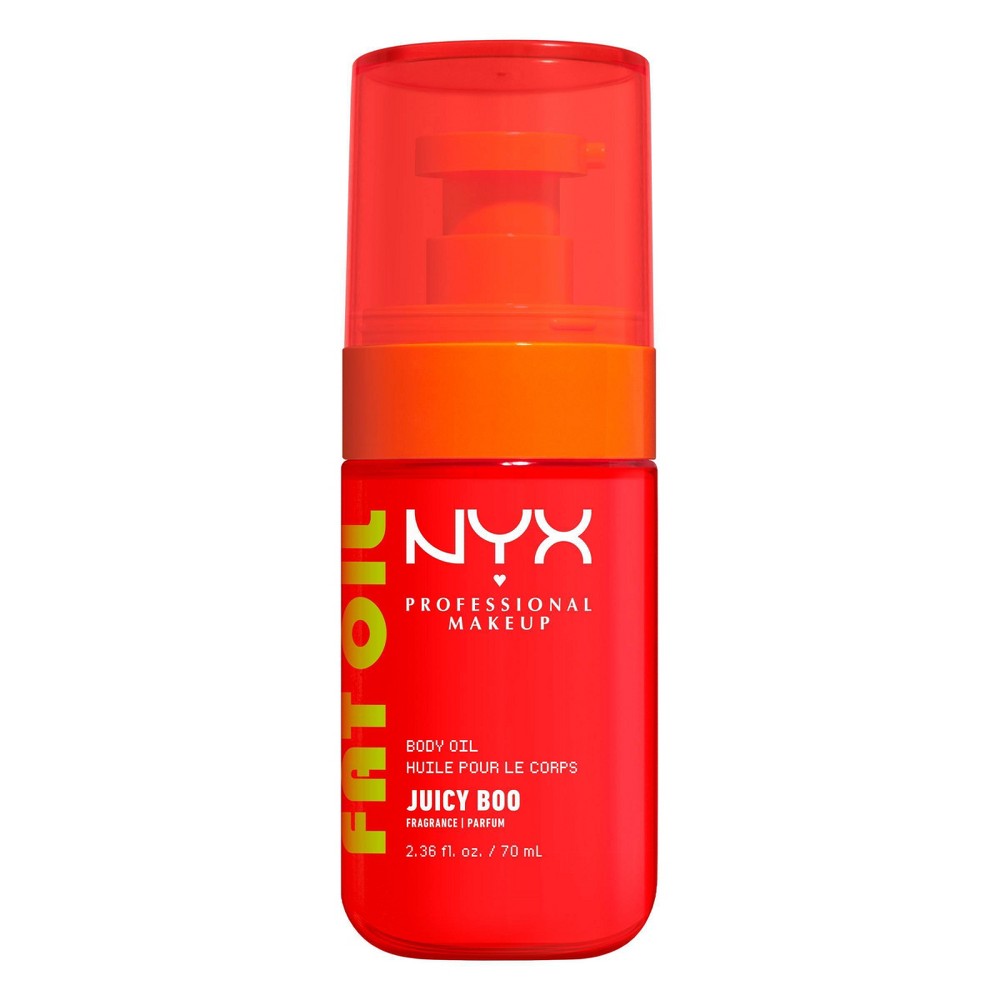


NYX Professional Makeup Fat Oil Body Oil with Vitamin E & Avocado Oil - Juicy Boo - 2.36 fl oz
Summary
This body oil contains beneficial ingredients like Vitamin E and avocado oil, which are known for their moisturizing and antioxidant properties. However, the product is processed and may include synthetic components that slightly lower its overall safety profile. The presence of any synthetic fragrance or other additives would further impact the score, but the inclusion of natural oils helps maintain a relatively positive rating.
At a glance
Key ingredients 31
Octyldodecanol
Octyldodecanol is a fatty alcohol used as an emollient and thickening agent in cosmetics. It helps to improve the texture and spreadability of the product. It is generally considered safe and non-irritating for most skin types.
Risks
There are minimal risks associated with Octyldodecanol, though some individuals with sensitive skin may experience mild irritation.
Benefits
It provides a smooth application and helps to lock in moisture, enhancing skin softness.
Octyldodecyl Stearoyl Stearate
This ingredient is an ester of stearic acid and octyldodecanol, used as an emollient and skin conditioning agent. It helps to create a smooth, soft feel on the skin. It is generally considered safe for use in cosmetics.
Risks
There are no significant risks associated with this ingredient, though it may cause mild irritation in very sensitive individuals.
Benefits
It enhances the texture of the product and provides a moisturizing effect.
C12-15 Alkyl Benzoate
C12-15 Alkyl Benzoate is an ester used as an emollient and thickening agent in cosmetics. It provides a silky feel and helps to reduce the greasy feel of oils in formulations. It is considered safe for use in cosmetics.
Risks
There are minimal risks, though it may cause mild irritation in sensitive skin types.
Benefits
It improves the texture and spreadability of the product, enhancing user experience.
Silica Dimethyl Silylate
Silica Dimethyl Silylate is a modified form of silica used as a thickening agent and to improve the texture of cosmetic products. It helps to provide a matte finish and enhance the stability of formulations. It is generally considered safe for use.
Risks
Inhalation of silica particles can be harmful, but this risk is minimal in liquid formulations.
Benefits
It provides a smooth, matte finish and improves product stability.
Calcium Aluminum Borosilicate
This ingredient is a glass-like compound used to add shimmer and shine to cosmetic products. It is commonly used in color cosmetics for its reflective properties. It is considered safe for use in cosmetics.
Risks
There are minimal risks associated with this ingredient, though it may cause mild irritation if it comes into contact with the eyes.
Benefits
It provides a shimmering effect, enhancing the visual appeal of the product.
Titanium Dioxide
Titanium Dioxide is a mineral used as a pigment and sunscreen agent in cosmetics. It provides opacity and UV protection. It is considered safe for use in cosmetics when used in non-nano form.
Risks
Inhalation of nano-sized particles can be harmful, but this risk is minimal in liquid formulations.
Benefits
It offers UV protection and enhances the opacity of the product.
Parfum
Parfum is a term used to denote fragrance in cosmetic products. It is a mixture of various aromatic compounds used to impart scent. It is often criticized for potential allergenic properties.
Risks
Fragrances can cause allergic reactions and skin irritation, especially in sensitive individuals.
Benefits
It provides a pleasant scent, enhancing the sensory experience of the product.
Dextrin Palmitate
Dextrin Palmitate is an ester of palmitic acid and dextrin, used as a thickening agent and emollient in cosmetics. It helps to improve the texture and stability of formulations. It is generally considered safe for use.
Risks
There are minimal risks associated with this ingredient, though it may cause mild irritation in sensitive skin types.
Benefits
It enhances the texture and stability of the product, providing a smooth application.
Synthetic Fluorphlogopite
Synthetic Fluorphlogopite is a synthetic mica used to add shimmer and shine to cosmetic products. It is a safer alternative to natural mica, which can contain impurities. It is considered safe for use in cosmetics.
Risks
There are minimal risks associated with this ingredient, though it may cause mild irritation if it comes into contact with the eyes.
Benefits
It provides a shimmering effect, enhancing the visual appeal of the product.
Limnanthes Alba (Meadowfoam) Seed Oil
Meadowfoam Seed Oil is a natural oil used for its emollient properties in cosmetics. It is rich in long-chain fatty acids, providing excellent moisturizing benefits. It is considered safe and beneficial for most skin types.
Risks
There are minimal risks associated with this ingredient, though it may cause mild irritation in very sensitive individuals.
Benefits
It provides deep hydration and helps to lock in moisture, improving skin softness and elasticity.
Persea Gratissima (Avocado) Oil
Avocado Oil is a natural oil rich in vitamins and fatty acids, used for its moisturizing and nourishing properties in cosmetics. It is known for its ability to penetrate the skin deeply. It is considered safe and beneficial for most skin types.
Risks
There are minimal risks associated with this ingredient, though it may cause mild irritation in very sensitive individuals.
Benefits
It provides deep hydration and nourishment, improving skin texture and elasticity.
Tin Oxide
Tin Oxide is used as an opacifying agent and to add shine in cosmetic products. It is often used in combination with mica to enhance the reflective properties. It is considered safe for use in cosmetics.
Risks
There are minimal risks associated with this ingredient, though it may cause mild irritation if it comes into contact with the eyes.
Benefits
It enhances the shine and opacity of the product, improving its visual appeal.
Aluminum Hydroxide
Aluminum Hydroxide is used as a thickening agent and to improve the opacity of cosmetic products. It is also used to stabilize formulations. It is considered safe for use in cosmetics.
Risks
There are minimal risks associated with this ingredient, though it may cause mild irritation in sensitive skin types.
Benefits
It enhances the texture and stability of the product, providing a smooth application.
Tocopheryl Acetate
Tocopheryl Acetate is a form of Vitamin E used for its antioxidant properties in cosmetics. It helps to protect the skin from free radical damage. It is considered safe and beneficial for most skin types.
Risks
There are minimal risks associated with this ingredient, though it may cause mild irritation in very sensitive individuals.
Benefits
It provides antioxidant protection and helps to improve skin health and appearance.
Pentaerythrityl Tetra-Di-T-Butyl Hydroxyhydrocinnamate
This ingredient is an antioxidant used to stabilize cosmetic formulations and prevent oxidation. It helps to extend the shelf life of products. It is considered safe for use in cosmetics.
Risks
There are minimal risks associated with this ingredient, though it may cause mild irritation in sensitive skin types.
Benefits
It helps to stabilize the product and prevent degradation, ensuring product efficacy.
Phenoxyethanol
Phenoxyethanol is a preservative used to prevent microbial growth in cosmetic products. It is effective against a broad spectrum of microorganisms. It is considered safe for use in cosmetics at low concentrations.
Risks
Phenoxyethanol can cause skin irritation and allergic reactions in some individuals, especially at higher concentrations.
Benefits
It helps to preserve the product and prevent contamination, ensuring product safety.
Mica
Mica is a natural mineral used to add shimmer and shine to cosmetic products. It is commonly used in color cosmetics for its reflective properties. It is considered safe for use in cosmetics.
Risks
There are minimal risks associated with this ingredient, though it may cause mild irritation if it comes into contact with the eyes.
Benefits
It provides a shimmering effect, enhancing the visual appeal of the product.
Iron Oxides
Iron Oxides are pigments used to provide color in cosmetic products. They are stable and non-toxic, making them a popular choice for color cosmetics. They are considered safe for use in cosmetics.
Risks
There are minimal risks associated with this ingredient, though it may cause mild irritation in sensitive skin types.
Benefits
They provide vibrant and stable color, enhancing the visual appeal of the product.
Linalool
Linalool is a naturally occurring terpene alcohol found in many flowers and spice plants. It is used for its fragrance properties in cosmetics. It is considered safe for use in cosmetics, though it is a known allergen.
Risks
Linalool can cause allergic reactions and skin irritation, especially in sensitive individuals.
Benefits
It provides a pleasant floral scent, enhancing the sensory experience of the product.
Linalyl Acetate
Linalyl Acetate is an ester of linalool and acetic acid, used for its fragrance properties in cosmetics. It is commonly found in essential oils such as lavender. It is considered safe for use in cosmetics, though it is a known allergen.
Risks
Linalyl Acetate can cause allergic reactions and skin irritation, especially in sensitive individuals.
Benefits
It provides a pleasant floral scent, enhancing the sensory experience of the product.
Geranyl Acetate
Geranyl Acetate is an ester used for its fragrance properties in cosmetics. It is found in various essential oils and provides a sweet, floral scent. It is considered safe for use in cosmetics, though it is a known allergen.
Risks
Geranyl Acetate can cause allergic reactions and skin irritation, especially in sensitive individuals.
Benefits
It provides a pleasant floral scent, enhancing the sensory experience of the product.
Vanillin
Vanillin is an aromatic compound used for its fragrance properties in cosmetics. It provides a sweet, vanilla-like scent. It is considered safe for use in cosmetics.
Risks
There are minimal risks associated with this ingredient, though it may cause mild irritation in sensitive skin types.
Benefits
It provides a pleasant vanilla scent, enhancing the sensory experience of the product.
Pogostemon Cablin Oil
Pogostemon Cablin Oil, commonly known as patchouli oil, is used for its fragrance and skin conditioning properties in cosmetics. It is derived from the leaves of the patchouli plant. It is considered safe for use in cosmetics.
Risks
There are minimal risks associated with this ingredient, though it may cause mild irritation in sensitive skin types.
Benefits
It provides a distinctive earthy scent and has skin conditioning benefits.
Limonene
Limonene is a naturally occurring compound found in the peels of citrus fruits, used for its fragrance properties in cosmetics. It provides a fresh, citrus scent. It is considered safe for use in cosmetics, though it is a known allergen.
Risks
Limonene can cause allergic reactions and skin irritation, especially in sensitive individuals.
Benefits
It provides a fresh citrus scent, enhancing the sensory experience of the product.
Hydroxycitronellal
Hydroxycitronellal is a fragrance ingredient used for its floral scent in cosmetics. It is commonly used in perfumes and scented products. It is considered safe for use in cosmetics, though it is a known allergen.
Risks
Hydroxycitronellal can cause allergic reactions and skin irritation, especially in sensitive individuals.
Benefits
It provides a pleasant floral scent, enhancing the sensory experience of the product.
Tetramethyl Acetyloctahydronaphthalenes
Tetramethyl Acetyloctahydronaphthalenes, also known as Iso E Super, is a fragrance ingredient used for its woody scent in cosmetics. It is commonly used in perfumes and scented products. It is considered safe for use in cosmetics.
Risks
There are minimal risks associated with this ingredient, though it may cause mild irritation in sensitive skin types.
Benefits
It provides a distinctive woody scent, enhancing the sensory experience of the product.
Citrus Aurantium (Bitter Orange) Peel Oil
Bitter Orange Peel Oil is used for its fragrance and skin conditioning properties in cosmetics. It is derived from the peel of the bitter orange fruit. It is considered safe for use in cosmetics.
Risks
There are minimal risks associated with this ingredient, though it may cause mild irritation in sensitive skin types.
Benefits
It provides a fresh citrus scent and has skin conditioning benefits.
Carvone
Carvone is a naturally occurring compound found in essential oils, used for its fragrance properties in cosmetics. It provides a minty or spicy scent. It is considered safe for use in cosmetics.
Risks
There are minimal risks associated with this ingredient, though it may cause mild irritation in sensitive skin types.
Benefits
It provides a minty or spicy scent, enhancing the sensory experience of the product.
Benzaldehyde
Benzaldehyde is an aromatic compound used for its fragrance properties in cosmetics. It provides a sweet, almond-like scent. It is considered safe for use in cosmetics.
Risks
There are minimal risks associated with this ingredient, though it may cause mild irritation in sensitive skin types.
Benefits
It provides a sweet almond scent, enhancing the sensory experience of the product.
Benzyl Alcohol
Benzyl Alcohol is used as a preservative and fragrance ingredient in cosmetics. It helps to prevent microbial growth and provides a mild floral scent. It is considered safe for use in cosmetics at low concentrations.
Risks
Benzyl Alcohol can cause skin irritation and allergic reactions in some individuals, especially at higher concentrations.
Benefits
It helps to preserve the product and provides a mild floral scent.
Benzyl Salicylate
Benzyl Salicylate is a fragrance ingredient used for its floral scent in cosmetics. It is commonly used in perfumes and scented products. It is considered safe for use in cosmetics, though it is a known allergen.
Risks
Benzyl Salicylate can cause allergic reactions and skin irritation, especially in sensitive individuals.
Benefits
It provides a pleasant floral scent, enhancing the sensory experience of the product.
Processing
Processed Foods
Get the full breakdown in the Scout app
Scan any product to see lab results, healthy alternatives, and your personalized analysis.
Download on theApp Store