
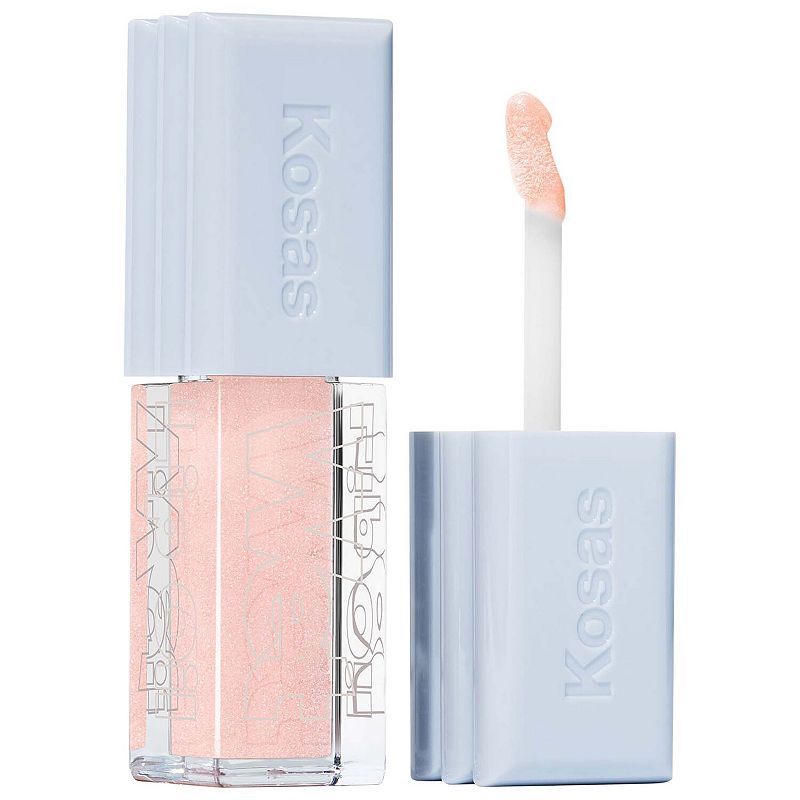

Kosas Wet Lip Oil Plumping Peptide Lip Treatment Gloss Color: Exposed Size: N/A
Summary
This lip treatment gloss contains beneficial ingredients like peptides, which can help with plumping and hydration. However, it is a processed product with a more complex ingredient list, which may include synthetic components that slightly lower its score. The absence of harsh chemicals like parabens or petrolatum is positive, but the processing level and potential presence of synthetic additives prevent it from achieving a top-tier rating.
At a glance
Key ingredients 29
Oleic/Linoleic/Linolenic Polyglycerides
These are fatty acid esters derived from natural oils. They help to moisturize and condition the skin, providing a smooth texture. They are generally considered safe and beneficial for skin hydration.
Risks
There are minimal risks associated with these compounds, primarily limited to rare allergic reactions.
Benefits
They are excellent for moisturizing and improving skin texture, making them beneficial in lip care products.
Bis-Diglyceryl Polyacyladipate-2
This is a synthetic emollient used to provide a smooth and glossy finish. It mimics the properties of natural oils and is often used in lip products for its conditioning effects. It is considered safe for use in cosmetics.
Risks
There are minimal risks, though some individuals may experience mild irritation.
Benefits
It provides a smooth, glossy finish and helps to condition the lips.
Ricinus Communis (Castor) Seed Oil
Castor oil is a natural oil known for its moisturizing properties. It is rich in ricinoleic acid, which helps to lock in moisture and soothe the skin. It is widely used in lip care products for its hydrating benefits.
Risks
Rarely, it can cause allergic reactions in sensitive individuals.
Benefits
It is highly effective in moisturizing and soothing dry, chapped lips.
Polyhydroxystearic Acid
This is a polymer used as a thickening agent and emulsifier in cosmetics. It helps to stabilize formulations and improve texture. It is considered safe for use in personal care products.
Risks
There are minimal risks associated with this ingredient, primarily limited to rare skin irritation.
Benefits
It improves the texture and stability of cosmetic formulations.
Caprylic/Capric Triglyceride
Derived from coconut oil and glycerin, this ingredient is used as an emollient and skin-repairing ingredient. It helps to replenish the skin's surface and resist moisture loss. It is considered safe and beneficial for skin care.
Risks
There are minimal risks, though it may cause mild irritation in sensitive individuals.
Benefits
It is excellent for moisturizing and repairing the skin barrier.
Butyrospermum Parkii (Shea) Butter
Shea butter is a natural fat extracted from the nuts of the shea tree. It is known for its rich moisturizing properties and ability to soothe and protect the skin. It is widely used in lip care for its hydrating benefits.
Risks
Rarely, it can cause allergic reactions in individuals with nut allergies.
Benefits
It provides deep hydration and protection for dry, chapped lips.
Persea Gratissima (Avocado) Oil
Avocado oil is a natural oil rich in fatty acids and vitamins. It is known for its moisturizing and nourishing properties, making it beneficial for skin and lip care. It is considered safe and effective for use in cosmetics.
Risks
There are minimal risks, though it may cause mild irritation in sensitive individuals.
Benefits
It deeply nourishes and moisturizes the skin, improving its texture and appearance.
Ethylhexyl Palmitate
This is an ester of 2-ethylhexyl alcohol and palmitic acid, used as an emollient and texture enhancer. It provides a smooth, silky feel to cosmetic products. It is considered safe for use in personal care products.
Risks
There are minimal risks, though it may cause mild irritation in sensitive individuals.
Benefits
It enhances the texture and feel of cosmetic formulations, providing a silky finish.
Oryza Sativa (Rice) Bran Extract
Rice bran extract is rich in antioxidants and nutrients, known for its skin-soothing and conditioning properties. It is used in cosmetics for its ability to improve skin texture and appearance. It is considered safe and beneficial for skin care.
Risks
There are minimal risks, though it may cause mild irritation in sensitive individuals.
Benefits
It provides antioxidant protection and improves skin texture.
Mica
Mica is a naturally occurring mineral used to add shimmer and shine to cosmetic products. It is widely used in makeup for its reflective properties. It is considered safe for use in cosmetics.
Risks
Inhalation of mica particles can pose respiratory risks, though this is less of a concern in lip products.
Benefits
It adds a natural shimmer and shine to cosmetic products.
Silica Dimethyl Silylate
This is a modified form of silica used as a thickening agent and to improve the texture of cosmetic products. It helps to provide a smooth, matte finish. It is considered safe for use in cosmetics.
Risks
There are minimal risks, though it may cause mild irritation in sensitive individuals.
Benefits
It improves the texture and finish of cosmetic formulations.
Caprylyl Glycol
Caprylyl glycol is a skin-conditioning agent and preservative booster. It helps to hydrate the skin and enhance the efficacy of preservatives. It is considered safe and beneficial for use in cosmetics.
Risks
There are minimal risks, though it may cause mild irritation in sensitive individuals.
Benefits
It provides hydration and enhances the preservation of cosmetic products.
Citrus Aurantium Dulcis (Orange) Oil
Orange oil is a natural essential oil known for its refreshing scent and potential skin benefits. It is used in cosmetics for its fragrance and potential antioxidant properties. It is considered safe for use in cosmetics.
Risks
It can cause photosensitivity and irritation in some individuals, especially when exposed to sunlight.
Benefits
It provides a refreshing scent and potential antioxidant benefits.
Ethylhexylglycerin
Ethylhexylglycerin is a skin-conditioning agent and preservative booster. It helps to improve the skin feel and enhance the efficacy of preservatives. It is considered safe for use in cosmetics.
Risks
There are minimal risks, though it may cause mild irritation in sensitive individuals.
Benefits
It enhances the preservation and skin feel of cosmetic products.
Glucomannan
Glucomannan is a natural polysaccharide used as a thickening agent and moisturizer. It helps to improve the texture and hydration of cosmetic products. It is considered safe and beneficial for use in cosmetics.
Risks
There are minimal risks, though it may cause mild irritation in sensitive individuals.
Benefits
It provides hydration and improves the texture of cosmetic formulations.
Helianthus Annuus (Sunflower) Extract
Sunflower extract is rich in vitamins and fatty acids, known for its moisturizing and skin-conditioning properties. It is used in cosmetics for its ability to nourish and protect the skin. It is considered safe and beneficial for skin care.
Risks
There are minimal risks, though it may cause mild irritation in sensitive individuals.
Benefits
It nourishes and protects the skin, improving its texture and appearance.
Lactic Acid
Lactic acid is an alpha hydroxy acid (AHA) used for its exfoliating and skin-renewing properties. It helps to improve skin texture and hydration. It is considered safe and beneficial for use in cosmetics.
Risks
It can cause irritation and sensitivity, especially in higher concentrations.
Benefits
It exfoliates and renews the skin, improving texture and hydration.
Oenothera Biennis (Evening Primrose) Oil
Evening primrose oil is rich in gamma-linolenic acid, known for its moisturizing and anti-inflammatory properties. It is used in cosmetics for its ability to soothe and hydrate the skin. It is considered safe and beneficial for skin care.
Risks
There are minimal risks, though it may cause mild irritation in sensitive individuals.
Benefits
It soothes and hydrates the skin, providing anti-inflammatory benefits.
Palmitoyl Tripeptide-1
This is a synthetic peptide used for its anti-aging and skin-repairing properties. It helps to stimulate collagen production and improve skin elasticity. It is considered safe and beneficial for use in cosmetics.
Risks
There are minimal risks, though it may cause mild irritation in sensitive individuals.
Benefits
It stimulates collagen production and improves skin elasticity, providing anti-aging benefits.
Rosmarinus Officinalis (Rosemary) Leaf Extract
Rosemary extract is rich in antioxidants and known for its skin-soothing properties. It is used in cosmetics for its ability to protect and condition the skin. It is considered safe and beneficial for skin care.
Risks
There are minimal risks, though it may cause mild irritation in sensitive individuals.
Benefits
It provides antioxidant protection and soothes the skin.
Sodium Hyaluronate
Sodium hyaluronate is a form of hyaluronic acid used for its hydrating and skin-plumping properties. It helps to retain moisture and improve skin texture. It is considered safe and beneficial for use in cosmetics.
Risks
There are minimal risks, though it may cause mild irritation in sensitive individuals.
Benefits
It provides deep hydration and plumps the skin, improving texture and appearance.
Sorbitan Isostearate
This is an emulsifier used to stabilize cosmetic formulations. It helps to blend oil and water components, improving texture and consistency. It is considered safe for use in cosmetics.
Risks
There are minimal risks, though it may cause mild irritation in sensitive individuals.
Benefits
It stabilizes formulations and improves texture and consistency.
Tin Oxide
Tin oxide is used as an opacifying agent and to add shine to cosmetic products. It is considered safe for use in cosmetics.
Risks
There are minimal risks, though it may cause mild irritation in sensitive individuals.
Benefits
It adds shine and opacity to cosmetic formulations.
Tocopherol
Tocopherol, or vitamin E, is a natural antioxidant used for its skin-conditioning and protective properties. It helps to protect the skin from oxidative stress and improve moisture retention. It is considered safe and beneficial for use in cosmetics.
Risks
There are minimal risks, though it may cause mild irritation in sensitive individuals.
Benefits
It provides antioxidant protection and improves skin moisture retention.
Tribehenin
Tribehenin is an emollient and conditioning agent used to improve the texture and feel of cosmetic products. It helps to moisturize and soften the skin. It is considered safe for use in cosmetics.
Risks
There are minimal risks, though it may cause mild irritation in sensitive individuals.
Benefits
It moisturizes and softens the skin, improving texture and feel.
Trihydroxystearin
Trihydroxystearin is a thickening agent used to improve the texture and stability of cosmetic products. It helps to provide a smooth, creamy consistency. It is considered safe for use in cosmetics.
Risks
There are minimal risks, though it may cause mild irritation in sensitive individuals.
Benefits
It improves the texture and stability of cosmetic formulations.
Vanillin
Vanillin is a flavoring agent used to add a pleasant scent to cosmetic products. It is considered safe for use in cosmetics.
Risks
There are minimal risks, though it may cause mild irritation in sensitive individuals.
Benefits
It adds a pleasant scent to cosmetic formulations.
Limonene
Limonene is a naturally occurring compound found in citrus oils, used for its fragrance and potential antioxidant properties. It is considered safe for use in cosmetics, though it can be a sensitizer.
Risks
It can cause skin irritation and sensitization, especially in higher concentrations.
Benefits
It provides a refreshing citrus scent and potential antioxidant benefits.
Linalool
Linalool is a naturally occurring terpene alcohol found in many flowers and spice plants, used for its fragrance. It is considered safe for use in cosmetics, though it can be a sensitizer.
Risks
It can cause skin irritation and sensitization, especially in higher concentrations.
Benefits
It provides a pleasant floral scent to cosmetic formulations.
Processing
Processed Foods
Get the full breakdown in the Scout app
Scan any product to see lab results, healthy alternatives, and your personalized analysis.
Download on theApp Store