
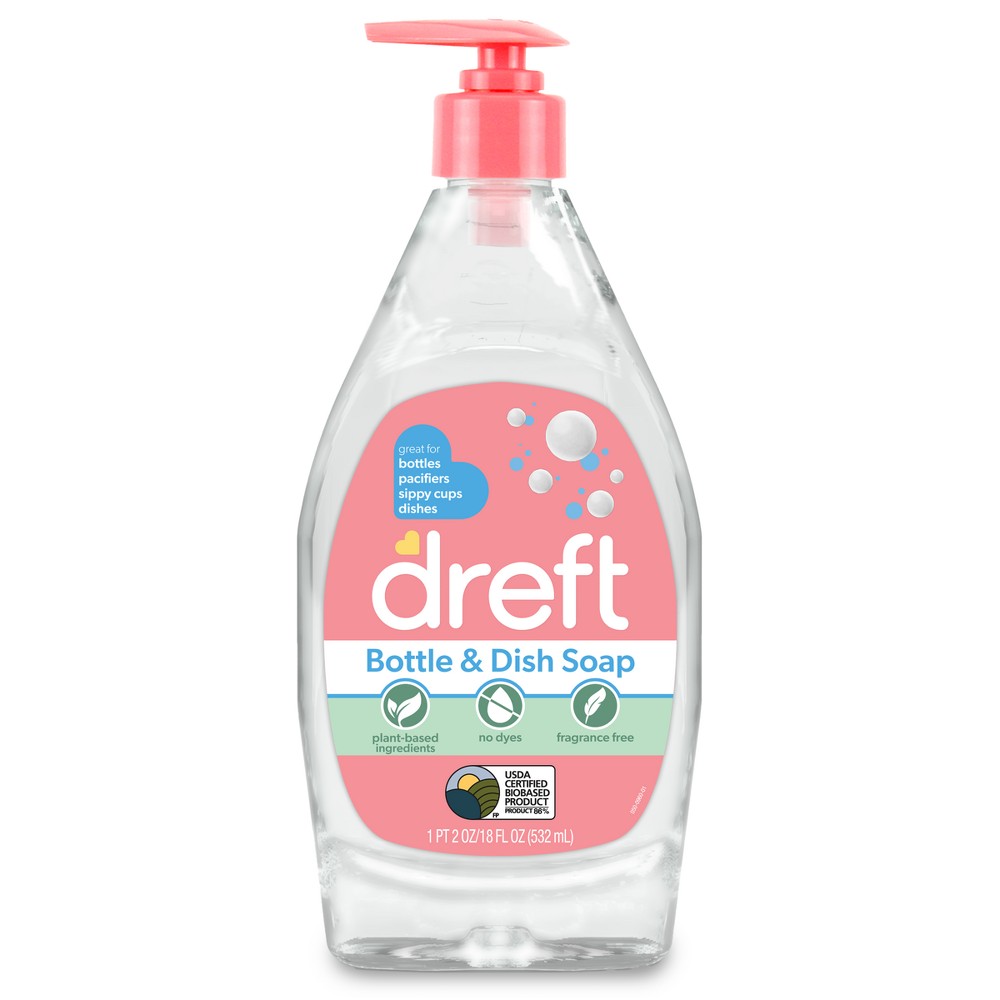

Dreft Bottle & Dish Soap Cleaner - 18 fl oz
Summary
This cleaning product is formulated with minimal processing and focuses on safety for indoor use and environmental impact. It avoids harsh surfactants like sodium lauryl sulfate and instead uses plant-derived ingredients, which are biodegradable and eco-friendly. The absence of synthetic fragrances and harmful chemicals contributes to its high rating.
At a glance
Key ingredients 8
Water
Water is a universal solvent and is used as a base in many cleaning products. It helps dissolve other ingredients and facilitates the cleaning process. It is essential for diluting concentrated substances.
Risks
There are no significant risks associated with water in cleaning products.
Benefits
Water is safe, non-toxic, and environmentally friendly.
Sodium Laurylglucosides Hydroxypropylsulfonate
This is a mild surfactant derived from natural sources. It is used to help remove dirt and grease effectively. It is considered less irritating than traditional sulfates.
Risks
There are minimal risks, but it can cause mild irritation in sensitive individuals.
Benefits
It is biodegradable and considered a safer alternative to harsher sulfates.
Caprylyl/Capryl Glucoside
Caprylyl/Capryl Glucoside is a non-ionic surfactant derived from plant-based fatty acids and glucose. It is used for its gentle cleansing properties. It helps to emulsify oils and dirt for easy removal.
Risks
It is generally safe, but overuse can lead to mild skin irritation.
Benefits
It is biodegradable and suitable for sensitive skin.
Lauramine Oxide
Lauramine Oxide is an amine oxide surfactant used for its foam-boosting and thickening properties. It helps to enhance the cleaning power of formulations. It is often used in combination with other surfactants.
Risks
It can cause mild irritation to the skin and eyes upon direct contact.
Benefits
It is effective in removing grease and is biodegradable.
Sodium Lauroyl Methyl Isethionate
This is a mild surfactant known for its ability to create a creamy lather. It is derived from coconut oil and is used for its gentle cleansing properties. It is often used in sulfate-free formulations.
Risks
It is generally considered safe with low irritation potential.
Benefits
It is biodegradable and suitable for sensitive skin.
Cocamidopropyl Betaine
Cocamidopropyl Betaine is a surfactant derived from coconut oil. It is used to reduce irritation potential of other surfactants and improve foam quality. It is commonly used in personal care and cleaning products.
Risks
It can cause allergic reactions in some individuals, although it is generally considered safe.
Benefits
It is biodegradable and helps to stabilize foam.
Coco-Glucoside
Coco-Glucoside is a mild, non-ionic surfactant derived from coconut oil and glucose. It is used for its gentle cleansing and foaming properties. It is suitable for sensitive skin and is often used in natural formulations.
Risks
There are minimal risks, but it can cause mild irritation in sensitive individuals.
Benefits
It is biodegradable and considered environmentally friendly.
Glycerin
Glycerin is a humectant that helps to retain moisture in formulations. It is used to prevent drying of the skin and to improve the texture of products. It is derived from natural sources such as vegetable oils.
Risks
There are no significant risks associated with glycerin in cleaning products.
Benefits
It is safe, non-toxic, and helps to maintain skin hydration.
Processing
Unprocessed or Minimally Processed Foods
Get the full breakdown in the Scout app
Scan any product to see lab results, healthy alternatives, and your personalized analysis.
Download on theApp Store