
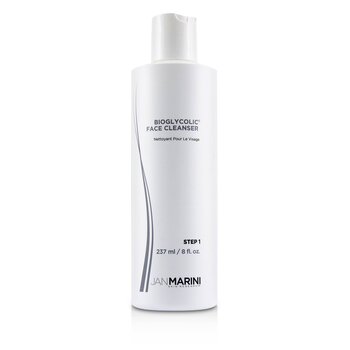
Jan Marini Skin Research Bioglycolic Face Cleanser 8 Fl Oz
Summary
This face cleanser contains glycolic acid, which is beneficial for exfoliation and improving skin texture. However, it also includes sodium laureth sulfate, which poses a risk of 1,4-dioxane contamination, and synthetic fragrance, which can be irritating to sensitive skin. The presence of these ingredients suggests a moderate level of processing and potential for skin irritation, impacting its overall safety profile.
At a glance
Key ingredients 13
Glycolic AcidNeutral
Glycolic acid is an alpha hydroxy acid (AHA) commonly used for its exfoliating properties. It helps to remove dead skin cells, promoting a smoother and more even skin texture. However, it can cause irritation, especially for sensitive skin types.
Risks
Potential for skin irritation and increased sensitivity to sunlight.
Benefits
Effective in improving skin texture and reducing signs of aging.
SorbitolNeutral
Sorbitol is a sugar alcohol used as a humectant in skincare products. It helps to retain moisture in the skin, preventing dryness. While generally safe, it can cause irritation in some individuals.
Risks
Possible skin irritation for sensitive individuals.
Benefits
Helps maintain skin hydration and softness.
Cetyl AlcoholNeutral
Cetyl alcohol is a fatty alcohol used as an emollient and thickening agent in cosmetics. It helps to soften and smooth the skin, enhancing the texture of formulations. It is generally considered safe and non-irritating.
Risks
Minimal risk of irritation.
Benefits
Improves skin texture and provides a smooth application.
Stearyl AlcoholNeutral
Stearyl alcohol is a fatty alcohol that acts as an emollient and thickener in skincare products. It helps to stabilize formulations and provide a creamy texture. It is typically non-irritating and safe for most skin types.
Risks
Low risk of irritation.
Benefits
Enhances product texture and provides moisturizing benefits.
Sodium HydroxideNeutral
Sodium hydroxide is used to adjust the pH of cosmetic formulations. It is a strong alkaline compound that can be irritating in high concentrations. However, in small amounts, it is generally safe and effective for pH balancing.
Risks
Potential for irritation if used in high concentrations.
Benefits
Helps maintain the stability and effectiveness of the product by balancing pH.
Ammonium Lauryl Sulfate
Ammonium lauryl sulfate is a surfactant used for its cleansing and foaming properties. It can be harsh on the skin, stripping away natural oils and causing irritation. It is considered less irritating than sodium lauryl sulfate but still poses a risk for sensitive skin.
Risks
Can cause skin irritation and dryness.
Benefits
Effective cleansing and foaming agent.
Palmitic AcidNeutral
Palmitic acid is a fatty acid used as an emollient and surfactant in skincare products. It helps to cleanse the skin and improve the texture of formulations. It is generally safe and non-irritating.
Risks
Low risk of irritation.
Benefits
Provides moisturizing benefits and improves product texture.
Caprylyl GlycolNeutral
Caprylyl glycol is a skin conditioning agent and preservative booster. It helps to improve the moisture content of the skin and enhance the efficacy of preservatives. It is generally considered safe and non-irritating.
Risks
Minimal risk of irritation.
Benefits
Enhances skin hydration and product preservation.
EthylhexylglycerinNeutral
Ethylhexylglycerin is used as a skin conditioning agent and preservative enhancer. It helps to improve the texture of formulations and boost the effectiveness of preservatives. It is generally safe and well-tolerated.
Risks
Low risk of irritation.
Benefits
Improves product stability and skin feel.
Hexylene GlycolNeutral
Hexylene glycol is a solvent and viscosity agent used in cosmetics. It helps to improve the texture and spreadability of products. It is generally safe but can cause irritation in sensitive individuals.
Risks
Potential for skin irritation.
Benefits
Enhances product texture and application.
Phenoxyethanol
Phenoxyethanol is a preservative used to prevent microbial growth in cosmetics. It is effective but can cause irritation and allergic reactions in some individuals. It is considered a moderate risk ingredient in skincare formulations.
Risks
Can cause skin irritation and allergic reactions.
Benefits
Provides effective preservation against microbial contamination.
Methylparaben
Methylparaben is a paraben used as a preservative in cosmetics. It is effective in preventing microbial growth but has been associated with potential endocrine disruption. It is considered a controversial ingredient due to these concerns.
Risks
Potential endocrine disruption and skin irritation.
Benefits
Effective preservative for extending product shelf life.
Propylparaben
Propylparaben is another paraben used as a preservative in cosmetics. Like other parabens, it is effective but has raised concerns about endocrine disruption and potential health risks. It is often avoided in formulations seeking to be paraben-free.
Risks
Potential endocrine disruption and skin irritation.
Benefits
Provides preservation against microbial growth.
Processing
Processed Foods
Get the full breakdown in the Scout app
Scan any product to see lab results, healthy alternatives, and your personalized analysis.
Download on theApp Store