
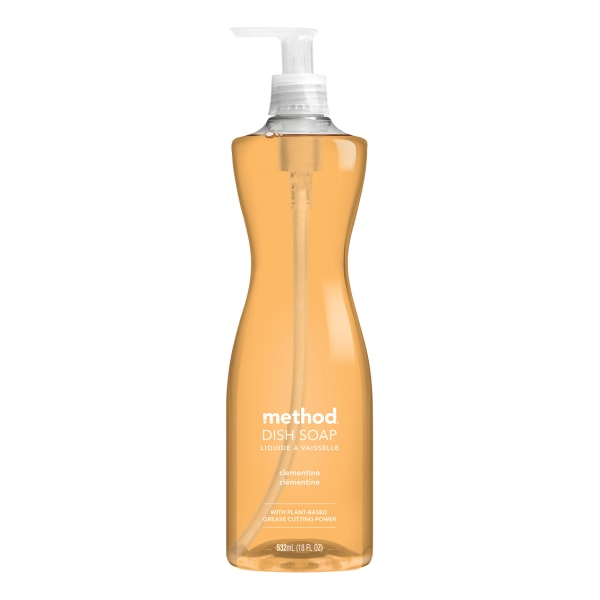

Method® Dish Soap Clementine 18 Oz Pump Bottle 81793900735
Summary
This dish soap contains mostly plant-based ingredients, including biodegradable surfactants, which are safer for indoor use and the environment. However, it includes synthetic fragrances, which can be a concern for some users due to potential allergens and environmental impact. The product is processed, but it avoids harsher chemicals like SLS and bleach, contributing to a more favorable score.
At a glance
Key ingredients 7
Aqua
Aqua, or water, is the most common solvent used in cleaning products. It acts as a carrier for other ingredients. It is generally considered safe and non-toxic.
Risks
There are no significant risks associated with water in cleaning products.
Benefits
Water helps dissolve other ingredients and facilitates the cleaning process.
Ethanol
Ethanol is used as a solvent and antibacterial agent in cleaning products. It helps dissolve oils and other substances. It is effective in killing bacteria and viruses.
Risks
Ethanol can be drying to the skin and may cause irritation with prolonged exposure.
Benefits
Ethanol is effective in sanitizing surfaces and is a relatively safe solvent.
Fragrance
Fragrance is added to cleaning products to provide a pleasant scent. It is often a mixture of various aromatic compounds. Synthetic fragrances can cause allergic reactions in sensitive individuals.
Risks
Fragrances can be irritating to the skin and respiratory system, and may cause allergic reactions.
Benefits
Fragrances can enhance the user experience by masking unpleasant odors.
Lauryl Glucoside
Lauryl glucoside is a mild, plant-derived surfactant used in cleaning products. It is derived from glucose and lauryl alcohol. It is considered gentle on the skin and environmentally friendly.
Risks
There are minimal risks associated with lauryl glucoside, though it may cause mild irritation in very sensitive individuals.
Benefits
Lauryl glucoside is biodegradable and suitable for sensitive skin, making it a positive choice for eco-friendly products.
Methylisothiazolinone
Methylisothiazolinone is a preservative used to prevent microbial growth in water-containing products. It is effective in low concentrations. However, it is known to cause allergic reactions in some individuals.
Risks
Methylisothiazolinone can cause skin sensitization and allergic reactions, especially with prolonged exposure.
Benefits
It helps extend the shelf life of products by preventing microbial contamination.
Glycerin
Glycerin is a humectant that helps retain moisture in products. It is derived from plant oils or synthesized. It is generally considered safe and beneficial for skin hydration.
Risks
There are minimal risks associated with glycerin, though it may cause irritation in very sensitive individuals.
Benefits
Glycerin helps keep skin moisturized and can improve the texture of cleaning products.
Sodium Chloride
Sodium chloride, or table salt, is used to thicken and stabilize cleaning products. It is a common and safe ingredient. It can also enhance the cleaning power of surfactants.
Risks
There are no significant risks associated with sodium chloride in cleaning products.
Benefits
Sodium chloride is non-toxic and helps improve the viscosity and effectiveness of cleaning formulations.
Processing
Processed Foods
Get the full breakdown in the Scout app
Scan any product to see lab results, healthy alternatives, and your personalized analysis.
Download on theApp Store