
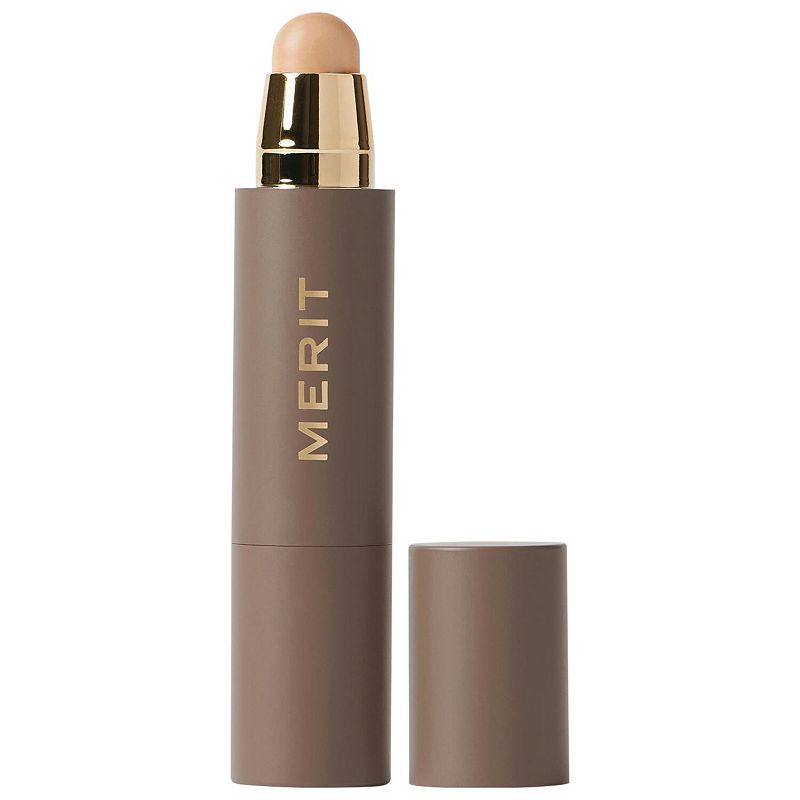


MERIT The Minimalist Perfecting Complexion Foundation and Concealer Stick, Size: .23Oz, Silk
Analysis updated August 2026 · How Scout scores
At a glance
Summary
This product contains beneficial ingredients like Caprylic/Capric Triglyceride and Glycerin, which provide moisturizing and emollient properties. However, the presence of BHT, a controversial antioxidant with potential health concerns, affects its overall safety profile. The product is moderately processed, which also influences its rating.
Key ingredients 26
Caprylic/Capric TriglycerideVery Good
Caprylic/Capric Triglyceride is derived from coconut oil and glycerin, known for its excellent emollient properties. It helps to moisturize and replenish the skin. It is well-tolerated and non-irritating.
Risks
There are minimal risks, primarily related to rare allergic reactions.
Benefits
It provides lightweight moisture and enhances the absorption of other ingredients.
Cera Carnauba (Copernicia Cerifera (Carnauba) Wax, Cire De Carnauba)Good
Carnauba wax is a natural wax derived from the leaves of the carnauba palm. It is used as a thickening agent and to provide a glossy finish. It is well-tolerated and non-irritating.
Risks
There are minimal risks, primarily related to rare allergic reactions.
Benefits
It provides a natural glossy finish and improves the texture of the product.
Tocopheryl AcetateGood
Tocopheryl Acetate is a form of Vitamin E, known for its antioxidant properties. It helps to protect the skin from free radical damage. It is well-tolerated and beneficial for skin health.
Risks
There are minimal risks, primarily related to rare allergic reactions.
Benefits
It provides antioxidant protection and supports skin health.
GlycerinGood
Glycerin is a humectant that attracts moisture to the skin, helping to keep it hydrated. It is well-tolerated and beneficial for maintaining skin moisture balance. It is widely used in cosmetics for its moisturizing properties.
Risks
There are minimal risks, primarily related to rare allergic reactions.
Benefits
It provides excellent moisturizing benefits and helps maintain skin hydration.
MicaGood
Beneficial ingredient — whole-food or functional value in this product class.
Risks
There are no significant risks associated with this ingredient.
Benefits
It provides a shimmering effect and enhances the appearance of the product.
CI 77491/77492/77499 (Iron Oxides)Good
Beneficial ingredient — whole-food or functional value in this product class.
Risks
There are no significant risks associated with this ingredient.
Benefits
They provide color and pigmentation to the product.
Hydrogenated PolydeceneNeutral
Hydrogenated Polydecene is a synthetic emollient used to improve skin texture. It is generally considered safe for use in cosmetics. It does not provide significant benefits or risks.
Risks
There are no significant risks associated with this ingredient.
Benefits
It helps to improve the texture and spreadability of the product.
OctyldodecanolNeutral
Octyldodecanol is a fatty alcohol used as an emollient and emulsifier. It helps to improve the texture of cosmetic formulations. It is generally considered safe and non-irritating.
Risks
There are no significant risks associated with this ingredient.
Benefits
It enhances the smoothness and spreadability of the product.
SilicaNeutral
Silica is used as a thickening agent and to improve the texture of cosmetics. It is generally considered safe for topical use. It does not provide significant benefits or risks.
Risks
Inhalation of silica dust can be harmful, but this is not a concern in cosmetic use.
Benefits
It helps to control the viscosity and improve the feel of the product.
Dipentaerythrityl Hexahydroxystearate/Hexastearate/HexarosinateNeutral
This ingredient is used as a binding agent and emollient in cosmetics. It helps to stabilize formulations and improve texture. It is generally considered safe for use.
Risks
There are no significant risks associated with this ingredient.
Benefits
It enhances the stability and texture of the product.
Hydrogenated PolyisobuteneNeutral
Hydrogenated Polyisobutene is a synthetic polymer used as an emollient and moisturizer. It helps to improve the texture and feel of the product. It is generally considered safe for use in cosmetics.
Risks
There are no significant risks associated with this ingredient.
Benefits
It provides a smooth and moisturizing effect.
Synthetic WaxNeutral
Synthetic wax is used as a thickening agent and to improve the texture of cosmetics. It helps to provide a smooth application. It is generally considered safe for use.
Risks
There are no significant risks associated with this ingredient.
Benefits
It enhances the texture and application of the product.
TriethoxycaprylylsilaneNeutral
Triethoxycaprylylsilane is used as a surface treatment for pigments to improve their dispersion in formulations. It helps to enhance the stability and application of the product. It is generally considered safe for use.
Risks
There are no significant risks associated with this ingredient.
Benefits
It improves pigment dispersion and product stability.
Cera Microcristallina (Microcrystalline Wax, Cire Microcristalline)Neutral
Microcrystalline wax is used as a thickening agent and to improve the texture of cosmetics. It helps to provide a smooth application. It is generally considered safe for use.
Risks
There are no significant risks associated with this ingredient.
Benefits
It enhances the texture and application of the product.
Sorbitan IsostearateNeutral
Sorbitan Isostearate is an emulsifier used to stabilize formulations. It helps to blend oil and water components. It is generally considered safe for use in cosmetics.
Risks
There are no significant risks associated with this ingredient.
Benefits
It improves the stability and consistency of the product.
Pancratium Maritimum ExtractNeutral
Pancratium Maritimum Extract is a botanical extract used for its potential skin-soothing properties. It is generally considered safe for use in cosmetics. Its benefits are not well-documented.
Risks
There are no significant risks associated with this ingredient.
Benefits
It may provide soothing effects on the skin.
Caprylyl GlycolNeutral
Caprylyl Glycol is used as a skin conditioning agent and preservative. It helps to improve the moisture content of the skin. It is generally considered safe for use in cosmetics.
Risks
There are no significant risks associated with this ingredient.
Benefits
It provides moisturizing benefits and helps preserve the product.
Propylene CarbonateNeutral
Propylene Carbonate is used as a solvent and viscosity controller in cosmetics. It helps to improve the texture and consistency of formulations. It is generally considered safe for use.
Risks
There are no significant risks associated with this ingredient.
Benefits
It enhances the texture and consistency of the product.
EthylhexylglycerinNeutral
Ethylhexylglycerin is used as a skin conditioning agent and preservative enhancer. It helps to improve the moisture content of the skin. It is generally considered safe for use in cosmetics.
Risks
There are no significant risks associated with this ingredient.
Benefits
It provides moisturizing benefits and enhances preservative efficacy.
1, 2-HexanediolNeutral
1, 2-Hexanediol is used as a solvent and preservative in cosmetics. It helps to improve the texture and stability of formulations. It is generally considered safe for use.
Risks
There are no significant risks associated with this ingredient.
Benefits
It enhances the texture and stability of the product.
Stearalkonium HectoriteNeutral
Stearalkonium Hectorite is used as a thickening agent and to improve the texture of cosmetics. It helps to stabilize formulations and improve spreadability. It is generally considered safe for use.
Risks
There are no significant risks associated with this ingredient.
Benefits
It enhances the texture and stability of the product.
Aqua (Water, Eau)Neutral
Water is used as a solvent in cosmetics to dissolve other ingredients. It is essential for the formulation of many products. It is generally considered safe and non-irritating.
Risks
There are no significant risks associated with this ingredient.
Benefits
It acts as a solvent and helps to blend other ingredients.
CI 77891 (Titanium Dioxide)Neutral
Titanium Dioxide is used as a pigment and UV filter in cosmetics. It is generally considered safe for use in cosmetics. It provides opacity and sun protection benefits.
Risks
Inhalation of fine particles can be harmful, but this is not a concern in cream formulations.
Benefits
It provides pigmentation and some UV protection.
DimethiconeBad
Occlusive silicone film-former — flagged under clean-beauty doctrine.
Risks
There are no significant risks associated with this ingredient.
Benefits
It provides a smooth and silky texture to the product.
BHTBad
BHT (Butylated Hydroxytoluene) is used as an antioxidant to prevent product spoilage. However, it is controversial due to potential health concerns, including skin irritation and endocrine disruption. It is allowed in cosmetics but with restrictions.
Risks
Potential risks include skin irritation and possible endocrine disruption.
Benefits
It helps to extend the shelf life of the product by preventing oxidation.
PolyethyleneVery Bad
Heavily flagged ingredient class under Scout's doctrine.
Risks
There are environmental concerns regarding microplastics, but minimal direct health risks.
Benefits
It provides a smooth and even application of the product.
Processing
Processed Foods
Get the full breakdown in the Scout appTake Scout shopping
Scan any product to see lab results, healthy alternatives, and your personalized analysis.
Download on theApp Store GET IT ONGoogle PlayAmazon pricing & content
Amazon price as of . Product prices and availability are accurate as of the date/time indicated and are subject to change. Any price and availability information displayed on Amazon.com at the time of purchase will apply to the purchase of this product.
CERTAIN CONTENT THAT APPEARS ON THIS SITE COMES FROM AMAZON. THIS CONTENT IS PROVIDED “AS IS” AND IS SUBJECT TO CHANGE OR REMOVAL AT ANY TIME.