
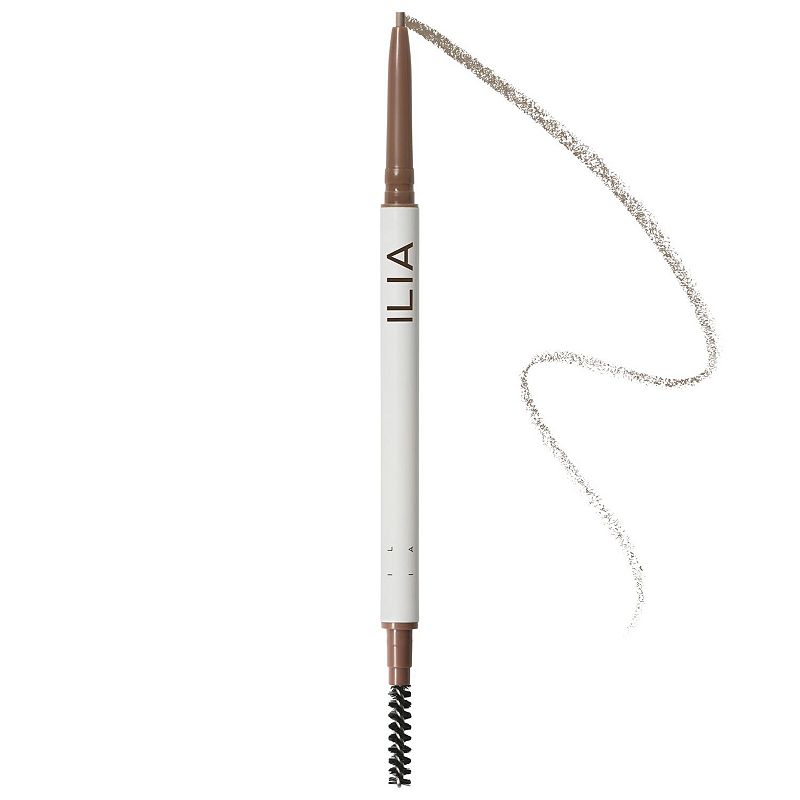


ILIA Beauty In Full Micro-Tip Brow Pencil - Dark Blonde 0.003 oz Brow Pencil
Analysis updated August 2026 · How Scout scores
At a glance
Summary
This brow pencil contains beneficial ingredients like Tocopherol and Panthenol, which provide antioxidant and moisturizing benefits. However, it also includes synthetic waxes and polymers, which contribute to its processed nature. The presence of these synthetic components, along with the processed level of the product, limits its score despite the inclusion of some beneficial ingredients.
Key ingredients 15
TocopherolVery Good
Tocopherol, also known as Vitamin E, is an antioxidant that helps to protect the skin from damage caused by free radicals. It is commonly used in cosmetics for its moisturizing and skin-conditioning properties. It is considered safe and beneficial for use in personal care products.
Risks
There are minimal risks associated with Tocopherol, though it may cause mild irritation in rare cases.
Benefits
It provides antioxidant protection and helps to moisturize and condition the skin.
PanthenolVery Good
Panthenol, also known as Provitamin B5, is a moisturizing and skin-conditioning agent used in cosmetics. It helps to improve skin hydration and reduce inflammation. It is considered safe and beneficial for use in personal care products.
Risks
There are minimal risks associated with Panthenol, though it may cause mild irritation in rare cases.
Benefits
It provides deep hydration and helps to soothe and condition the skin.
MicaGood
Beneficial ingredient — whole-food or functional value in this product class.
Risks
There are minimal risks associated with Mica, though it may cause mild irritation in sensitive individuals.
Benefits
It provides a shimmering effect and enhances the visual appeal of the product.
Ascorbyl PalmitateGood
Beneficial ingredient — whole-food or functional value in this product class.
Risks
There are minimal risks associated with Ascorbyl Palmitate, though it may cause mild irritation in sensitive individuals.
Benefits
It provides antioxidant protection and helps to stabilize cosmetic formulations.
Diisostearyl MalateNeutral
Diisostearyl Malate is an emollient that provides a smooth application and enhances the texture of cosmetic products. It is commonly used in lipsticks and other makeup products for its moisturizing properties. It is generally considered safe for use in cosmetics.
Risks
There are minimal risks associated with Diisostearyl Malate, though some individuals may experience mild irritation.
Benefits
It helps in providing a smooth and creamy texture to the product, enhancing user experience.
TriethylhexanoinNeutral
Triethylhexanoin is a skin-conditioning agent that helps to improve the spreadability of cosmetic products. It is often used as an emollient in various formulations. It is considered safe for use in cosmetics.
Risks
There are no significant risks associated with Triethylhexanoin, though it may cause mild irritation in sensitive individuals.
Benefits
It enhances the texture and application of the product, providing a silky feel.
C20-40 AcidNeutral
C20-40 Acid is a mixture of fatty acids used as a thickening agent in cosmetics. It helps to stabilize formulations and improve texture. It is generally regarded as safe for use in personal care products.
Risks
There are minimal risks associated with C20-40 Acid, with rare cases of skin irritation reported.
Benefits
It contributes to the stability and consistency of the product, ensuring a uniform application.
Synthetic WaxNeutral
Synthetic Wax is used in cosmetics to provide structure and stability to the product. It helps in maintaining the shape and consistency of the formulation. It is considered safe for use in cosmetics.
Risks
Synthetic Wax may cause mild irritation in some individuals, though it is generally well-tolerated.
Benefits
It provides a stable base for the product, ensuring it retains its form and effectiveness.
C20-40 AlcoholsNeutral
C20-40 Alcohols are fatty alcohols used as emollients and thickening agents in cosmetics. They help to improve the texture and feel of the product. They are considered safe for use in personal care products.
Risks
There are minimal risks associated with C20-40 Alcohols, with rare cases of skin irritation reported.
Benefits
They enhance the texture and application of the product, providing a smooth finish.
Glyceryl Behenate/EicosadioateNeutral
Glyceryl Behenate/Eicosadioate is an emollient and thickening agent used in cosmetics to improve texture and application. It is considered safe for use in personal care products. It helps to provide a smooth and creamy consistency.
Risks
There are minimal risks associated with Glyceryl Behenate/Eicosadioate, with rare cases of skin irritation reported.
Benefits
It enhances the texture and spreadability of the product, providing a pleasant user experience.
Ethylene/Propylene CopolymerNeutral
Ethylene/Propylene Copolymer is used as a film-former and thickening agent in cosmetics. It helps to improve the texture and stability of the product. It is considered safe for use in personal care products.
Risks
There are minimal risks associated with Ethylene/Propylene Copolymer, though it may cause mild irritation in sensitive individuals.
Benefits
It provides structure and stability to the product, ensuring consistent application.
EthylcelluloseNeutral
Ethylcellulose is a film-forming agent used in cosmetics to provide texture and stability. It helps to improve the consistency and application of the product. It is considered safe for use in personal care products.
Risks
There are minimal risks associated with Ethylcellulose, with rare cases of skin irritation reported.
Benefits
It enhances the texture and application of the product, providing a smooth finish.
Boron NitrideNeutral
Boron Nitride is used in cosmetics to improve texture and provide a silky feel. It helps to enhance the application and finish of the product. It is considered safe for use in personal care products.
Risks
There are minimal risks associated with Boron Nitride, though it may cause mild irritation in sensitive individuals.
Benefits
It provides a smooth and silky texture, enhancing the overall user experience.
VP/Eicosene CopolymerNeutral
VP/Eicosene Copolymer is used as a film-former and thickening agent in cosmetics. It helps to improve the texture and stability of the product. It is considered safe for use in personal care products.
Risks
There are minimal risks associated with VP/Eicosene Copolymer, though it may cause mild irritation in sensitive individuals.
Benefits
It provides structure and stability to the product, ensuring consistent application.
PolyethyleneVery Bad
Heavily flagged ingredient class under Scout's doctrine.
Risks
Polyethylene may pose environmental concerns due to its non-biodegradable nature, though it is safe for topical use.
Benefits
It provides structure and stability to the product, ensuring consistent application.
Get the full breakdown in the Scout appTake Scout shopping
Scan any product to see lab results, healthy alternatives, and your personalized analysis.
Download on theApp Store GET IT ONGoogle PlayAmazon pricing & content
Amazon price as of . Product prices and availability are accurate as of the date/time indicated and are subject to change. Any price and availability information displayed on Amazon.com at the time of purchase will apply to the purchase of this product.
CERTAIN CONTENT THAT APPEARS ON THIS SITE COMES FROM AMAZON. THIS CONTENT IS PROVIDED “AS IS” AND IS SUBJECT TO CHANGE OR REMOVAL AT ANY TIME.