
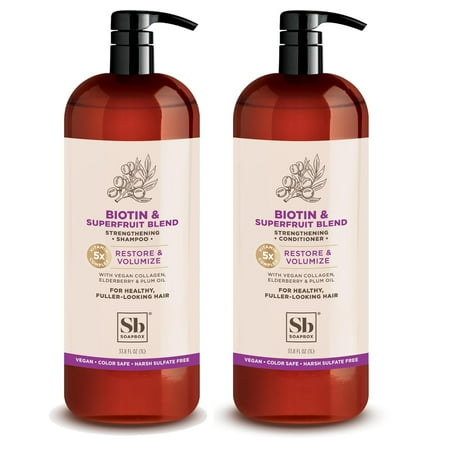



Soapbox Shampoo & Conditioner Set Biotin & Superfruits Scent 33.8 Fl Oz Each Bottle
Summary
This shampoo and conditioner set contains some beneficial ingredients like biotin and superfruits, which can support hair health. However, the presence of synthetic fragrance and the processed nature of the product limit its score. While it avoids some of the most harmful additives, the inclusion of synthetic components and the level of processing prevent it from achieving a higher rating.
At a glance
Key ingredients 18
Cocamidopropyl Betaine
Cocamidopropyl Betaine is a mild surfactant derived from coconut oil, often used to reduce irritation from harsher surfactants. It helps to create a rich lather and improve the cleansing properties of the shampoo. It is considered gentle on the skin and hair.
Risks
Some individuals may experience allergic reactions or irritation.
Benefits
It is known for its ability to cleanse without stripping natural oils, making it suitable for sensitive skin.
Sodium C14-16 Olefin SulfonateNeutral
Sodium C14-16 Olefin Sulfonate is a surfactant used for its effective cleansing and foaming properties. It is derived from coconut oil and is often used as an alternative to sulfates. While it is effective at removing dirt and oil, it can be drying for some hair types.
Risks
Potential to cause dryness or irritation for sensitive scalps.
Benefits
Provides strong cleansing action, making it effective for oily hair.
Butyrospermum Parkii (Shea) Butter
Shea Butter is a natural fat extracted from the nuts of the shea tree, known for its moisturizing and conditioning properties. It helps to nourish and soften hair, making it more manageable. Rich in vitamins and fatty acids, it supports healthy hair growth.
Risks
Generally considered safe with minimal risk of allergic reactions.
Benefits
Deeply moisturizes and conditions hair, improving texture and shine.
Biotin (Vitamin B7)
Biotin is a water-soluble vitamin that supports hair health by strengthening the hair shaft and promoting growth. It is often included in hair care products to improve hair thickness and reduce breakage. While its effectiveness in topical applications is debated, it remains a popular ingredient for hair health.
Risks
Topical application may not be as effective as oral supplementation.
Benefits
Supports hair strength and growth, potentially reducing hair loss.
Hydrolyzed Collagen
Hydrolyzed Collagen is a protein that helps to strengthen and repair damaged hair. It is broken down into smaller peptides for better absorption and effectiveness. It can improve hair elasticity and reduce breakage.
Risks
Minimal risks, though effectiveness can vary between individuals.
Benefits
Enhances hair strength and elasticity, reducing the likelihood of breakage.
Sambucus Nigra (Elderberry) Seed Oil
Elderberry Seed Oil is rich in antioxidants and essential fatty acids, which help to nourish and protect hair. It is known for its anti-inflammatory properties, which can soothe the scalp. This oil can also add shine and softness to hair.
Risks
Generally safe, but may cause allergic reactions in sensitive individuals.
Benefits
Provides nourishment and protection, enhancing hair shine and softness.
Aloe Barbadensis (Aloe Vera) Leaf Juice
Aloe Vera Leaf Juice is known for its soothing and moisturizing properties. It helps to hydrate the scalp and hair, reducing dryness and irritation. Aloe vera also contains enzymes that promote healthy hair growth.
Risks
Rarely causes allergic reactions, but patch testing is recommended.
Benefits
Hydrates and soothes the scalp, promoting healthier hair growth.
Panthenol
Panthenol, a derivative of Vitamin B5, is used for its moisturizing and conditioning properties. It penetrates the hair shaft to improve moisture retention and elasticity. It also adds shine and reduces split ends.
Risks
Generally safe with low risk of irritation.
Benefits
Improves hair moisture and elasticity, enhancing shine and reducing split ends.
Glycerin
Glycerin is a humectant that attracts moisture to the hair and scalp, helping to maintain hydration. It is often used in hair care products to combat dryness and frizz. Glycerin is derived from natural sources and is considered safe for most users.
Risks
Can cause buildup if used excessively in humid conditions.
Benefits
Helps maintain moisture balance, reducing dryness and frizz.
Citric AcidNeutral
Citric Acid is used to adjust the pH of hair care products, ensuring they are compatible with the natural pH of hair and scalp. It can also help to remove mineral buildup from hard water. While it is not directly beneficial to hair health, it supports the overall formulation.
Risks
May cause irritation if used in high concentrations.
Benefits
Helps maintain product stability and pH balance.
Disodium Laureth SulfosuccinateNeutral
Disodium Laureth Sulfosuccinate is a mild surfactant used for its cleansing and foaming properties. It is considered less irritating than traditional sulfates. While effective at removing dirt and oil, it is not as harsh as SLS or SLES.
Risks
May cause mild irritation in sensitive individuals.
Benefits
Provides gentle cleansing without excessive stripping of natural oils.
Guar Hydroxypropyltrimonium ChlorideNeutral
Guar Hydroxypropyltrimonium Chloride is a conditioning agent derived from guar gum. It helps to improve the texture and manageability of hair by reducing static and frizz. It is often used in hair care products for its detangling properties.
Risks
Generally considered safe with low risk of irritation.
Benefits
Enhances hair manageability and reduces static.
Cetrimonium ChlorideNeutral
Cetrimonium Chloride is a conditioning agent that helps to reduce static and improve hair manageability. It is commonly used in conditioners to enhance smoothness and detangling. While effective, it is a synthetic compound.
Risks
May cause irritation if used in high concentrations.
Benefits
Improves hair smoothness and reduces static.
Sodium Chloride
Sodium Chloride is used as a thickening agent in shampoos and conditioners. While it helps to improve product texture, it can be drying to the hair and scalp. It is often avoided in products for dry or sensitive hair types.
Risks
Can cause dryness and irritation, especially for sensitive scalps.
Benefits
Contributes to product consistency and thickness.
Sodium Lauryl SulfoacetateNeutral
Sodium Lauryl Sulfoacetate is a mild surfactant used for its cleansing and foaming properties. It is considered less irritating than traditional sulfates. It effectively removes dirt and oil without excessive stripping of natural oils.
Risks
May cause mild irritation in sensitive individuals.
Benefits
Provides gentle cleansing suitable for sensitive skin.
Fragrance (Parfum)
Fragrance is used to impart a pleasant scent to hair care products. However, synthetic fragrances can contain a variety of undisclosed chemicals, some of which may cause irritation or allergic reactions. It is often criticized for its potential to cause skin sensitivity.
Risks
Potential to cause allergic reactions or irritation.
Benefits
Enhances the sensory experience of the product.
Benzyl Alcohol
Benzyl Alcohol is used as a preservative and solvent in hair care products. While it helps to prevent microbial growth, it is also a drying alcohol that can cause irritation. It is often avoided in products for sensitive skin or hair.
Risks
Can cause dryness and irritation, particularly for sensitive skin.
Benefits
Acts as a preservative, extending product shelf life.
Dehydroacetic AcidNeutral
Dehydroacetic Acid is a preservative used to prevent microbial growth in cosmetic products. It is considered a safer alternative to parabens. While effective at preserving product integrity, it does not directly benefit hair health.
Risks
Generally considered safe with low risk of irritation.
Benefits
Helps maintain product safety and longevity.
Processing
Processed Foods
Get the full breakdown in the Scout app
Scan any product to see lab results, healthy alternatives, and your personalized analysis.
Download on theApp Store