
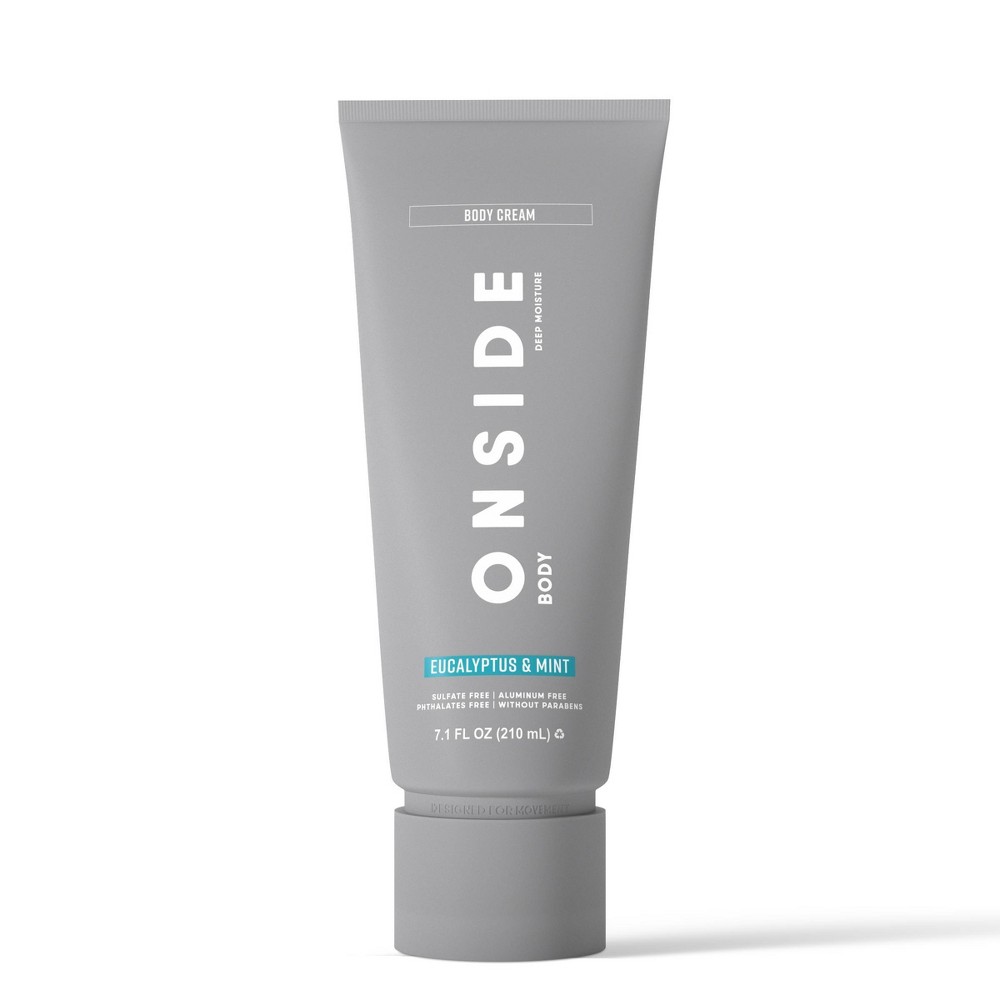


Onside Body Cream - Eucalyptus Mint - 7.1 fl oz
Summary
The Onside Body Cream contains a mix of natural and synthetic ingredients, including eucalyptus and mint essential oils, which are beneficial for their soothing properties. However, the presence of synthetic fragrance and other processed components reduces its overall safety profile. While it avoids some of the most harmful chemicals, the level of processing and inclusion of synthetic elements prevent it from achieving a higher score.
At a glance
Key ingredients 15
Water
Water is a universal solvent used to dissolve other ingredients in the formulation. It helps in spreading the product evenly on the skin. It is essential for hydration and acts as a carrier for other ingredients.
Risks
There are no significant risks associated with water in cosmetic formulations.
Benefits
Water provides hydration and helps in the absorption of other beneficial ingredients.
Carthamus Tinctorius (Safflower) Seed Oil
Safflower seed oil is a natural oil rich in linoleic acid, which helps to maintain the skin's barrier. It is known for its moisturizing properties and ability to soothe dry skin. It is often used in skincare for its emollient benefits.
Risks
There are minimal risks, though some individuals may experience allergic reactions.
Benefits
It provides essential fatty acids that help to nourish and hydrate the skin.
Glycerin
Glycerin is a humectant that attracts moisture to the skin, helping to keep it hydrated. It is widely used in skincare products for its ability to improve skin barrier function. It is considered safe and effective for all skin types.
Risks
Glycerin is generally safe, but in very high concentrations, it may cause irritation.
Benefits
It helps to maintain skin hydration and improve skin smoothness.
Caprylic/Capric Triglyceride
This ingredient is derived from coconut oil and glycerin, providing a silky feel to the skin. It acts as an emollient, helping to lock in moisture. It is often used to improve the spreadability of products.
Risks
There are minimal risks, though it may cause breakouts in acne-prone skin.
Benefits
It enhances skin hydration and provides a lightweight, non-greasy feel.
Cetyl Alcohol
Cetyl alcohol is a fatty alcohol used as an emollient and thickener in cosmetic formulations. It helps to stabilize emulsions and improve the texture of products. It is not drying like other alcohols and is safe for use in skincare.
Risks
It is generally safe, but some individuals with sensitive skin may experience irritation.
Benefits
It provides a smooth, creamy texture and helps to soften the skin.
Dimethicone
Dimethicone is a type of silicone used to create a barrier on the skin, preventing moisture loss. It provides a silky, smooth feel and helps to fill in fine lines and wrinkles. It is widely used in skincare for its protective and smoothing properties.
Risks
It may cause breakouts in some individuals with acne-prone skin.
Benefits
It helps to protect the skin from moisture loss and improves the texture of the product.
Glyceryl Stearate
Glyceryl stearate is an emulsifier that helps to blend oil and water components in formulations. It also acts as a lubricant on the skin's surface, giving it a soft and smooth appearance. It is derived from natural sources and is considered safe for use.
Risks
There are minimal risks, though it may cause mild irritation in sensitive individuals.
Benefits
It helps to stabilize formulations and provides a smooth, soft feel to the skin.
Shea Butter
Shea butter is a natural fat extracted from the nuts of the shea tree, known for its moisturizing and anti-inflammatory properties. It is rich in vitamins and fatty acids, making it an excellent emollient for dry skin. It is widely used in skincare for its nourishing benefits.
Risks
There are minimal risks, though some individuals may experience allergic reactions.
Benefits
It deeply moisturizes and nourishes the skin, improving elasticity and softness.
Niacinamide (Vitamin B3)
Niacinamide is a form of vitamin B3 that offers multiple skin benefits, including improving skin tone and texture. It helps to reduce inflammation and redness, making it suitable for sensitive skin. It is a popular ingredient in skincare for its ability to enhance the skin barrier.
Risks
There are minimal risks, though high concentrations may cause irritation.
Benefits
It improves skin elasticity, enhances barrier function, and reduces signs of aging.
Jojoba Oil
Jojoba oil is a natural oil that closely resembles the skin's natural sebum, making it an excellent moisturizer. It is non-comedogenic and helps to balance oil production. It is often used in skincare for its soothing and hydrating properties.
Risks
There are minimal risks, though some individuals may experience allergic reactions.
Benefits
It provides long-lasting moisture and helps to balance the skin's natural oils.
Cetearyl Glucoside
Cetearyl glucoside is a natural emulsifier derived from coconut oil and sugar. It helps to blend oil and water components in formulations, providing a stable emulsion. It is considered safe and gentle for use in skincare products.
Risks
There are minimal risks, though it may cause mild irritation in sensitive individuals.
Benefits
It helps to stabilize formulations and provides a smooth, creamy texture.
Sorbic Acid
Sorbic acid is a natural preservative used to prevent the growth of mold and yeast in cosmetic products. It is considered safe and effective for use in skincare. It helps to extend the shelf life of products without the use of harsh chemicals.
Risks
There are minimal risks, though it may cause mild irritation in sensitive individuals.
Benefits
It helps to preserve the product and prevent microbial growth.
Meadowfoam Seed Oil
Meadowfoam seed oil is a natural oil known for its moisturizing and rejuvenating properties. It is rich in long-chain fatty acids, providing a protective barrier on the skin. It is often used in skincare for its ability to lock in moisture and improve skin texture.
Risks
There are minimal risks, though some individuals may experience allergic reactions.
Benefits
It provides long-lasting hydration and helps to protect the skin from environmental stressors.
Coconut Oil
Coconut oil is a natural oil known for its moisturizing and antimicrobial properties. It is rich in fatty acids, making it an excellent emollient for dry skin. It is widely used in skincare for its nourishing and protective benefits.
Risks
It may cause breakouts in acne-prone skin due to its comedogenic nature.
Benefits
It deeply moisturizes and nourishes the skin, improving softness and elasticity.
Stearic Acid
Stearic acid is a fatty acid used as an emulsifier and thickener in cosmetic formulations. It helps to stabilize products and improve their texture. It is derived from natural sources and is considered safe for use in skincare.
Risks
There are minimal risks, though it may cause mild irritation in sensitive individuals.
Benefits
It helps to stabilize formulations and provides a smooth, creamy texture.
Processing
Processed Foods
Get the full breakdown in the Scout app
Scan any product to see lab results, healthy alternatives, and your personalized analysis.
Download on theApp Store