
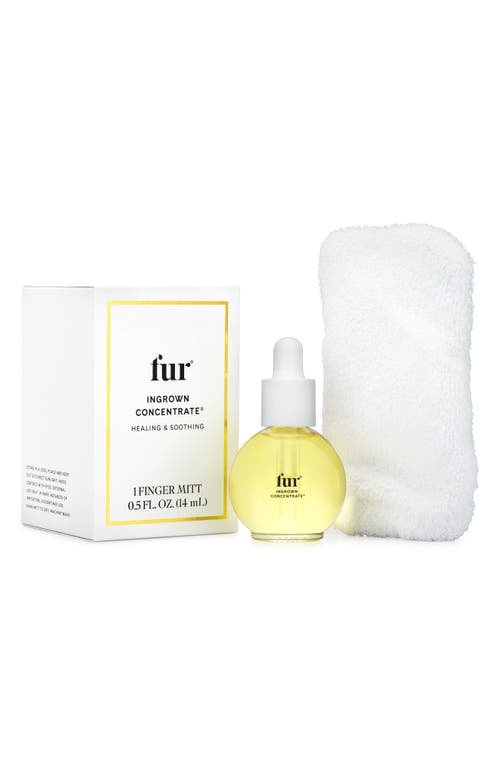

fur Ingrown Concentrate, 0.5-oz.
Summary
The product contains beneficial natural oils and botanicals, which are generally safe and nourishing for the skin. However, the presence of synthetic fragrance or parfum can be a concern due to potential skin irritation and endocrine disruption. The overall formulation is mostly clean, but the inclusion of fragrance slightly lowers its safety profile.
At a glance
Key ingredients 9
Fractionated Coconut Oil
Fractionated Coconut Oil is a processed form of coconut oil that remains liquid at room temperature. It is known for its excellent moisturizing properties and ability to penetrate the skin easily. It is often used in skincare for its lightweight texture and non-greasy feel.
Risks
There are minimal risks associated with fractionated coconut oil, though some individuals may experience mild irritation.
Benefits
It provides deep hydration and helps to improve skin texture and softness.
Vitis Vinifera (Grape) Seed Oil
Grape Seed Oil is rich in antioxidants and essential fatty acids, making it beneficial for skin health. It is lightweight and easily absorbed, which makes it suitable for all skin types. It is often used to improve skin elasticity and reduce the appearance of fine lines.
Risks
Grape seed oil is generally safe, but those with grape allergies should avoid it.
Benefits
It helps to protect the skin from environmental damage and supports skin repair.
Simmondsia Chinensis (Jojoba) Seed Oil
Jojoba Oil closely resembles the natural oils of the skin, making it an excellent moisturizer. It is non-comedogenic and helps to balance oil production. It is often used to soothe and soften the skin.
Risks
Jojoba oil is generally safe, but overuse can lead to skin irritation in sensitive individuals.
Benefits
It provides long-lasting moisture and helps to regulate sebum production.
Ricinus Communis Seed Oil
Castor Oil is known for its thick consistency and high ricinoleic acid content, which provides excellent moisturizing properties. It is often used to soothe dry skin and promote healing. It also has anti-inflammatory properties.
Risks
Castor oil can cause allergic reactions in some individuals, leading to skin irritation.
Benefits
It deeply hydrates the skin and can help reduce inflammation.
Coconut Oil
Coconut Oil is a popular natural moisturizer that is rich in fatty acids. It is known for its ability to hydrate and protect the skin barrier. It is often used in skincare for its antibacterial and anti-inflammatory properties.
Risks
Coconut oil can clog pores in some individuals, potentially leading to acne.
Benefits
It provides deep hydration and helps to maintain skin health.
Tamanu Oil
Tamanu Oil is known for its regenerative properties and ability to promote skin healing. It is rich in fatty acids and antioxidants, which help to nourish and protect the skin. It is often used to improve the appearance of scars and blemishes.
Risks
Tamanu oil can cause allergic reactions in some individuals, especially those with nut allergies.
Benefits
It supports skin regeneration and helps to reduce the appearance of scars.
Chamomile Oil
Chamomile Oil is known for its calming and anti-inflammatory properties. It is often used to soothe irritated skin and reduce redness. It is also rich in antioxidants, which help to protect the skin from environmental stressors.
Risks
Chamomile oil can cause allergic reactions in individuals sensitive to ragweed or other plants in the Asteraceae family.
Benefits
It soothes and calms the skin, reducing irritation and redness.
Tea Tree Oil
Tea Tree Oil is renowned for its antimicrobial and anti-inflammatory properties. It is often used to treat acne and other skin infections. It helps to reduce redness and swelling associated with acne.
Risks
Tea tree oil can cause skin irritation and allergic reactions in some individuals, especially if used undiluted.
Benefits
It helps to clear acne and reduce inflammation.
Caprylic/Capric Triglyceride
Caprylic/Capric Triglyceride is derived from coconut oil and glycerin, providing a silky, non-greasy feel. It is used as an emollient and helps to improve the spreadability of products. It is often used to enhance the absorption of active ingredients.
Risks
There are minimal risks associated with this ingredient, though it can cause mild irritation in sensitive individuals.
Benefits
It enhances product texture and helps to moisturize the skin.
Processing
Processed Foods
Get the full breakdown in the Scout app
Scan any product to see lab results, healthy alternatives, and your personalized analysis.
Download on theApp Store