
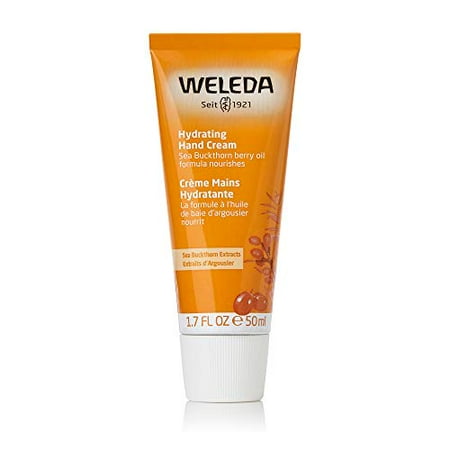


Weleda Sea Buckthorn Hand Cream 1.7 Ounce
Summary
Weleda Sea Buckthorn Hand Cream contains beneficial natural ingredients such as sea buckthorn oil and sesame oil, which are known for their nourishing and moisturizing properties. The product avoids harsh chemicals and synthetic fragrances, contributing to a cleaner label. However, it includes some processed ingredients that slightly lower its overall score compared to more minimally processed options.
At a glance
Key ingredients 10
Water/Aqua/Eau
Water is a universal solvent and is used as a base in many cosmetic formulations. It helps dissolve other ingredients and provides hydration to the skin. It is essential for the consistency and application of the cream.
Risks
There are no significant risks associated with water in cosmetics.
Benefits
Water provides hydration and helps in the absorption of other beneficial ingredients.
Sesamum Indicum (Sesame) Seed Oil
Sesame seed oil is a natural oil rich in antioxidants and essential fatty acids. It acts as an emollient, helping to soften and moisturize the skin. It is known for its anti-inflammatory and healing properties.
Risks
There is a potential risk of allergic reactions in individuals with sesame allergies.
Benefits
Sesame seed oil helps in moisturizing the skin and provides antioxidant protection.
Alcohol
Alcohol is used in cosmetics as a solvent and to help other ingredients penetrate the skin. It can also act as a preservative to extend the shelf life of the product. In small amounts, it can enhance the texture and feel of the product.
Risks
Alcohol can be drying to the skin if used in high concentrations.
Benefits
In controlled amounts, alcohol can help improve the absorption of active ingredients.
Hydrolyzed Beeswax
Hydrolyzed beeswax is a natural wax that provides a protective barrier on the skin. It helps to lock in moisture and improve the texture of the product. It is often used for its emollient properties.
Risks
There are minimal risks associated with beeswax, though it may cause allergic reactions in sensitive individuals.
Benefits
Beeswax helps to retain moisture and provides a protective barrier on the skin.
Tapioca Starch
Tapioca starch is used in cosmetics as a thickening agent and to improve the texture of the product. It helps to absorb excess oil and provides a smooth, matte finish. It is derived from the cassava plant and is considered a natural ingredient.
Risks
There are no significant risks associated with tapioca starch in cosmetics.
Benefits
Tapioca starch helps to control oil and provides a smooth texture to the skin.
Lysolecithin
Lysolecithin is a natural emulsifier derived from lecithin, used to stabilize and blend ingredients in cosmetic formulations. It helps to improve the texture and consistency of the product. It is known for its skin-conditioning properties.
Risks
There are minimal risks associated with lysolecithin, though it may cause irritation in very sensitive skin.
Benefits
Lysolecithin helps to stabilize formulations and provides skin-conditioning benefits.
Beeswax/Cera Alba
Beeswax is a natural wax produced by honeybees and is used in cosmetics for its emollient and thickening properties. It forms a protective barrier on the skin, helping to lock in moisture. It is valued for its natural origin and skin-friendly properties.
Risks
Beeswax may cause allergic reactions in individuals sensitive to bee products.
Benefits
Beeswax provides a protective barrier and helps to retain moisture in the skin.
Glyceryl Stearate SE
Glyceryl Stearate SE is an emulsifier that helps to blend oil and water components in cosmetic formulations. It also acts as a lubricant on the skin's surface, giving it a soft and smooth appearance. It is derived from natural sources like vegetable oils.
Risks
There are minimal risks associated with glyceryl stearate SE, though it may cause irritation in sensitive skin.
Benefits
Glyceryl Stearate SE helps to stabilize formulations and provides a smooth texture to the skin.
Hippophae Rhamnoides Oil
Hippophae Rhamnoides Oil, also known as sea buckthorn oil, is rich in vitamins and antioxidants. It is known for its regenerative and healing properties, making it beneficial for skin health. It provides nourishment and helps to improve skin elasticity.
Risks
There are minimal risks associated with sea buckthorn oil, though it may cause irritation in very sensitive skin.
Benefits
Sea buckthorn oil provides nourishment and helps to improve skin elasticity and health.
Xanthan Gum
Xanthan gum is a natural thickening agent used in cosmetics to stabilize and improve the texture of formulations. It helps to create a smooth and consistent product. It is derived from the fermentation of sugars and is considered safe for use.
Risks
There are no significant risks associated with xanthan gum in cosmetics.
Benefits
Xanthan gum helps to stabilize formulations and provides a smooth texture.
Processing
Processed Culinary Ingredients
Get the full breakdown in the Scout app
Scan any product to see lab results, healthy alternatives, and your personalized analysis.
Download on theApp Store