
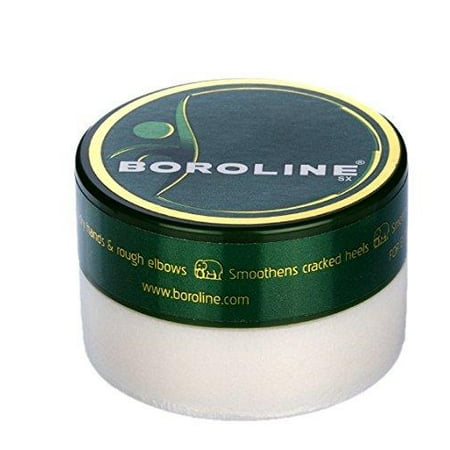
Boroline Antiseptic Cream- Night Repair Cream for Skin-40g
Summary
Boroline Antiseptic Cream contains some beneficial ingredients like lanolin and boric acid, which are known for their skin-soothing and antiseptic properties. However, the product is processed and includes synthetic preservatives and fragrances, which can be potential irritants or allergens. The presence of these synthetic components and the level of processing limit its overall score.
At a glance
Key ingredients 14
Water
Water is a universal solvent and is used as a base in many cosmetic formulations. It helps dissolve other ingredients and provides hydration to the skin. It is generally considered safe and non-irritating.
Risks
There are no significant risks associated with water in cosmetics.
Benefits
Water provides hydration and helps in the absorption of other beneficial ingredients.
Glycerin
Glycerin is a humectant that attracts moisture to the skin, helping to keep it hydrated. It is widely used in skincare products for its moisturizing properties. It is generally well-tolerated and beneficial for dry skin.
Risks
In rare cases, glycerin can cause irritation if used in high concentrations.
Benefits
Glycerin helps maintain skin hydration and improves skin barrier function.
Isopropyl Palmitate
Isopropyl Palmitate is an emollient that helps to soften and smooth the skin. It is used to enhance the texture of cosmetic products. It is generally considered safe but can be comedogenic for some skin types.
Risks
It may cause acne or skin irritation in individuals with sensitive or acne-prone skin.
Benefits
It provides a smooth application and helps to improve skin texture.
Cetyl Alcohol
Cetyl Alcohol is a fatty alcohol used as an emollient and thickening agent in cosmetics. It helps to stabilize formulations and improve texture. It is generally considered safe and non-irritating.
Risks
Rarely, it can cause mild irritation in sensitive individuals.
Benefits
It helps to soften and condition the skin, enhancing the feel of the product.
Cyclopentasiloxane
Cyclopentasiloxane is a silicone-based compound used to improve the spreadability of products. It provides a silky, smooth feel and helps to temporarily fill in fine lines. It is generally considered safe for use in cosmetics.
Risks
There are concerns about its environmental impact and potential bioaccumulation.
Benefits
It enhances the texture and application of the product, providing a smooth finish.
Dimethiconol
Dimethiconol is a silicone that forms a protective barrier on the skin, helping to lock in moisture. It is used to improve the texture and feel of cosmetic products. It is generally considered safe and non-irritating.
Risks
There are minimal risks, but it may cause build-up on the skin with prolonged use.
Benefits
It provides a smooth, silky feel and helps to protect the skin from moisture loss.
Glyceryl Stearate
Glyceryl Stearate is an emulsifier that helps to blend oil and water components in formulations. It also acts as a lubricant on the skin's surface. It is generally considered safe and beneficial for skin conditioning.
Risks
It may cause mild irritation in sensitive individuals.
Benefits
It helps to maintain the stability of the product and provides a smooth application.
PEG-100 Stearate
PEG-100 Stearate is an emulsifier used to stabilize formulations and improve texture. It helps to blend ingredients and enhance the spreadability of products. It is generally considered safe but may have contamination concerns.
Risks
There is a potential risk of contamination with ethylene oxide and 1,4-dioxane.
Benefits
It improves the texture and stability of cosmetic formulations.
Sodium Hyaluronate
Sodium Hyaluronate is a form of hyaluronic acid that acts as a powerful humectant, attracting moisture to the skin. It is used for its excellent hydrating properties and ability to improve skin elasticity. It is highly regarded in skincare for its benefits.
Risks
There are minimal risks associated with its use.
Benefits
It provides deep hydration and helps to plump and smooth the skin.
Boric Acid
Boric Acid is used as an antiseptic and preservative in cosmetic formulations. It helps to prevent microbial growth and extend the shelf life of products. However, it can be irritating and is restricted in some regions.
Risks
It can cause skin irritation and is toxic if ingested.
Benefits
It provides antimicrobial properties, helping to preserve the product.
Zinc Oxide
Zinc Oxide is a mineral used for its protective and soothing properties in skincare. It acts as a physical sunscreen and provides a barrier against irritants. It is considered safe and beneficial, especially in creams and lotions.
Risks
There are minimal risks, but it may leave a white cast on the skin.
Benefits
It offers sun protection and has anti-inflammatory properties.
Mineral Oil
Mineral Oil is a highly refined oil used as an emollient to lock in moisture. It forms a barrier on the skin, preventing moisture loss. It is generally considered safe but can be comedogenic for some skin types.
Risks
It may cause acne or skin irritation in individuals with sensitive or acne-prone skin.
Benefits
It provides effective moisture retention and softens the skin.
Paraffin Wax
Paraffin Wax is used as an emollient and thickening agent in cosmetics. It helps to create a protective barrier on the skin, locking in moisture. It is generally considered safe but may cause issues for sensitive skin.
Risks
It can cause skin irritation or allergic reactions in sensitive individuals.
Benefits
It provides a protective barrier and helps to retain moisture in the skin.
Lanolin
Lanolin is a natural emollient derived from sheep's wool, known for its moisturizing properties. It helps to soften and protect the skin by forming a barrier to prevent moisture loss. It is highly regarded for its skin-conditioning benefits.
Risks
It may cause allergic reactions in individuals sensitive to wool.
Benefits
It provides excellent moisturization and helps to repair dry, cracked skin.
Processing
Processed Foods
Get the full breakdown in the Scout app
Scan any product to see lab results, healthy alternatives, and your personalized analysis.
Download on theApp Store