
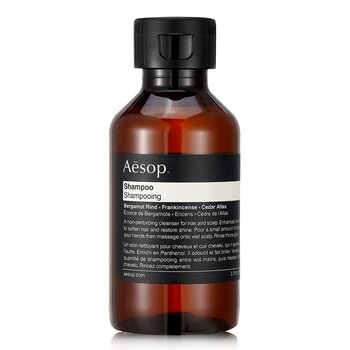


Aesop Shampoo at Nordstrom, Size 3.4 Oz
Summary
The Aesop Shampoo contains some beneficial ingredients like plant-based extracts and essential oils, which are generally good for hair and scalp health. However, it also includes synthetic fragrance and other processed components that can be concerning for sensitive scalps. The presence of these ingredients, along with its processed nature, limits its score despite the inclusion of some natural elements.
At a glance
Key ingredients 7
Water (Aqua)Neutral
Water is a universal solvent used in many cosmetic products. It acts as a base for the formulation, allowing other ingredients to dissolve and mix properly. It does not have any direct benefits or risks in the context of shampoo.
Risks
There are no significant risks associated with water in cosmetic formulations.
Benefits
Water helps to evenly distribute other ingredients in the shampoo.
Sodium Lauroamphoacetate
Sodium Lauroamphoacetate is a mild surfactant derived from coconut oil. It is used to gently cleanse the hair and scalp without stripping natural oils. It is considered safe and non-irritating for most skin types.
Risks
There are minimal risks associated with this ingredient, though some individuals may experience mild irritation.
Benefits
It provides gentle cleansing properties, making it suitable for sensitive scalps.
Sodium Methyl Cocoyl Taurate
Sodium Methyl Cocoyl Taurate is a coconut-derived surfactant known for its mildness. It helps to create a rich lather and cleanse the hair effectively. It is often used in formulations for sensitive skin due to its gentle nature.
Risks
There are minimal risks, though it may cause irritation in very sensitive individuals.
Benefits
It is beneficial for providing a gentle yet effective cleansing action.
Cocamidopropyl Hydroxysultaine
Cocamidopropyl Hydroxysultaine is a surfactant and foam booster derived from coconut oil. It enhances the cleansing properties of the shampoo while being gentle on the skin. It also helps to condition the hair, leaving it soft and manageable.
Risks
Some individuals may experience allergic reactions or irritation.
Benefits
It contributes to a rich lather and conditioning effect, improving hair texture.
Sodium Chloride
Sodium Chloride is commonly used as a thickening agent in shampoos. However, it can contribute to drying out the scalp and hair, especially with frequent use. It is not recommended for individuals with dry or sensitive scalps.
Risks
It may cause dryness and irritation, particularly for those with sensitive skin.
Benefits
It helps to increase the viscosity of the shampoo, improving its texture.
Glycerin
Glycerin is a humectant that attracts moisture to the hair and scalp. It helps to maintain hydration, preventing dryness and frizz. It is widely used in hair care products for its moisturizing properties.
Risks
There are minimal risks, though excessive use may lead to a sticky residue.
Benefits
It effectively hydrates and conditions the hair, enhancing its softness and shine.
Citric AcidNeutral
Citric Acid is used to adjust the pH level of cosmetic products. It helps to maintain the stability and effectiveness of the formulation. It does not have direct benefits or risks in the context of shampoo.
Risks
In high concentrations, it may cause irritation, but it is generally safe in cosmetic formulations.
Benefits
It helps to balance the pH, ensuring the product is gentle on the hair and scalp.
Processing
Processed Foods
Get the full breakdown in the Scout app
Scan any product to see lab results, healthy alternatives, and your personalized analysis.
Download on theApp Store