
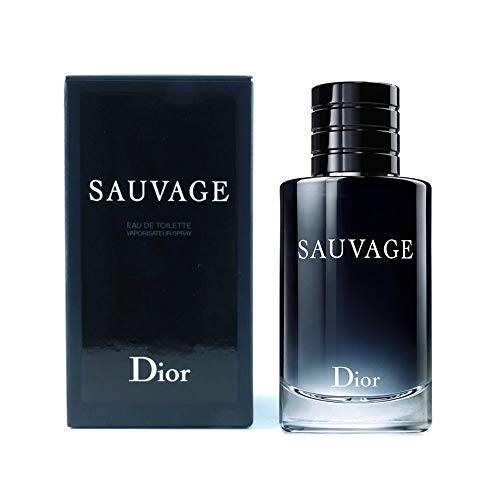


Dior Sauvage Eau de Toilette
At a glance
Summary
Dior Sauvage Eau de Toilette is a designer cologne built on three big problems: (1) an undisclosed 'Parfum' trade-secret blend that legally hides dozens of aromachemicals — almost certainly including synthetic musks like Galaxolide and Tonalide (endocrine disruptors that bioaccumulate in human tissue and breast milk), Ambroxan, Iso E Super, and historically DEP-class phthalate carriers; (2) six IFRA / EU-declared dermal sensitizers (limonene, linalool, citronellol, coumarin, citral, geraniol) at high enough levels to require labeling — these are the most common causes of fragrance contact dermatitis, and the spray-application pattern delivers them to skin, clothing, and the inhalation zone; (3) four synthetic dyes added purely for the blue-gradient bottle aesthetic, three of which are well-documented skin sensitizers in topical products. The one bright spot is Tinogard TT, a cleaner antioxidant used in place of BHT. Manufactured by LVMH, no third-party clean-beauty certifications. Designer mass-market fragrances score harshly against disclosed-formula clean alternatives (Skylar, Phlur, Ellis Brooklyn, DedCool) that omit synthetic musks, dyes, and undisclosed parfum blends.
Key ingredients 16
Parfum (Fragrance)Very Bad
Trade-secret blanket term that legally conceals dozens to hundreds of individual aromachemicals. For a high-projection designer scent like Sauvage, the blend almost certainly contains synthetic polycyclic musks (Galaxolide, Tonalide) — endocrine disruptors that bioaccumulate in human fat tissue, breast milk, and wastewater — alongside Ambroxan and Iso E Super. Historically, designer fragrances also used DEP phthalates as solvents; Dior claims phase-out but discloses no replacement.
See more about Parfum (Fragrance) →LimoneneBad
IFRA / EU-declared fragrance allergen. Oxidizes on skin and in the bottle into stronger sensitizers; one of the top causes of fragrance contact dermatitis. Required label disclosure means it is present above 0.001% in this leave-on product.
See more about Limonene →LinaloolBad
IFRA / EU-declared fragrance allergen. Air-oxidized linalool hydroperoxides are confirmed contact sensitizers — labeled because exposure is high in spray-on fragrance.
See more about Linalool →Butyl Methoxydibenzoylmethane (Avobenzone)Bad
Chemical UV filter added to prevent fragrance discoloration in clear/blue bottles. Documented photoallergen and shows mild estrogenic activity in cell and animal studies — concerning for a leave-on product applied to the neck and wrists daily.
See more about Butyl Methoxydibenzoylmethane (Avobenzone) →CitronellolBad
IFRA / EU-declared fragrance allergen. Recognized dermal sensitizer; one of the most frequently cited fragrance allergens in patch-test studies.
See more about Citronellol →CoumarinBad
IFRA / EU-declared fragrance allergen. Category 2 skin sensitizer; the EU SCCS has flagged it for cumulative exposure risk across multiple fragranced products.
See more about Coumarin →CitralBad
IFRA / EU-declared fragrance allergen with strong sensitizing potential — IFRA restricts maximum use levels in leave-on products specifically because of its high contact-allergy rate.
See more about Citral →GeraniolBad
IFRA / EU-declared fragrance allergen with rose-like odor. Documented skin sensitizer; oxidation products are even more reactive.
See more about Geraniol →CI 60730 (Ext. Violet 2)Bad
Coal-tar-derived violet dye added purely for the bottle's blue-purple gradient. Provides zero functional benefit — pure cosmetic colorant on a product designed to be sprayed and absorbed into skin.
See more about CI 60730 (Ext. Violet 2) →CI 14700 (FD&C Red 4)Bad
Coal-tar azo dye used for the bottle aesthetic. Azo dyes are a known class of contact sensitizers in topical/leave-on products and have been progressively phased out of clean-formulation cosmetics. Pure aesthetic addition with no consumer benefit.
See more about CI 14700 (FD&C Red 4) →CI 42090 (FD&C Blue 1)Bad
Coal-tar triphenylmethane dye added for color. Documented dermal absorption in topical use; some neurotoxicity signals in animal studies. Aesthetic-only.
See more about CI 42090 (FD&C Blue 1) →CI 47005 (D&C Yellow 10 / Quinoline Yellow)Bad
Coal-tar quinoline dye added for color. Listed as a skin sensitizer in EU cosmetic safety reports. Aesthetic-only addition; clean-fragrance brands omit dyes entirely.
See more about CI 47005 (D&C Yellow 10 / Quinoline Yellow) →Alcohol (Denat.)Neutral
Ethanol-based solvent carrier (80%+ of formula). Denaturant identity is not disclosed. Drying to skin but otherwise inert.
See more about Alcohol (Denat.) →Aqua (Water)Neutral
Solvent; safe.
See more about Aqua (Water) →Triethyl CitrateNeutral
Benign perfuming agent / alcohol denaturant. Generally safe for skin contact.
See more about Triethyl Citrate →Pentaerythrityl Tetra-Di-T-Butyl Hydroxyhydrocinnamate (Tinogard TT)Good
Cleaner antioxidant alternative to BHT. Used at <0.8% to prevent oxidative degradation. The only meaningfully positive ingredient in the formula.
See more about Pentaerythrityl Tetra-Di-T-Butyl Hydroxyhydrocinnamate (Tinogard TT) →Get the full breakdown in the Scout appTake Scout shopping
Scan any product to see lab results, healthy alternatives, and your personalized analysis.
Download on theApp Store GET IT ONGoogle PlayAmazon pricing & content
Amazon price as of . Product prices and availability are accurate as of the date/time indicated and are subject to change. Any price and availability information displayed on Amazon.com at the time of purchase will apply to the purchase of this product.
CERTAIN CONTENT THAT APPEARS ON THIS SITE COMES FROM AMAZON. THIS CONTENT IS PROVIDED “AS IS” AND IS SUBJECT TO CHANGE OR REMOVAL AT ANY TIME.