
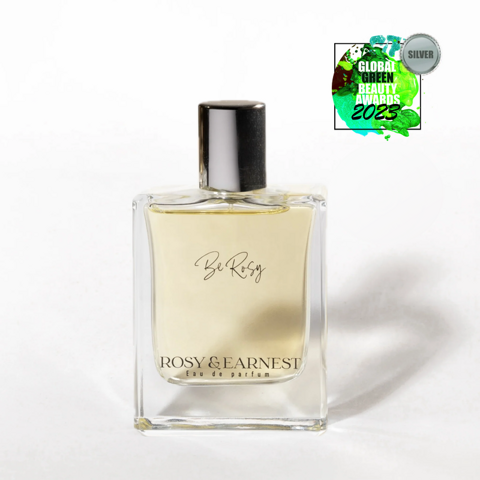
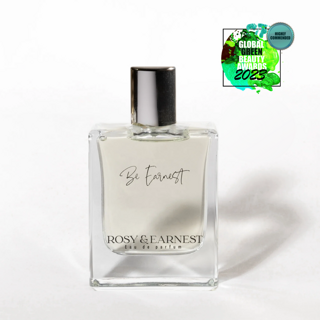


Rosy & Earnest Be Rosy Eau de Parfum
At a glance
Summary
Rosy & Earnest Be Rosy Eau de Parfum scores 73/100. A unisex green-floral-tea EDP from the same EWG Verified™ female-founded indie house as Be Earnest. Strengths: full formula disclosure, macrocyclic-only musk profile (Ethylene Brassylate, Cyclohexadecanone, Ambroxide), Tinogard TT antioxidant, no synthetic dyes, no UV filters, no Lilial / HICC / phthalates. The 12-point drop versus Be Earnest is driven by the heavier rose-floral aromachemical load: eight declared EU 26 allergens including isoeugenol — a top-strength sensitizer that IFRA caps at 0.02% in leave-on products. Still meaningfully cleaner than any designer floral.
Key ingredients 23
Ethylene BrassylateVery Good
Macrocyclic synthetic musk. Non-bioaccumulative and biodegradable — IFRA-supported clean alternative to Galaxolide-class polycyclic musks.
See more about Ethylene Brassylate →EWG Verified™ FormulationGood
Brand carries EWG Verified™ certification — independently vetted against the strictest health-and-safety ingredient standards (no Galaxolide, no Tonalide, no phthalates, no nitromusks).
See more about EWG Verified™ Formulation →Full Fragrance DisclosureGood
Brand discloses the complete fragrance formula on the product page — no 'Parfum' trade-secret blanket hiding aromachemicals.
See more about Full Fragrance Disclosure →AmbroxideGood
Synthetic / biotech amber-woody molecule. Non-bioaccumulative; no documented endocrine activity.
See more about Ambroxide →Cyclohexadecanone (Macrocyclic Musk)Good
Macrocyclic musk; non-bioaccumulative replacement for polycyclic musks.
See more about Cyclohexadecanone (Macrocyclic Musk) →Methyl Dihydrojasmonate (Hedione)Good
Hedione — high-volume floral-jasmine aromachemical. Not on EU 26 list; no documented endocrine activity.
See more about Methyl Dihydrojasmonate (Hedione) →Tinogard TTGood
Antioxidant stabilizer (Methyl Di-T-Butyl Hydroxyhydrocinnamate). Used at trace levels to prevent oxidation of allergens like linalool; itself non-sensitizing.
See more about Tinogard TT →Green Tea Leaf ExtractGood
Antioxidant-rich tea extract — natural caffeine sources are never penalized.
See more about Green Tea Leaf Extract →Alcohol Denat.Neutral
Denatured ethanol solvent carrier (~80% of formula). Drying to skin but inert.
See more about Alcohol Denat. →Aqua (Water)Neutral
Solvent; safe.
See more about Aqua (Water) →Iso E SuperNeutral
Tetramethyl Acetyloctahydronaphthalenes. Synthetic woody amber; not on EU 26 list. Long-standing IFRA-supported aromachemical with low sensitization profile.
See more about Iso E Super →Triethyl CitrateNeutral
Solvent / fixative replacement for DEP phthalate. Non-sensitizing, non-endocrine.
See more about Triethyl Citrate →Bergamot OilNeutral
Furocoumarin-free bergamot per IFRA. Natural citrus note.
See more about Bergamot Oil →Mandarin OilNeutral
Natural citrus oil. Brings limonene naturally.
See more about Mandarin Oil →Osmanthus Flower ExtractNeutral
Natural floral extract. Non-allergenic at use levels.
See more about Osmanthus Flower Extract →LimoneneBad
IFRA / EU-declared fragrance allergen. Oxidizes on skin into stronger sensitizers; one of the top causes of fragrance contact dermatitis.
See more about Limonene →LinaloolBad
IFRA / EU-declared fragrance allergen. Air-oxidized linalool hydroperoxides are confirmed contact sensitizers — spray exposure is high.
See more about Linalool →Benzyl SalicylateBad
IFRA / EU-declared fragrance allergen and weak photoallergen. Recent SCCS reviews have raised concerns about possible endocrine activity at typical fine-fragrance use levels.
See more about Benzyl Salicylate →CitralBad
IFRA / EU-declared fragrance allergen with strong sensitizing potential — IFRA restricts maximum use levels in leave-on products.
See more about Citral →CitronellolBad
IFRA / EU-declared fragrance allergen. Recognized dermal sensitizer; one of the most frequently cited fragrance allergens in patch-test studies.
See more about Citronellol →GeraniolBad
IFRA / EU-declared fragrance allergen with rose-like odor. Documented skin sensitizer; oxidation products are even more reactive.
See more about Geraniol →EugenolBad
IFRA / EU-declared fragrance allergen. Clove-derived; documented strong dermal sensitizer with IFRA-restricted use levels in leave-on products.
See more about Eugenol →IsoeugenolVery Bad
EU 26 fragrance allergen and a top-strength dermal sensitizer per IFRA. Capped at 0.02% in leave-on products because of its high allergic-contact-dermatitis rate.
See more about Isoeugenol →Get the full breakdown in the Scout appTake Scout shopping
Scan any product to see lab results, healthy alternatives, and your personalized analysis.
Download on theApp Store GET IT ONGoogle Play