
Ingredient
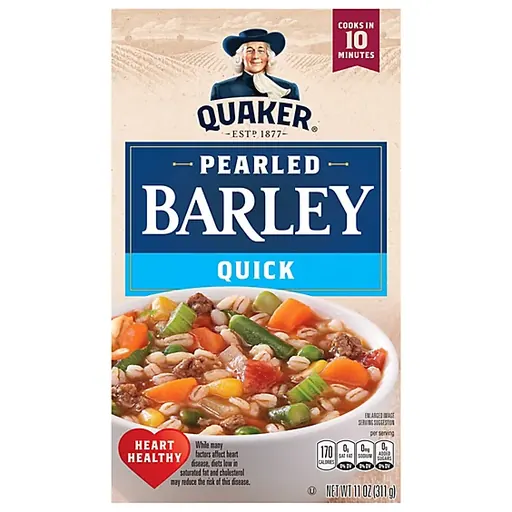
Pearled barley
What is Pearled barley?
Pearled barley is a type of barley grain that has been processed to remove its outer husk and bran layer, which gives it a smoother and faster-cooking texture. It's typically lighter in color and requires less cooking time compared to hulled barley.
Pearled barley is used in soups, stews, and as a side dish due to its chewy texture and mild flavor. It is a source of carbohydrates and contains some fiber, though less than whole grain barley due to the removal of the bran. Some research suggests barley can help regulate blood sugar and improve heart health, but these benefits are more pronounced with whole, unprocessed barley.
When you see pearled barley on a label, know that it is not gluten-free and may not provide the full nutritional benefits of whole grain barley. It's a refined grain option that still offers some nutritional value and versatility in cooking.
Commonly found in: soups, stews, pilafs, side dishes, grain salads
What to watch
- Pearled barley contains gluten, which is unsuitable for those with celiac disease or gluten sensitivity.
Benefits
- Barley may contribute to heart health and help regulate blood sugar.
Barley is generally recognized as safe (GRAS) and has no specific restrictions.
Research shows benefits for heart health and blood sugar control, especially in whole forms, but effects vary with pearled barley.
As a plant-derived grain, pearled barley is considered vegan.
Scout's take
Pearled barley is a whole grain that has been polished to remove its outer husk, making it quicker to cook. It retains a significant amount of its fiber and nutrients despite the processing. This ingredient is minimally processed and provides a good source of dietary fiber and essential nutrients.
Found in 1 product
Scan any product to see every ingredient explained — and healthier swaps.
Download on theApp Store GET IT ONGoogle Play